

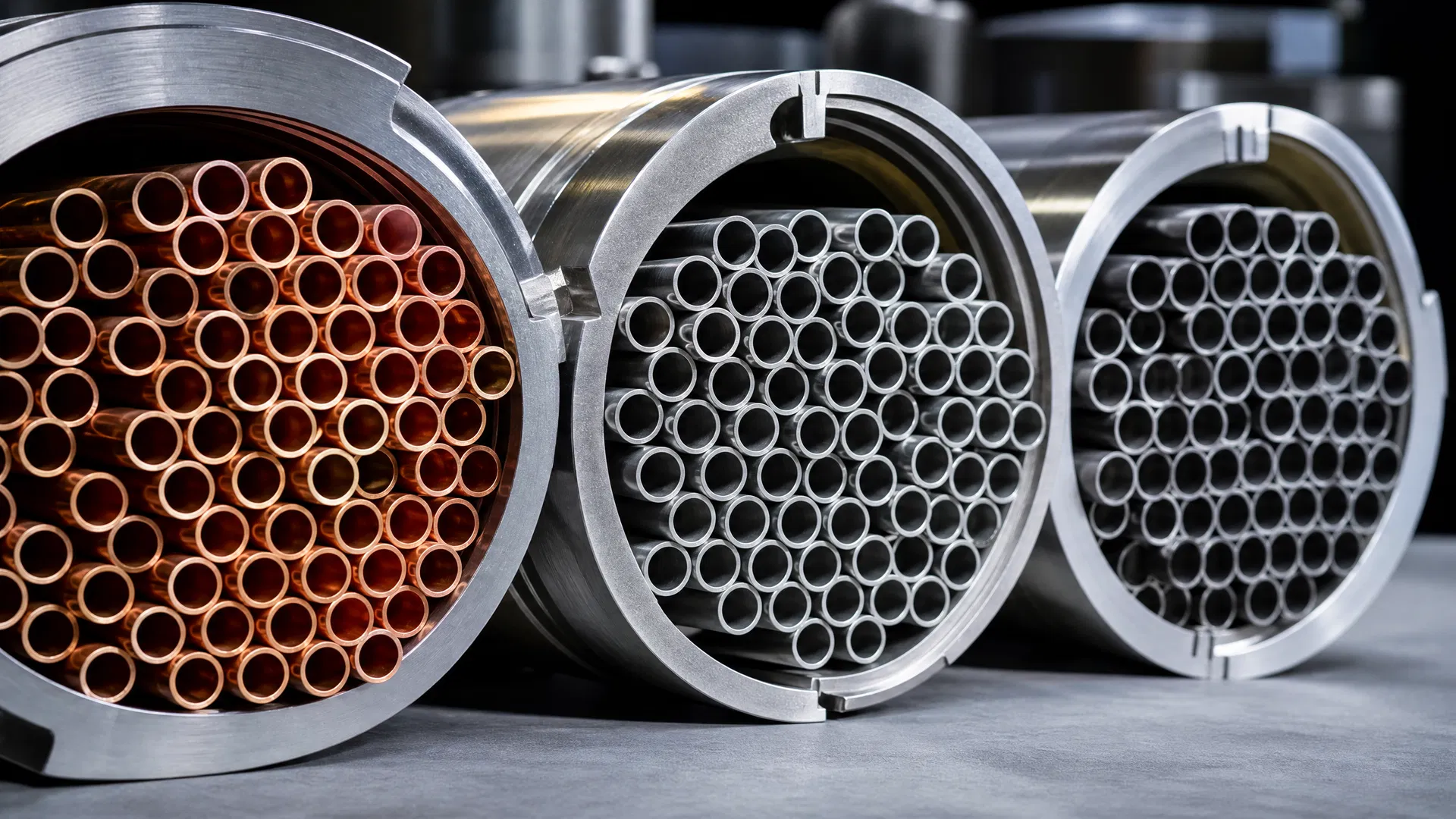
Titanium heat exchangers are the highest-value units to sell on the secondary market because of their exceptional corrosion resistance in aggressive environments like seawater cooling and chlor-alkali processing, driving immense replacement demand. While standard scrap titanium yields only a baseline commodity rate, selling your intact titanium plate packs or shell and tube bundles to a specialized buyer can secure significantly higher returns based on reusable surface area. Surplus Heat Exchangers pays 100% upfront for these premium units and handles all nationwide freight.
Surplus Heat Exchangers buys used and surplus heat exchangers nationwide — 100% upfront, with free rigging and freight, in any condition. Send a photo of the nameplate to 951-403-5738 for a same-day cash offer.
Why do titanium heat exchangers command the highest resale and scrap values?
When facility managers, demolition contractors, or plant engineers look to liquidate surplus equipment, titanium heat exchangers consistently emerge as the most lucrative assets. The fundamental reason lies in the raw material cost and the complex manufacturing processes required to work with titanium. Unlike carbon steel or standard 304 stainless steel, titanium is an exotic, high-performance metal designed to withstand the most corrosive and punishing industrial environments on earth. Because new titanium units require significant capital investment and often come with extended manufacturing lead times, the secondary market for used, surplus, or even slightly damaged titanium heat exchangers is incredibly robust.
Buyers in the secondary market are highly motivated to acquire used titanium units to bypass long OEM lead times and reduce their capital expenditures. This urgency translates directly into higher payout offers for sellers. Furthermore, even if a titanium heat exchanger has reached the end of its operational life and cannot be refurbished, its intrinsic scrap value dwarfs that of almost any other industrial metal. The combination of high intrinsic material value and intense demand for reusable units ensures that titanium heat exchangers remain the undisputed heavyweight champions of industrial asset recovery.
How much is a used titanium heat exchanger worth compared to other materials?
The financial return on a used heat exchanger depends heavily on its metallurgy, configuration, and overall condition. To understand just how valuable titanium units are, it is helpful to compare their baseline scrap values against more common industrial metals. While intact, reusable shell and tube heat exchangers generally resell for roughly a significant premium over scrap based on its heat-transfer surface area depending on materials and condition, the scrap floor provides a clear picture of titanium's premium status.
As the data illustrates, titanium commands a massive premium over standard alloys. A heavy industrial titanium shell and tube bundle weighing 10,000 pounds could yielda strong resale figure in pure scrap value alone. However, if that same unit is structurally sound and can be repurposed, a specialized buyer like Surplus Heat Exchangers will often pay well above the scrap floor, factoring in the reusable square footage and the specific TEMA (Tubular Exchanger Manufacturers Association) design type.
What industries and applications drive the demand for used titanium units?
The extraordinary value of used titanium heat exchangers is directly tied to the specific, high-stakes industries that rely on them. Titanium is virtually immune to chloride ion pitting, crevice corrosion, and stress corrosion cracking, making it the only viable choice for certain chemical and marine applications. When you sell a titanium unit, it is likely destined to support one of these critical sectors.
- Chlor-Alkali Processing: The production of chlorine and caustic soda involves highly aggressive wet chlorine gas and brine solutions. Titanium is one of the few materials that can survive this environment without rapid degradation.
- Seawater Cooling and Desalination: Coastal power plants, offshore oil rigs, and marine vessels utilize seawater as a cooling medium. While cupro-nickel is sometimes used, titanium offers superior longevity and resistance to biological fouling and high-velocity seawater erosion.
- Chemical and Petrochemical Refining: Processes involving aggressive acids, such as nitric acid or organic acids with chloride impurities, require the robust protection that only titanium or high-nickel alloys can provide.
- Pulp and Paper Manufacturing: The bleaching processes in paper mills utilize chlorine dioxide and sodium hypochlorite, chemicals that rapidly destroy standard stainless steels but are easily handled by titanium heat exchangers.
Because these industries cannot compromise on material integrity, they are willing to pay a premium for high-quality used titanium equipment, which in turn allows buyers to offer you top dollar for your surplus units.
Are titanium plate and frame heat exchangers worth more than shell and tube bundles?
When evaluating your surplus equipment, the configuration of the heat exchanger plays a significant role in determining its value. The two most common configurations for titanium units are plate and frame (gasketed or welded) and shell and tube. Both hold immense value, but they are evaluated differently by buyers.
Titanium plate and frame heat exchangers, manufactured by industry leaders like Alfa Laval, GEA, Tranter, SPX/APV, Kelvion, and SWEP, are highly sought after because of their modularity. The titanium plates can be easily removed, cleaned, regasketed, and redeployed into new frames. If you have a surplus Alfa Laval or Tranter unit with a large titanium plate pack, the value is concentrated almost entirely in those plates. Because the plates are relatively lightweight compared to a massive tube bundle, the value offered for reusable titanium plates is often exceptionally high.
Conversely, titanium shell and tube heat exchangers—often built by manufacturers like Standard Xchange or ITT—derive their value from the sheer volume of titanium used in the tubes, tubesheets, and sometimes the shell itself. These units are evaluated based on their TEMA class (such as TEMA R for severe refinery service), the total square footage of heat transfer area, and the thickness of the titanium components. While a shell and tube unit might be harder to transport, its massive weight and large surface area can result in a staggering total payout. Surplus Heat Exchangers handles all the heavy lifting, providing free nationwide freight and rigging to ensure you can easily monetize these massive assets.
How does the condition of titanium plates or tubes affect your payout?
While titanium is incredibly durable, the operational history and current condition of your heat exchanger will influence the final offer you receive. Buyers evaluate several key factors when determining whether a unit will be priced for reuse or relegated to scrap.
For shell and tube units, buyers will inspect the tube bundle for signs of severe fouling, plugging, or mechanical damage. If a significant percentage of the titanium tubes have been plugged due to leaks, the unit's reusable heat transfer area is reduced, which may push the valuation closer to the scrap baseline. However, because titanium resists the pitting and corrosion that typically destroys stainless steel tubes, used titanium bundles often remain in excellent reusable condition even after decades of service.
For plate and frame units, the condition of the titanium plates is paramount. Buyers look for deformation, deep scratches, or pinhole leaks. The condition of the rubber gaskets (such as EPDM or Viton) is largely irrelevant, as any reputable refurbisher will strip and replace the gaskets before resale. As long as the titanium plates themselves are flat and structurally sound, they retain maximum resale value. Even if the carbon steel frame is heavily rusted or damaged, the titanium plate pack inside remains a highly liquid and valuable asset.
Should you scrap your titanium heat exchanger or sell it for reuse?
Many plant managers and demolition contractors default to calling their local scrap yard when disposing of old equipment. When dealing with titanium heat exchangers, this is almost always a costly mistake. Local scrap yards typically deal in bulk ferrous metals and common non-ferrous materials like copper and aluminum. They often lack the specialized knowledge to accurately identify and grade industrial titanium, leading to lowball scrap offers that fail to reflect the true market value of the metal.
More importantly, a local scrap yard will only ever pay you the raw material value. They have no network to resell an intact Alfa Laval plate pack or a pristine TEMA-rated shell and tube bundle. By selling to a specialized buyer in the secondary equipment market, you unlock the reuse premium. A specialized buyer evaluates the unit as a functional piece of engineered equipment. Even if the unit must be scrapped, a specialized buyer has direct relationships with exotic metal foundries and can offer a higher per-pound rate than a standard municipal scrap dealer.
How can you sell your used titanium heat exchanger quickly and safely?
Selling heavy industrial equipment can be a logistical nightmare, but it doesn't have to be. The key to maximizing your return while minimizing your headache is partnering with a buyer who has the capital to pay upfront and the logistical expertise to handle the extraction and transportation.
Surplus Heat Exchangers is your premier nationwide partner for liquidating used and surplus titanium heat exchangers. We understand the intrinsic value of titanium and the secondary market demand for top-tier brands like GEA, Kelvion, and Standard Xchange. We buy units in any condition—whether they are brand new surplus, gently used, or completely fouled and ready for the furnace.
Our process is designed to be entirely frictionless for the seller. We don't ask you to wait for a buyer to be found; we purchase for our own inventory and pay 100% upfront before the equipment ever leaves your facility. Furthermore, we handle all the complex logistics, including specialized rigging and heavy-haul freight, at absolutely no cost to you.
To turn your idle titanium heat exchangers into immediate capital, simply take a few clear photos of the unit, capturing the manufacturer's nameplate. Email the photos to our secure online quote form, or call us directly at 951-403-5738. Our valuation experts will quickly assess your equipment and provide a top-dollar cash offer. Don't leave money on the table with local scrap yards—contact Surplus Heat Exchangers today and get the maximum value for your premium titanium assets.
| Material | Typical scrap range | Why it matters for resale |
|---|---|---|
| Carbon steel | $0.05–$0.12 / lb | the most common shell/tube material; lowest scrap value but highest resale demand for standard process duty |
| 304 stainless steel | $0.40–$0.70 / lb | corrosion resistant, widely reused in food, dairy and chemical service |
| 316 / 316L stainless steel | $0.55–$0.90 / lb | molybdenum-bearing grade for chloride and marine service; strong resale value |
| Copper | $2.50–$3.50 / lb | found in tube bundles and HVAC coils; high recovery value |
| Admiralty brass | $1.40–$2.20 / lb | classic condenser tube alloy; valued for both scrap and reuse |
| Cupro-nickel (90/10 & 70/30) | $2.00–$3.20 / lb | seawater and brackish-water service; premium resale and scrap |
| Titanium | $3.50–$6.00 / lb | used in aggressive chloride, seawater and chemical duty; the highest-value exchanger material |
Scrap ranges are indicative only and move with commodity markets; reusable units almost always beat scrap. Call 951-403-5738 for a current cash offer.
Key takeaway: across every common alloy, a working heat exchanger is worth far more resold than scrapped — often several times its melt value — so get a resale offer before you weigh it in.