
To recycle a heat exchanger responsibly, you must first safely drain all internal fluids, manage any hazardous refrigerants or oils, and partner with a certified industrial metal recycler. However, before sending your equipment to a scrap yard to be melted down, consider that selling your unit for direct reuse is a higher-value alternative that extends the equipment's life and provides a significantly better financial return.
Surplus Heat Exchangers buys used and surplus heat exchangers nationwide — 100% upfront, with free rigging and freight, in any condition. Send a photo of the nameplate to 951-403-5738 for a same-day cash offer.
Understanding the Heat Exchanger Recycling Process
When an industrial heat exchanger reaches the end of its service life at your facility, or when a plant upgrade renders it surplus, the immediate thought for many plant managers and procurement teams is to send it to the scrap yard. Recycling an industrial heat exchanger is a complex process that involves breaking down massive pieces of engineered equipment into their constituent raw materials. Whether you are dealing with a massive shell and tube heat exchanger, a compact plate and frame unit, or an air-cooled fin-fan cooler, these units are constructed from highly valuable industrial metals. Common materials include various grades of stainless steel, titanium, copper-nickel alloys, brass, and heavy carbon steel.
The traditional recycling process requires heavy machinery to dismantle the unit. The shell must be cut open, the tube bundles extracted, and the baffles and tube sheets separated. Because different metals have different commodity values, certified metal recyclers must meticulously sort the alloys before they can be melted down in a foundry. While this process is certainly more environmentally responsible than abandoning the equipment or sending non-hazardous components to a landfill, it is incredibly energy-intensive. Melting down high-grade engineered alloys destroys the intrinsic value of the manufacturing, machining, and ASME-certified welding that went into creating the heat exchanger in the first place.
Environmental Responsibilities: Draining Fluids and Handling Hazardous Materials
If you choose to proceed with traditional recycling, your facility must adhere to strict environmental protocols. Industrial heat exchangers process a vast array of fluids, ranging from benign cooling water to highly corrosive chemicals, heavy hydrocarbons, and specialized refrigerants. Before a unit can legally and safely leave your site for a scrap yard, it must be thoroughly decommissioned.
This decommissioning phase involves completely draining all internal fluids and purging the system. Any residual oils, chemical products, or hazardous materials must be captured and disposed of according to Environmental Protection Agency (EPA) guidelines and local environmental regulations. Failure to properly clean and document the state of the equipment can result in severe fines and environmental liabilities for your company. Furthermore, working with a certified industrial metal recycler is non-negotiable. You must ensure that the recycling facility has the proper permits to handle industrial equipment and that they provide you with a certificate of destruction or recycling documentation to close out your environmental compliance loop.
For maintenance and turnaround teams, this preparation requires significant labor hours, specialized safety equipment, and sometimes the hiring of third-party environmental contractors. The cost of this preparation can quickly eat into whatever marginal return you might expect from the scrap value of the metals.
The Waste Hierarchy: Why Reuse Beats Recycling
In the realm of industrial sustainability, the waste hierarchy is a guiding principle: Reduce, Reuse, Recycle. While recycling is a positive action, it is actually the last resort before disposal. Reuse sits higher on the hierarchy because it is vastly more sustainable and environmentally friendly.
When you recycle a heat exchanger, you are only recovering the raw material. The massive amount of energy—often referred to as embodied energy—that was expended to mine the ore, refine the metal, roll the steel, drill the tube sheets, and weld the pressure vessel is entirely lost. By contrast, when you choose to sell your heat exchanger for reuse, you preserve all of that embodied energy. Keeping the unit in service prevents the need to manufacture a brand-new unit from scratch, thereby significantly reducing the overall carbon footprint associated with industrial operations.
For facility owners, EPC contractors, and corporate boards focused on ESG (Environmental, Social, and Governance) initiatives, prioritizing the reuse of surplus equipment is a powerful way to meet sustainability targets. It demonstrates a commitment to the circular economy, where industrial assets are utilized to their absolute maximum potential before ever seeing the inside of a melting furnace.
How Resale Extends Equipment Life Across Industries
You might wonder who would want to buy a used or surplus heat exchanger that your plant no longer needs. The secondary market for industrial process equipment is incredibly robust. When you sell your surplus unit to a specialized buyer, it does not go to a scrap yard; it goes back to work.
Operating plants across the country frequently experience unexpected equipment failures. When a critical heat exchanger goes down, the lead time for a brand-new, custom-built replacement can stretch into many months or even over a year. These facilities cannot afford the catastrophic cost of prolonged downtime. A high-quality used or surplus heat exchanger can be deployed immediately, saving the plant millions in lost production.
Furthermore, not every unit is resold exactly as-is. A significant portion of the secondary market involves supplying heat-exchanger repair, remanufacturing, and modification shops. These specialized facilities are constantly in need of high-quality components to rebuild and recertify other units. They require intact alloy tubes, precision-drilled tube sheets, durable baffles, and ASME-coded shells. By selling your complete unit, you are providing the essential building blocks that allow these shops to keep countless other heat exchangers in safe, efficient operation across the manufacturing sector.
The Financial Bonus: Why Resale Pays Significantly More Than Scrap
Beyond the clear environmental and operational benefits, the most compelling reason to choose resale over recycling is the financial return. When you send a heat exchanger to a scrap yard, the facility is only paying you for the raw commodity weight of the metal. They do not care about the engineering, the pressure ratings, the U-stamp, or the National Board certification. To a scrap dealer, a highly engineered titanium tube bundle is nothing more than a pile of metal to be weighed on a scale.
Conversely, a direct resale buyer evaluates the equipment based on its functional utility and its value to the secondary market. Because the buyer intends to supply operating plants and remanufacturing shops with functional equipment and usable components, the margin is based on the unit's capability, not just its weight. This fundamental difference in valuation means that selling your surplus equipment typically pays significantly more than scrap.
Obtaining a resale valuation is entirely free and requires far less logistical headache than coordinating a complex scrapping operation. Instead of paying for extensive teardowns and environmental certifications just to get a scrap check, you can monetize the true engineered value of your surplus assets, injecting valuable capital back into your facility's maintenance or procurement budget.
How to Safely Sell Your Surplus Heat Exchanger
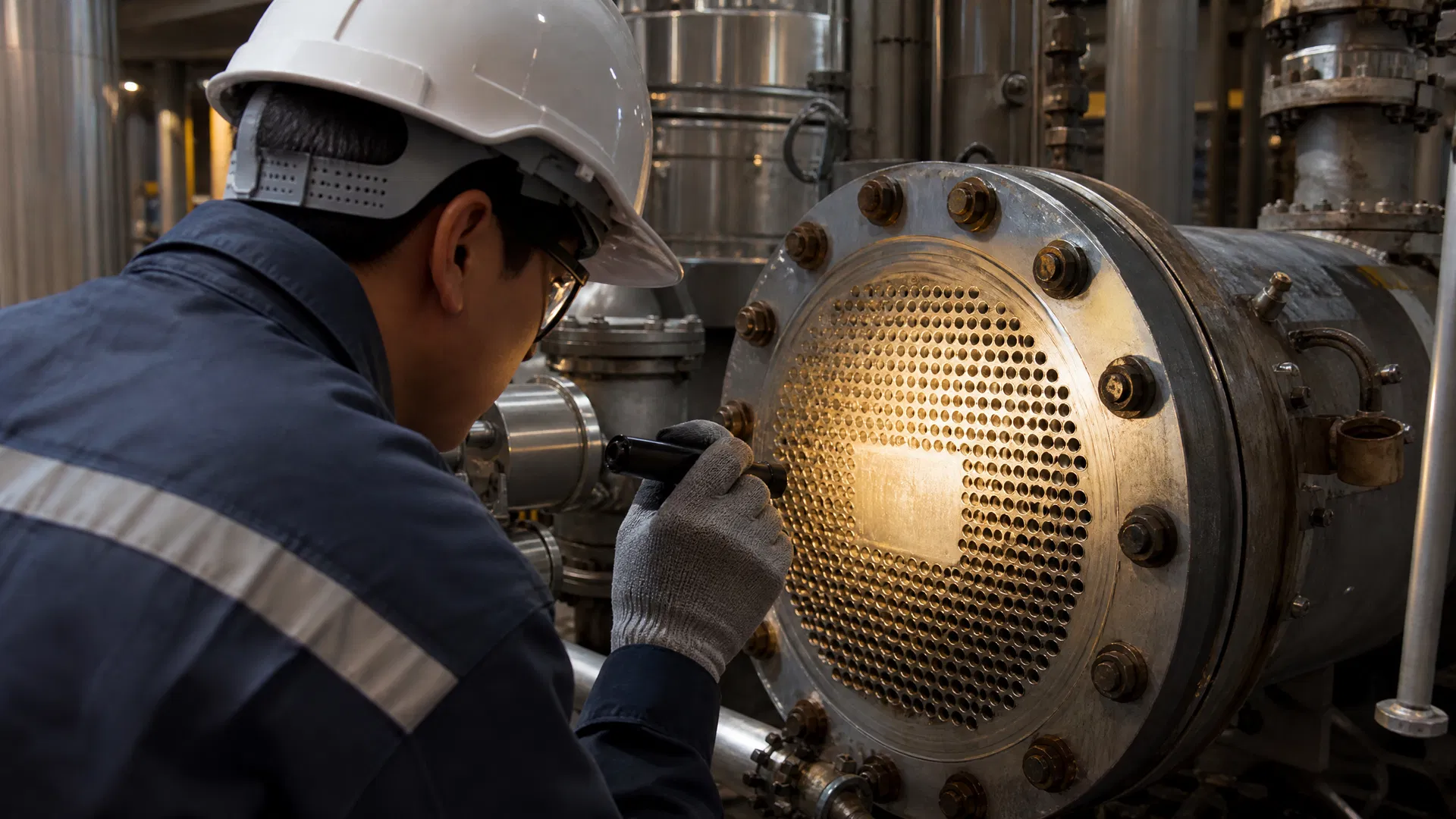
If you have decided that resale is the superior option for your surplus or decommissioned heat exchangers, the process is straightforward, provided you work with a reputable buyer. The first step is to gather accurate information about the equipment. Your maintenance or engineering team should take clear, well-lit photographs of the unit from multiple angles, capturing the overall condition of the shell, the nozzles, and the flanges.
Most importantly, you must locate and photograph the manufacturer's nameplate. The nameplate contains the critical data that determines the unit's value on the secondary market. This includes the ASME U-stamp, the National Board number, the materials of construction for both the shell and the tubes, the design pressures, the temperature ratings, and the total heat transfer surface area. With this information, a specialized buyer can quickly assess the unit and provide a firm cash offer.
When engaging with a buyer, it is crucial to prioritize the financial security of your facility. As a strict rule of thumb and a vital trust and safety tip: always advise your finance and procurement teams to get paid completely upfront before the equipment ever leaves your site. A reputable, professional buyer will operate on a pay-as-you-go basis, providing 100% of the funds before shipping. Furthermore, the best buyers will handle all the complex logistics, including the heavy rigging, crane operations, and nationwide freight, ensuring a seamless and risk-free transaction for your plant.
Make the Smart Choice for Your Facility's Surplus
Deciding how to handle decommissioned industrial equipment is a significant responsibility. While traditional recycling and scrapping are certainly better than landfilling, they represent a missed opportunity. By understanding the waste hierarchy and the robust secondary market for process equipment, plant managers can make a choice that benefits both the environment and the bottom line.
Selling your surplus heat exchangers keeps valuable, highly engineered equipment in service, supplies critical components to repair and remanufacturing shops, and yields a financial return that far exceeds standard scrap metal rates. It is the ultimate win-win scenario for modern industrial facilities looking to optimize their asset recovery strategies.
If you have surplus, used, or new equipment taking up valuable space at your facility, do not settle for scrap value. We buy heat exchangers in any condition, pay 100% upfront before shipping, and handle all the rigging and freight nationwide. Take a few photos of your equipment and its nameplate, and sell your heat exchanger to us today. Call 951-403-5738 to speak with our team and receive your free, no-obligation cash offer.