

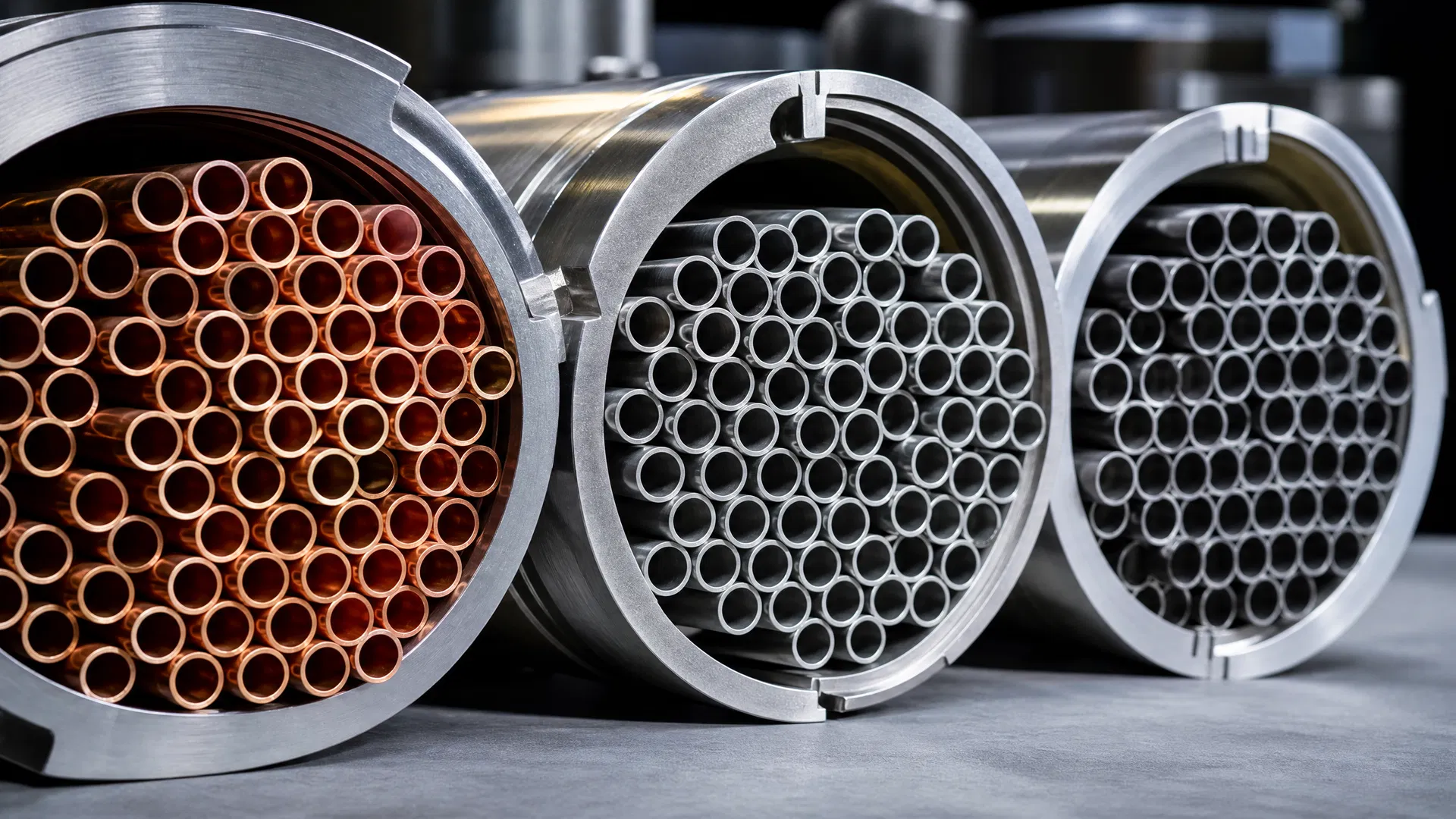
The material composition of your used heat exchanger is the single biggest factor determining its scrap or resale value, with prices ranging from more than scrap for basic carbon steel up to more than scrap for exotic metals like titanium. However, selling your unit intact to a specialized buyer often yields significantly more than scrap value—typically a premium over scrap for shell and tube models—because the equipment can be refurbished and repurposed.
Surplus Heat Exchangers buys used and surplus heat exchangers nationwide — 100% upfront, with free rigging and freight, in any condition. Send a photo of the nameplate to 951-403-5738 for a same-day cash offer.
How do different metals impact the scrap value of a heat exchanger?
Industrial heat exchangers are engineered to withstand extreme temperatures, high pressures, and highly corrosive chemical environments. To meet these rigorous demands, manufacturers utilize a wide variety of metals and specialized alloys. When a facility decides to decommission a unit, the specific metals used in its construction directly dictate its baseline scrap value on the commodities market. A massive unit constructed entirely of carbon steel might weigh tens of thousands of pounds but only yield a modest return at the local scrap yard. Conversely, a relatively compact heat exchanger built with high-grade titanium, Hastelloy, or Inconel can be worth thousands of dollars in raw material alone.
The complexity of heat exchanger design also plays a crucial role in scrap valuation. In many shell and tube heat exchangers, the outer shell is fabricated from inexpensive carbon steel, while the internal tube bundle—which actually handles the corrosive or high-temperature process fluid—is made from premium materials like stainless steel, copper, or cupro-nickel. If you take an assembled, mixed-metal unit to a scrap yard, the buyer will typically grade it as"dirty" or"irony" material. This means they will pay a drastically reduced rate, often close to the lowest common denominator, because of the intense labor required to cut the unit open and separate the valuable non-ferrous tubes from the ferrous steel shell.
What are the current per-pound scrap prices for common heat exchanger materials?
Scrap metal prices are inherently volatile, fluctuating daily based on global commodity markets, supply chain demands, and local recycling capacities. However, understanding the general price tiers for different alloys is essential for estimating the baseline value of your surplus equipment. The figures below represent typical clean scrap values. To achieve these prices at a standard scrap yard, the metals must be completely separated and free of heavy contamination, scale, or attachments of differing metals.
It is important to reiterate that these are"clean" prices. If your copper tube bundle is still firmly lodged inside a carbon steel shell, the scrap yard will not pay you more than scrap for the whole unit. They will either reject the load, require you to dismantle it, or pay a fraction of the value to cover their own labor costs for processing the mixed metals.
How can you identify the alloys and metals in your surplus heat exchanger?
Before you can accurately assess the value of your decommissioned equipment, you must identify its materials of construction. Fortunately, industrial heat exchangers are heavily documented and regulated, making identification relatively straightforward if you know where to look.
- Check the Manufacturer's Nameplate: The easiest and most accurate method is to locate the metal data tag riveted to the unit. Top-tier manufacturers like Alfa Laval, GEA, Tranter, Standard Xchange, ITT, SPX/APV, Kelvion, and SWEP stamp the exact materials directly on the plate. Look for abbreviations such as"CS" for carbon steel,"SS304" or"SS316" for stainless steel variants,"CuNi" for cupro-nickel, and"Ti" for titanium.
- Perform a Magnet Test: A simple magnet can quickly separate ferrous from non-ferrous metals. Standard carbon steel is highly magnetic. In contrast, 304 and 316 stainless steels are generally non-magnetic, though they may exhibit slight magnetism if they have been heavily cold-worked or machined. Copper, brass, cupro-nickel, and titanium will not react to a magnet at all.
- Observe Color and Patina: Visual inspection can provide strong clues. Copper develops a distinct green patina or dark brown oxidation over time. Brass retains a yellowish hue, while cupro-nickel appears silvery but is noticeably heavier than standard steel. Titanium is exceptionally light for its structural strength and maintains a dull, grayish-silver finish.
- Utilize XRF Analyzers: If the nameplate is missing or illegible, professional equipment buyers and scrap yards use X-ray fluorescence (XRF) guns. These handheld devices instantly analyze the metal's composition and provide an exact percentage breakdown of the alloy, ensuring you know exactly what materials you possess.
Why is the resale value of an intact heat exchanger usually higher than its scrap metal price?
While knowing the scrap value of your metals is a helpful baseline, treating a functional or repairable heat exchanger merely as scrap metal is often a massive financial mistake. The true value of industrial equipment lies in its utility, engineering, and the immediate availability it offers to the secondary market.
When a facility experiences a catastrophic equipment failure, they cannot afford to wait six to twelve months for a manufacturer to fabricate a new unit. They turn to the surplus market for immediate replacements. Because of this demand, intact shell and tube heat exchangers generally resell for roughly a premium over scrap of heat transfer area. This valuation depends heavily on the specific materials, pressure ratings, and the overall condition of the tubes and shell.
For example, a 1,500 square foot stainless steel heat exchanger might only contain a higher amount worth of raw scrap metal by weight. However, its value as a reusable piece of process equipment is exponentially higher. By selling to a specialized surplus buyer rather than a local scrap yard, you are tapping into the lucrative equipment resale market, allowing you to recover a much larger portion of your initial capital investment.
How do TEMA designations and brand names affect the overall value of your equipment?
Beyond raw materials, the engineering standards and the manufacturer's reputation significantly influence the desirability and value of a used heat exchanger. The Tubular Exchanger Manufacturers Association (TEMA) sets rigorous standards for the design and fabrication of shell and tube units. A heat exchanger built to TEMA Class R (for severe requirements in petroleum and related processing) features thicker tube sheets, heavier flanges, and more robust construction than a TEMA Class C (general commercial) unit. This over-engineering not only increases the raw scrap weight but makes the unit highly desirable for resale in demanding industrial applications.
Brand reputation is equally critical. Equipment manufactured by established industry leaders holds its value exceptionally well because plant engineers trust the build quality, and replacement parts like gaskets and plates are readily available. Plate and frame heat exchangers from renowned brands such as Alfa Laval, GEA, Tranter, and SPX/APV are always in high demand. Similarly, shell and tube units from Standard Xchange, ITT, and Kelvion, or brazed plate units from SWEP, command premium prices on the surplus market. Buyers know these brands represent reliability, which translates directly into higher cash offers for your surplus inventory.
What are the hidden costs of scrapping a heat exchanger yourself?
Many plant managers assume that hauling their old equipment to the local scrap yard is the quickest way to clear space and generate cash. However, the DIY scrapping process is fraught with hidden costs, logistical nightmares, and safety hazards that quickly erode any potential profit.
First, there is the issue of rigging and lifting. Industrial heat exchangers are incredibly heavy, awkwardly shaped, and difficult to maneuver. Safely moving a 20,000-pound unit requires specialized cranes, heavy-duty forklifts, and highly trained riggers. Once loaded, you must pay for flatbed transportation to the scrap yard, which can cost thousands of dollars depending on the distance and the size of the load.
Furthermore, to achieve the premium clean scrap prices for your stainless steel, copper, or titanium, you must dismantle the unit. Pulling a fouled tube bundle out of a carbon steel shell can take days of intense manual labor, requiring specialized hydraulic bundle pullers and cutting torches. Finally, there are environmental considerations. Scrap yards will routinely reject units that have not been thoroughly drained, flushed, and cleaned of residual chemicals or oils, leaving you stuck with a massive piece of equipment and a hefty disposal bill.
How can you sell your used heat exchanger for maximum cash without the hassle of scrapping?
Instead of dealing with the volatile scrap market, the grueling labor of dismantling equipment, and the high costs of freight and rigging, there is a vastly superior alternative. You can sell your equipment directly to Surplus Heat Exchangers. We are a nationwide buyer specializing exclusively in used, surplus, and obsolete heat transfer equipment, and we make the selling process completely effortless for you.
Whether you have a massive titanium shell and tube unit from a petrochemical plant, a fleet of stainless steel Alfa Laval plate and frame exchangers from a brewery, or a surplus SWEP brazed plate unit, we want to buy it. We purchase equipment in any condition—whether it is brand new in the crate, gently used, or completely fouled and ready for the boneyard.
When you sell to us, you eliminate all the traditional headaches. We pay 100% upfront before the equipment ever leaves your facility, ensuring you have cash in hand immediately. Furthermore, we handle and pay for all the freight, rigging, and logistics. You don't have to lift a finger or spend a dime on transportation. To get a fast, no-obligation cash offer, simply take a few clear photos of your unit along with a close-up of the manufacturer's nameplate. Email your photos to our secure online quote form or call us directly at 951-403-5738. Stop worrying about fluctuating scrap prices and let Surplus Heat Exchangers pay you top dollar for your industrial equipment today.
| Material | Typical scrap range | Why it matters for resale |
|---|---|---|
| Carbon steel | $0.05–$0.12 / lb | the most common shell/tube material; lowest scrap value but highest resale demand for standard process duty |
| 304 stainless steel | $0.40–$0.70 / lb | corrosion resistant, widely reused in food, dairy and chemical service |
| 316 / 316L stainless steel | $0.55–$0.90 / lb | molybdenum-bearing grade for chloride and marine service; strong resale value |
| Copper | $2.50–$3.50 / lb | found in tube bundles and HVAC coils; high recovery value |
| Admiralty brass | $1.40–$2.20 / lb | classic condenser tube alloy; valued for both scrap and reuse |
| Cupro-nickel (90/10 & 70/30) | $2.00–$3.20 / lb | seawater and brackish-water service; premium resale and scrap |
| Titanium | $3.50–$6.00 / lb | used in aggressive chloride, seawater and chemical duty; the highest-value exchanger material |
Scrap ranges are indicative only and move with commodity markets; reusable units almost always beat scrap. Call 951-403-5738 for a current cash offer.
Key takeaway: across every common alloy, a working heat exchanger is worth far more resold than scrapped — often several times its melt value — so get a resale offer before you weigh it in.