
To sell a used heat exchanger, gather essential documentation like the nameplate data, U-1 forms, and clear photographs to accurately represent the unit's specifications. Next, bypass traditional scrap yards and seek out a direct cash buyer who resells to operating plants and repair shops, as they will value the equipment based on its industrial utility rather than mere material weight. Finally, secure a formal offer, insist on receiving full payment upfront before any shipping occurs, and coordinate the rigging and freight to complete the transaction safely.
Surplus Heat Exchangers buys used and surplus heat exchangers nationwide — 100% upfront, with free rigging and freight, in any condition. Send a photo of the nameplate to 951-403-5738 for a same-day cash offer.
Should You Sell Your Heat Exchanger or Keep It as a Spare?
When a plant undergoes a turnaround, upgrade, or decommissioning, facility managers are often left with surplus heat exchangers. The immediate question is whether to retain the unit as a backup or liquidate it to recover capital. Keeping a spare can be a prudent risk management strategy if the exchanger is critical to ongoing operations and identical to active units. However, storing heavy industrial equipment incurs hidden costs: proper preservation, climate-controlled storage to prevent corrosion, and valuable floor space. Over time, unused equipment can degrade, and internal components may suffer from atmospheric exposure if not nitrogen-purged or properly sealed.
Selling the unit is often the most financially sound decision, especially if the equipment is no longer aligned with your current process requirements. Liquidating surplus assets immediately injects cash back into your maintenance or procurement budget. By choosing to sell your heat exchanger, you transform a dormant liability into active capital while clearing essential space in your laydown yard or warehouse.
What Information Do You Need to Gather Before Selling?
The key to securing the best possible offer lies in the details. Buyers cannot accurately value what they cannot verify. Before reaching out to potential buyers, compile a comprehensive dossier on the equipment. Start by locating and photographing the manufacturer's nameplate, which is the most critical piece of identification. It details the manufacturer, year built, serial number, design pressures, temperatures, and materials of construction.
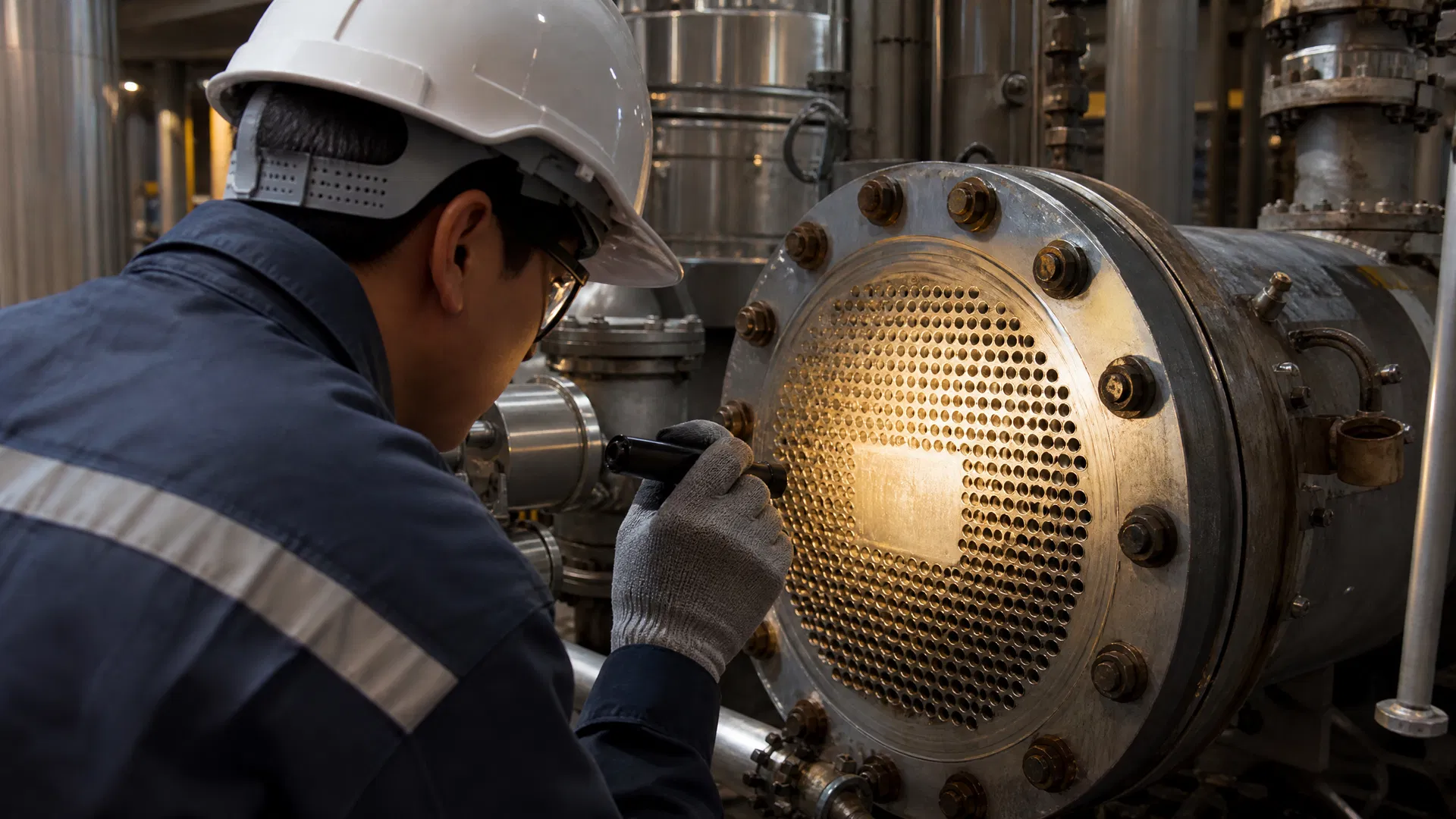
In addition to the nameplate, gather any available documentation. The ASME U-1 Data Report is highly sought after, as it provides the original design specifications and certifies the vessel's compliance with boiler and pressure vessel codes. General arrangement drawings, inspection reports, and maintenance logs also add significant value by proving the unit's history and structural integrity. Finally, take clear, high-resolution photographs of the entire unit, including close-ups of the shell, nozzles, flanges, and the tube bundle if it is exposed. If the unit has been recently cleaned, hydro-tested, or inspected, include those records as well.
How Do Buyers Value a Used Heat Exchanger?
Understanding how a buyer assesses your equipment can help you present it in the best possible light. Unlike scrap yards that only care about gross weight and base metal composition, specialized industrial buyers evaluate heat exchangers based on their potential for reuse and remanufacturing. Several critical factors influence the final valuation.
- Type: Shell and tube heat exchangers, plate and frame units, and air-cooled exchangers all have different secondary market demands.
- Materials: Units constructed from high-grade alloys such as stainless steel, titanium, Hastelloy, or Inconel command a premium due to their resistance to corrosive environments and high replacement costs.
- Surface area: The total heat transfer surface area, determined by the number, length, and diameter of the tubes, dictates capacity and directly impacts resale value.
- Condition: A well-maintained, properly flushed, and correctly stored unit will always be valued higher than one left exposed to the elements, though even damaged units hold significant value to the right buyer.
- Documentation: A complete package including the U-1 form and drawings elevates the unit from a questionable commodity to a certified, ready-to-deploy asset.
Scrap Yard vs. Broker vs. Direct Cash Buyer: Which is Best?
Once you have prepared your equipment for sale, you must decide which channel to use. The three most common avenues are local scrap yards, equipment brokers, and direct cash buyers, and they yield vastly different financial returns.
Local scrap yards are often the fastest way to remove equipment from your site, but they are invariably the least profitable. A scrap yard views your highly engineered heat exchanger merely as a pile of mixed metals, offering a valuation based strictly on commodity market prices for steel, copper, or alloys. This completely ignores the engineering, manufacturing, and functional value of the unit.
Equipment brokers list your heat exchanger on their network and take a commission when it sells. While they may eventually find a buyer willing to pay a premium, the consignment process can take months or even years. During this time, the equipment remains on your property, taking up space and potentially degrading. Brokers do not take ownership of the asset, meaning you carry the risk and carrying costs until a final end-user is found.
The optimal solution for most industrial facilities is a direct cash buyer. At Surplus Heat Exchangers, we are direct buyers who resell to operating plants and to repair, remanufacturing, and modification shops that need recertified alloy tubes, tube sheets, baffles, and ASME-coded shells. Because we understand the intrinsic engineering value of these components and have an established network of end-users, we can offer valuations that typically pay significantly more than scrap, with none of the waiting period of a broker.
How to Get an Offer and Agree on Terms
Initiating the sales process with a direct buyer is straightforward. Submit your photographs, nameplate data, and documentation for review. A reputable buyer will provide a free, no-obligation valuation within a few days. For highly complex or exceptionally large units, the buyer may request a site visit to inspect the equipment and assess removal logistics.
When you receive the offer, review the terms carefully. The valuation should reflect the unit's potential for reuse, not just its material weight. If you have multiple units or a complete plant teardown, a direct buyer can often package the entire lot into a single, comprehensive offer, simplifying your accounting and ensuring all surplus equipment is removed simultaneously. The purchase agreement should clearly outline the timeline for removal, the scope of work for rigging, and the transfer of liability.
Why You Must Insist on Payment Before Shipping
One of the most critical rules in selling heavy industrial equipment is to protect your financial interests throughout the transaction. You must always insist on receiving full payment before the equipment leaves your facility. Never agree to terms that require you to ship the heat exchanger and wait for payment upon delivery or inspection at the buyer's yard.
A reputable direct cash buyer will always operate on a pay-before-you-ship basis. Once the purchase agreement is signed, the buyer should wire the funds directly into your company's account. Only after the funds have cleared and are securely in your possession should you authorize the release of the equipment. This practice eliminates the risk of non-payment, disputes over condition upon arrival, or the logistical nightmare of trying to recover a massive piece of equipment already in transit. At Surplus Heat Exchangers, we pay 100% upfront, in cash, before any shipping or rigging begins.
Coordinating Removal, Rigging, and Freight
The final step in selling a used heat exchanger is the physical removal and transportation of the unit. Heat exchangers are massive, unwieldy, and often located in difficult-to-access areas of a plant. Improper rigging can result in severe damage to the equipment or, worse, cause catastrophic accidents and damage to your facility.
When you sell to a specialized direct buyer, they typically handle all aspects of the logistics, including hiring certified industrial riggers, securing the necessary cranes, and arranging for heavy-haul freight. The buyer's logistics team works closely with your plant's safety and security personnel to ensure the extraction complies with all site-specific safety protocols and permits. By offloading this logistical burden to the buyer, your maintenance and operations teams can remain focused on their core responsibilities. The buyer coordinates the flatbed or step-deck trailers, manages oversized load permits, and ensures the equipment is safely secured for nationwide transport.
If you have surplus equipment taking up space at your facility, it is time to take action. We buy used, new, and surplus heat exchangers in any condition, paying 100% upfront before shipping, and we handle all rigging and freight nationwide. To sell your heat exchanger and receive a free cash offer, send us your photos and nameplate data, or call us today at 951-403-5738.