

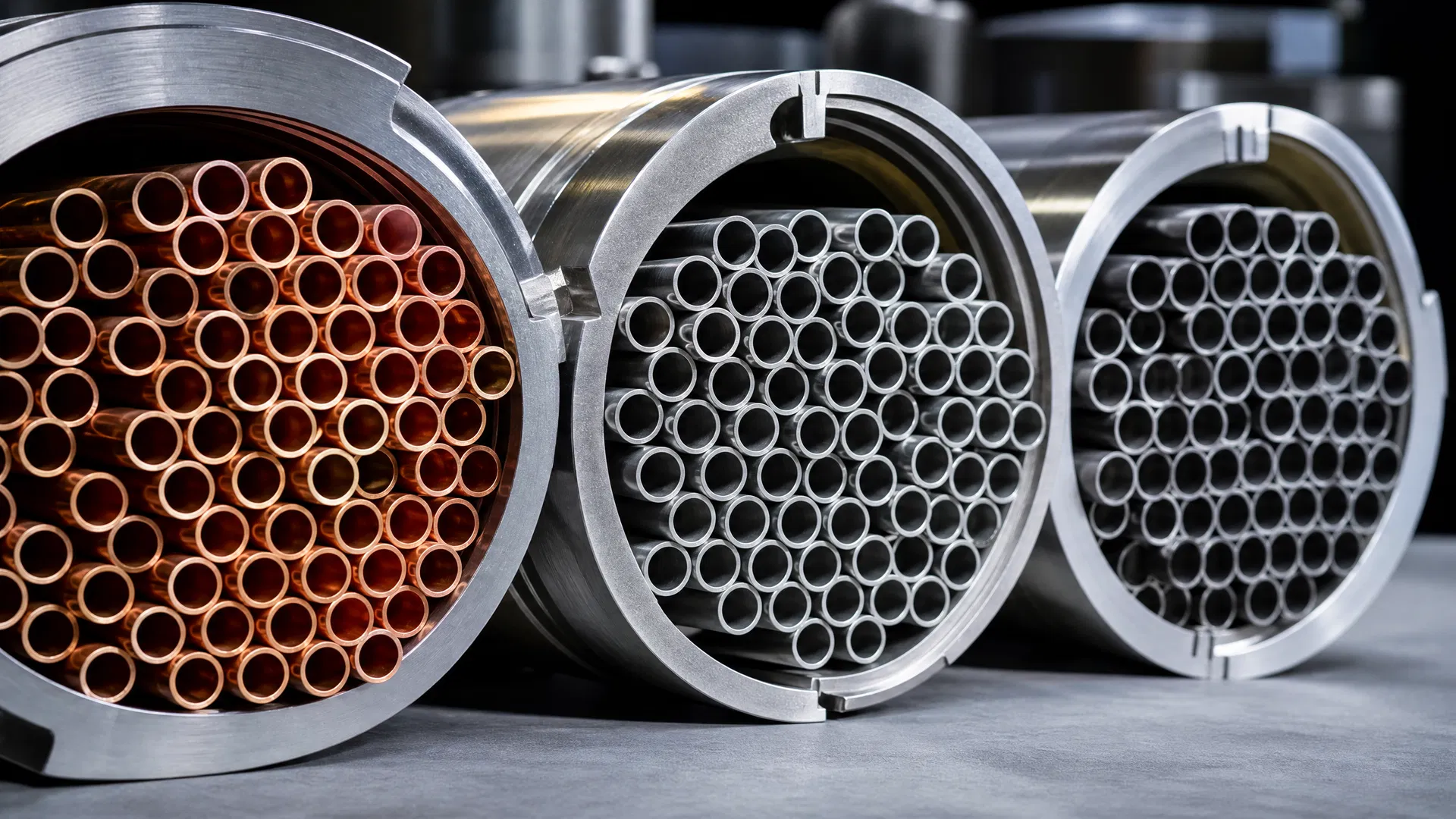
Cupro-nickel heat exchangers are highly valued for their exceptional resistance to seawater corrosion, making them essential in marine, desalination, and power generation applications. When selling a used or surplus cupro-nickel unit, you can expect scrap values ranging from only a baseline commodity rate, while functional shell and tube exchangers can yield resale values a significant premium over scrap value. To maximize your return, you can sell directly to specialized buyers who offer 100% upfront payment and handle all freight and rigging logistics.
Surplus Heat Exchangers buys used and surplus heat exchangers nationwide — 100% upfront, with free rigging and freight, in any condition. Send a photo of the nameplate to 951-403-5738 for a same-day cash offer.
What makes cupro-nickel alloys ideal for heat exchangers?
Cupro-nickel, a robust alloy composed primarily of copper and nickel, is widely recognized as one of the most reliable materials for industrial heat transfer equipment. The addition of nickel to copper significantly enhances the metal's strength and corrosion resistance, particularly in harsh, saline environments. Furthermore, trace amounts of iron and manganese are often added to the alloy to improve its resistance to impingement attack and erosion-corrosion caused by high-velocity fluid flow.
One of the most remarkable properties of cupro-nickel is its inherent biofouling resistance. In environments where seawater or brackish water is used as a cooling medium, marine organisms such as barnacles and algae can quickly accumulate on heat transfer surfaces, reducing efficiency and causing localized corrosion. Cupro-nickel naturally deters the attachment of these organisms, ensuring that the heat exchanger maintains optimal thermal performance over an extended operational lifespan.
Where are cupro-nickel heat exchangers most commonly used?
Because of their exceptional durability in corrosive environments, cupro-nickel heat exchangers are predominantly found in industries that rely heavily on seawater or brackish water for cooling processes. The marine industry is perhaps the largest consumer of these units, utilizing them extensively in shipbuilding for engine cooling systems, lube oil coolers, and onboard HVAC systems. Whether on commercial cargo vessels, naval ships, or offshore oil and gas platforms, cupro-nickel provides the reliability required for critical maritime operations.
Beyond the marine sector, cupro-nickel heat exchangers play a vital role in coastal power generation facilities. Nuclear and fossil-fuel power plants located near the ocean frequently use seawater in their main steam condensers and auxiliary cooling systems. The ability of cupro-nickel tubes to withstand the continuous flow of corrosive seawater without degrading ensures the uninterrupted operation of these massive power generation facilities.
How much is a used cupro-nickel heat exchanger worth?
Determining the value of a used or surplus cupro-nickel heat exchanger depends on several factors, including its condition, size, and current market demand. When evaluating these units, buyers typically look at two primary valuation methods: resale value for functional equipment and scrap value for units that have reached the end of their operational life.
For heat exchangers that are still in good working condition or can be refurbished, the resale value is generally calculated based on the heat transfer surface area. In the current industrial market, functional shell and tube heat exchangers can resell for a significant premium over scrap value. Units constructed with premium materials like cupro-nickel often command prices at the higher end of this spectrum, provided the tubes and tube sheets are free from severe pitting or mechanical damage.
If the heat exchanger is damaged beyond repair or obsolete, its value is derived from the raw materials it contains. Cupro-nickel is a highly sought-after scrap metal due to its valuable copper and nickel content. As of recent market trends, cupro-nickel scrap values range from only a baseline commodity rate. This is significantly higher than carbon steel (only a baseline commodity rate) and standard stainless steels like 304 (only a baseline commodity rate) or 316 (only a baseline commodity rate), though it remains below exotic metals like titanium (only a baseline commodity rate).
What are the differences between 90/10 and 70/30 cupro-nickel alloys?
When dealing with cupro-nickel heat exchangers, you will most frequently encounter two specific alloy grades: 90/10 (UNS C70600) and 70/30 (UNS C71500). Understanding the distinction between these two alloys is crucial for evaluating the equipment's capabilities and its ultimate market value.
The 90/10 cupro-nickel alloy consists of 90% copper and 10% nickel, with small additions of iron and manganese. This grade is highly regarded for its excellent resistance to general corrosion and stress corrosion cracking in marine environments. It offers a superior balance of cost-effectiveness and performance, making it the standard choice for most seawater cooling applications, including shipboard condensers and coastal power plant heat exchangers.
On the other hand, the 70/30 cupro-nickel alloy contains 70% copper and 30% nickel. The higher nickel content provides this alloy with significantly greater mechanical strength and an even higher resistance to impingement attack and erosion-corrosion. The 70/30 grade is typically reserved for the most severe applications where fluid velocities are exceptionally high, or where the cooling water contains a high concentration of suspended abrasive solids.
Which major brands manufacture cupro-nickel heat exchangers?
The industrial heat transfer market is dominated by several highly respected manufacturers known for producing top-tier cupro-nickel equipment. When you are looking to sell a surplus unit, having a nameplate from a recognized brand can significantly enhance its marketability and value. Buyers are often willing to pay a premium for equipment from manufacturers with a proven track record of engineering excellence and reliability.
Some of the most prominent brands in the industry include Alfa Laval, GEA, and Kelvion, all of which are renowned for their innovative designs and high-quality construction. Tranter and SWEP are also major players, particularly known for their advanced plate heat exchanger technologies, though cupro-nickel is more commonly found in shell and tube configurations. For traditional shell and tube designs, manufacturers like Standard Xchange, ITT, and SPX/APV have long histories of supplying robust cupro-nickel units to the marine and power generation sectors.
How does the TEMA designation impact the value of your equipment?
The Tubular Exchanger Manufacturers Association (TEMA) establishes the industry standards for the design, fabrication, and materials of shell and tube heat exchangers. When evaluating a surplus cupro-nickel heat exchanger, the TEMA designation listed on the unit's nameplate or documentation provides critical information about its construction and intended application, which directly influences its resale value.
TEMA standards are divided into three primary classes, each dictating different construction requirements:
- TEMA Class R: This class specifies the most rigorous design and fabrication requirements, intended for the severe conditions typically found in petroleum refineries and large-scale chemical processing plants. Cupro-nickel heat exchangers built to Class R standards are heavily constructed, highly durable, and command the highest resale values in the surplus market.
- TEMA Class C: Designed for generally moderate applications in commercial and general process industries, Class C units are more economical to build. While they are highly functional, they may not fetch the premium prices associated with Class R equipment.
- TEMA Class B: This class is specifically tailored for chemical process service. Class B units strike a balance between the heavy-duty requirements of Class R and the general-purpose design of Class C.
How can you compare the value of cupro-nickel to other heat exchanger materials?
To fully appreciate the value of a surplus cupro-nickel heat exchanger, it is helpful to compare it against units constructed from other common industrial materials. The choice of material dictates not only the initial capital cost of the equipment but also its long-term durability and its residual value on the secondary market.
Below is a comparison of common heat exchanger materials and their approximate scrap values, which serve as a baseline for evaluating surplus equipment:
How can you sell your surplus cupro-nickel heat exchanger for cash upfront?
If you have a used, surplus, or decommissioned cupro-nickel heat exchanger taking up valuable space in your facility, turning that idle equipment into working capital is easier than you might think. Rather than dealing with the complexities of finding an end-user or settling for local scrap yard prices, you can sell directly to Surplus Heat Exchangers.
At Surplus Heat Exchangers, we specialize in purchasing industrial heat transfer equipment nationwide. We buy heat exchangers in any condition—whether they are brand new, gently used, or completely obsolete. Our process is designed to be entirely frictionless for the seller. We pay 100% upfront for your equipment, ensuring you have cash in hand before the unit ever leaves your site. Furthermore, we handle all the heavy lifting; our team coordinates and covers the costs of all rigging, loading, and freight logistics, so you don't have to worry about transportation.
To get started, simply gather some basic information about your equipment. Take clear photos of the heat exchanger, paying special attention to the manufacturer's nameplate, which contains vital details like the brand, materials, and TEMA designation. Once you have your photos and information ready, you can reach out to our purchasing team directly. Call us at 951-403-5738 or email your details to our secure online quote form. We pride ourselves on providing fast, competitive offers, allowing you to quickly monetize your surplus cupro-nickel heat exchangers with zero hassle.
| Material | Typical scrap range | Why it matters for resale |
|---|---|---|
| Carbon steel | $0.05–$0.12 / lb | the most common shell/tube material; lowest scrap value but highest resale demand for standard process duty |
| 304 stainless steel | $0.40–$0.70 / lb | corrosion resistant, widely reused in food, dairy and chemical service |
| 316 / 316L stainless steel | $0.55–$0.90 / lb | molybdenum-bearing grade for chloride and marine service; strong resale value |
| Copper | $2.50–$3.50 / lb | found in tube bundles and HVAC coils; high recovery value |
| Admiralty brass | $1.40–$2.20 / lb | classic condenser tube alloy; valued for both scrap and reuse |
| Cupro-nickel (90/10 & 70/30) | $2.00–$3.20 / lb | seawater and brackish-water service; premium resale and scrap |
| Titanium | $3.50–$6.00 / lb | used in aggressive chloride, seawater and chemical duty; the highest-value exchanger material |
Scrap ranges are indicative only and move with commodity markets; reusable units almost always beat scrap. Call 951-403-5738 for a current cash offer.
Key takeaway: across every common alloy, a working heat exchanger is worth far more resold than scrapped — often several times its melt value — so get a resale offer before you weigh it in.