

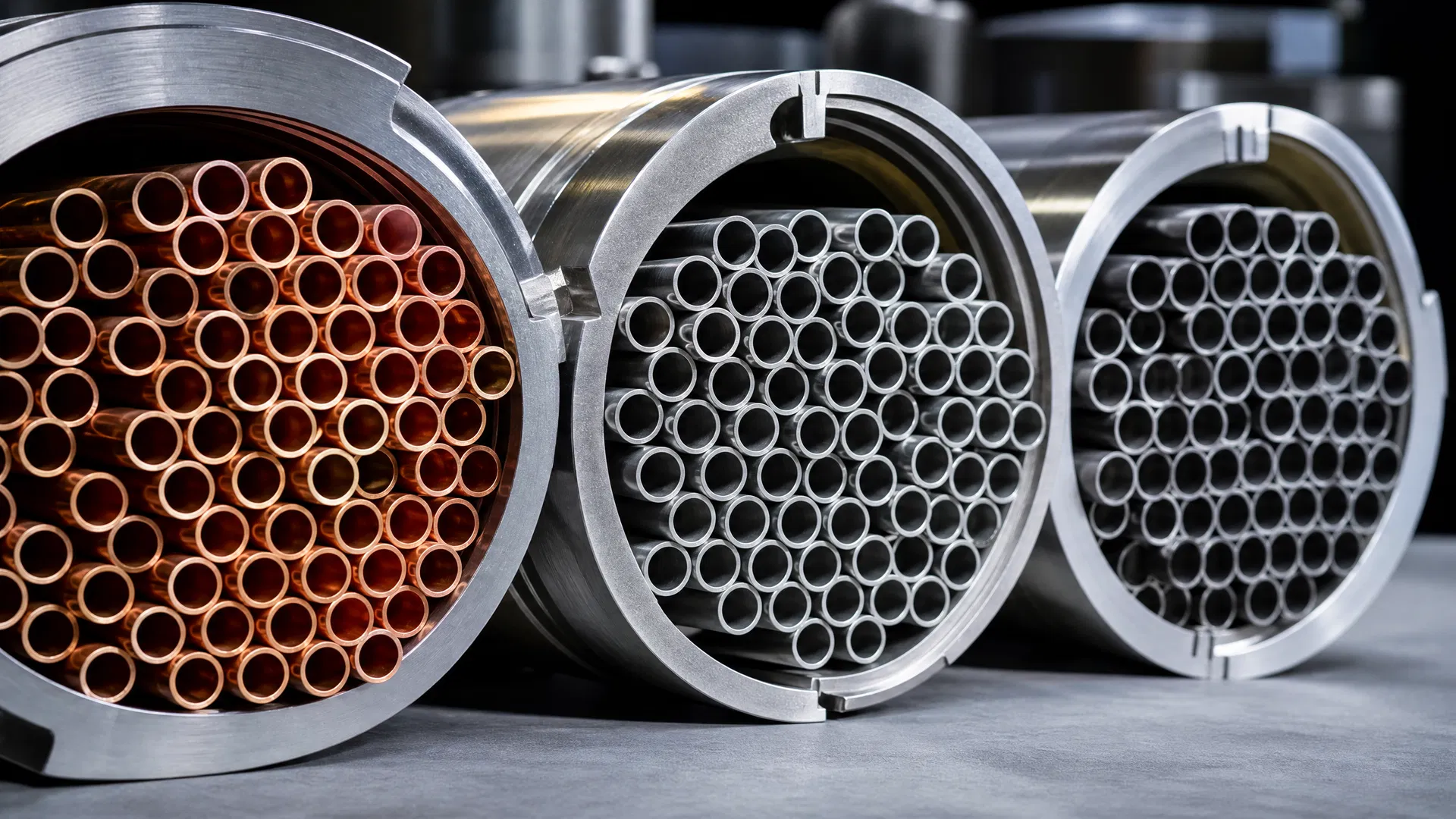
The value difference between carbon steel and stainless steel heat exchangers is substantial, with stainless steel units commanding significantly higher resale and scrap prices due to their corrosion resistance and broader industry applications. While carbon steel scrap yields only only a baseline commodity rate, 304 and 316 stainless steel can fetch only a baseline commodity rate, and functional stainless units often resell at the higher end of the a significant premium over scrap value range.
Surplus Heat Exchangers buys used and surplus heat exchangers nationwide — 100% upfront, with free rigging and freight, in any condition. Send a photo of the nameplate to 951-403-5738 for a same-day cash offer.
What is the resale value difference between carbon steel and stainless steel heat exchangers?
When evaluating the secondary market for industrial surplus, the material of construction is one of the most critical factors determining a heat exchanger's worth. The resale value difference between carbon steel and stainless steel heat exchangers is driven by initial capital costs, longevity, and the breadth of potential applications for the used equipment. Because stainless steel alloys are significantly more expensive to procure and manufacture, heat exchangers built from these materials retain a much higher percentage of their original value.
In the used equipment market, shell and tube heat exchangers generally resell for roughly a significant premium over scrap based on its heat-transfer surface area, depending heavily on the materials, design pressure, and overall condition. Carbon steel units, while highly functional and widely used, typically fall at the lower end of this pricing spectrum. Their abundance in the market and susceptibility to corrosion over time mean that buyers are less willing to pay a premium. Conversely, stainless steel units—particularly those made from 316L or higher-grade alloys—frequently push toward the upper end of that a meaningful amount threshold. Buyers are eager to acquire used stainless steel heat exchangers because buying them new requires long lead times and massive capital expenditure.
How do scrap prices compare for carbon steel versus 304 and 316 stainless steel?
Not every used heat exchanger is suitable for resale. Units that have suffered severe tube sheet damage, extensive pitting, or catastrophic pressure failures are often relegated to the scrap metal market. Even in this end-of-life scenario, the value differences between carbon steel and stainless steel are stark and immediately apparent.
Scrap yards and metal recyclers price materials based on global commodity markets. Carbon steel is an abundant, low-cost commodity, whereas stainless steel contains valuable alloying elements like chromium and nickel (and molybdenum in the case of 316 stainless). If you are dismantling a plant or clearing out a boneyard, understanding these baseline scrap values is essential to ensure you are not leaving money on the table.
As the table illustrates, a 10,000-pound carbon steel heat exchanger might only yielda strong resale figure in scrap value. In contrast, a 10,000-pound 316 stainless steel unit could yielda strong resale figure just in raw material. However, before you scrap any intact unit, it is vital to have it evaluated for resale, as the functional value almost always exceeds the scrap value.
Why does the material of construction impact the secondary market demand?
The secondary market demand for used heat exchangers is dictated by what the next end-user can safely and legally do with the equipment. Material of construction is the ultimate limiting factor in this regard. Carbon steel is highly susceptible to oxidation (rust) and chemical attack. While it is incredibly strong and handles high pressures well, it cannot be used in environments where product purity is paramount or where the process fluids are highly acidic or corrosive.
Stainless steel, on the other hand, forms a passive layer of chromium oxide that prevents further surface corrosion. This makes it the default choice for sanitary applications and aggressive chemical processing. When a used equipment dealer or a plant engineer is looking for a replacement heat exchanger, a stainless steel unit offers versatility. A 316 stainless steel shell and tube exchanger can be repurposed for cooling water, heating oils, condensing solvents, or processing food-grade liquids. A carbon steel unit is strictly limited to non-corrosive utilities. This versatility directly translates to higher demand, faster turnover times, and ultimately, a higher cash offer when you decide to sell your surplus equipment.
Where are carbon steel and stainless steel heat exchangers typically used?
Understanding the original applications of these units helps clarify why their values diverge so sharply. The industries that rely on these materials dictate the size, design, and specifications of the heat exchangers you might have in your facility.
Carbon Steel Applications:
- Petroleum Refining: Used extensively for crude oil heating, lube oil cooling, and heavy hydrocarbon condensing where internal corrosion is managed via chemical inhibitors.
- Power Generation: Commonly found in boiler blowdown systems, closed-loop cooling water circuits, and steam condensers.
- Heavy Manufacturing: Utilized in hydraulic fluid cooling, quench oil cooling, and general HVAC applications.
Stainless Steel Applications:
- Food and Beverage Processing: Mandatory for milk pasteurization, brewing, juice processing, and any application requiring Clean-In-Place (CIP) sanitization.
- Pharmaceuticals: Required for Water For Injection (WFI) systems, active pharmaceutical ingredient (API) manufacturing, and sterile processing.
- Chemical and Petrochemical: Essential for handling aggressive acids, bases, and corrosive solvents that would rapidly destroy carbon steel.
If you are decommissioning a food processing plant, your stainless steel plate and frame or shell and tube units are highly liquid assets. If you are tearing down an old boiler house, your carbon steel units still have value, but the buyer pool is restricted to heavy industrial utilities.
How do TEMA designations and brand names affect the value of your used equipment?
Beyond just the raw material, the engineering standards and the manufacturer's reputation play a massive role in determining the value of a used heat exchanger. The Tubular Exchanger Manufacturers Association (TEMA) sets the standard for shell and tube designs. A unit built to TEMA R (Refinery) standards features thicker components, more robust construction, and higher corrosion allowances than a unit built to TEMA C (Commercial) standards. A used TEMA R stainless steel heat exchanger is a premium asset that commands top dollar.
Brand recognition is equally important. Buyers in the secondary market want reliability, and they are willing to pay for names they trust. If your surplus inventory includes equipment from industry leaders like Alfa Laval, GEA, Tranter, Standard Xchange, ITT, SPX/APV, Kelvion, or SWEP, the value increases significantly. For example, a used Alfa Laval stainless steel plate heat exchanger or a Standard Xchange shell and tube unit will sell much faster than an unbranded or custom-fab unit from an unknown shop. When you sell your equipment, highlighting these brand names and TEMA designations ensures you receive the maximum possible offer.
What factors beyond material determine if your heat exchanger is worth more than scrap?
While material is the foundation of value, several other critical factors determine whether your carbon steel or stainless steel heat exchanger will be purchased for resale or relegated to the scrap heap. To get the best price, the unit must be viable for redeployment.
- The Manufacturer's Nameplate: This is arguably the most important component of a used heat exchanger. The nameplate contains the National Board number, the ASME U-stamp, design pressures, design temperatures, and materials of construction. Without a legible nameplate, a pressure vessel cannot be legally re-certified or installed in most industrial facilities, instantly reducing its value to scrap metal.
- Internal and External Condition: A carbon steel unit with severe external rust or internal scaling will require expensive refurbishment. A stainless steel unit with chloride pitting or stress corrosion cracking may be useless. Units that have been properly flushed, capped, and stored indoors retain the most value.
- Design Specifications: High-pressure units (e.g., 300 PSI and above) are more expensive to build and therefore more valuable on the used market. Similarly, units with removable tube bundles (like U-tube or floating head designs) are often preferred over fixed tube sheet designs because they are easier to clean and maintain.
- Market Supply and Demand: Standard sizes (e.g., 100 to 500 square feet of surface area) are highly liquid and easy to sell. Massive, custom-engineered units may take longer to find a buyer, though their absolute value remains high.
How can you sell your used carbon steel or stainless heat exchanger for maximum cash?
Whether you are liquidating a single carbon steel lube oil cooler or an entire plant's worth of stainless steel sanitary heat exchangers, the key to maximizing your return is working with a specialized buyer. Selling industrial equipment on your own can be a logistical nightmare, involving tire-kickers, complex freight arrangements, and delayed payments.
At Surplus Heat Exchangers, we make the process seamless and profitable for you. We buy used and surplus heat exchangers nationwide, regardless of whether they are carbon steel, 304 stainless, 316 stainless, or exotic alloys like titanium and cupro-nickel. We purchase equipment in any condition—from brand new surplus to heavily used units.
Most importantly, we pay 100% upfront before the equipment ever leaves your facility. You don't have to worry about shipping logistics; we handle all the rigging and freight. If you have surplus equipment taking up valuable space, turn it into working capital today. Call us at 951-403-5738 or email your photos and a clear picture of the manufacturer's nameplate to our secure online quote form for a fast, no-obligation cash offer.
| Material | Typical scrap range | Why it matters for resale |
|---|---|---|
| Carbon steel | $0.05–$0.12 / lb | the most common shell/tube material; lowest scrap value but highest resale demand for standard process duty |
| 304 stainless steel | $0.40–$0.70 / lb | corrosion resistant, widely reused in food, dairy and chemical service |
| 316 / 316L stainless steel | $0.55–$0.90 / lb | molybdenum-bearing grade for chloride and marine service; strong resale value |
| Copper | $2.50–$3.50 / lb | found in tube bundles and HVAC coils; high recovery value |
| Admiralty brass | $1.40–$2.20 / lb | classic condenser tube alloy; valued for both scrap and reuse |
| Cupro-nickel (90/10 & 70/30) | $2.00–$3.20 / lb | seawater and brackish-water service; premium resale and scrap |
| Titanium | $3.50–$6.00 / lb | used in aggressive chloride, seawater and chemical duty; the highest-value exchanger material |
Scrap ranges are indicative only and move with commodity markets; reusable units almost always beat scrap. Call 951-403-5738 for a current cash offer.
Key takeaway: across every common alloy, a working heat exchanger is worth far more resold than scrapped — often several times its melt value — so get a resale offer before you weigh it in.