

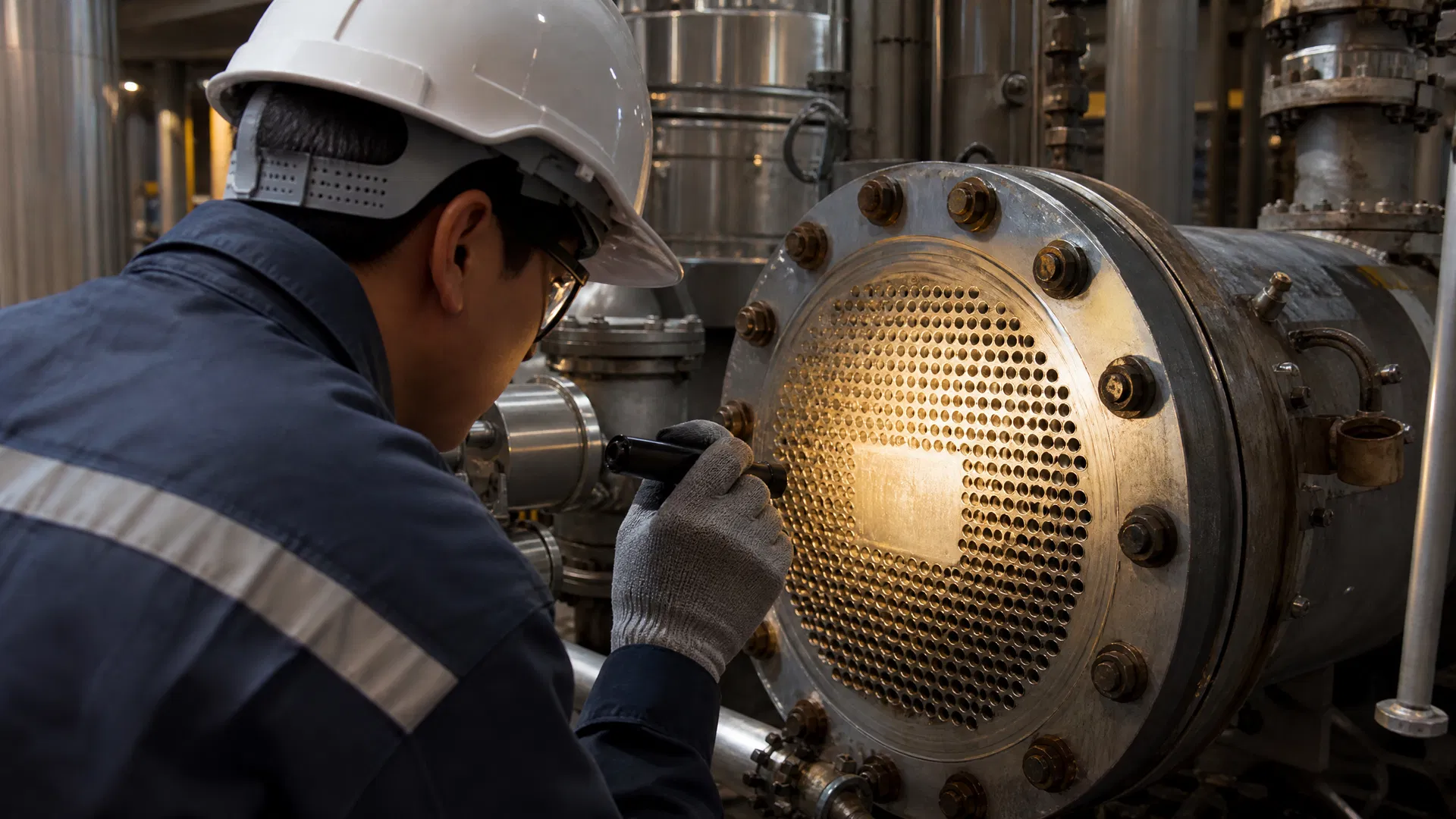
When deciding where to sell a used heat exchanger, your main options are a local scrap yard, a general equipment dealer, or a direct specialist buyer. A direct specialist buyer like Surplus Heat Exchangers typically pays the highest price because they evaluate the unit for its functional resale value rather than just its raw material weight, while also covering the heavy logistics of freight and rigging.
Surplus Heat Exchangers buys used and surplus heat exchangers nationwide — 100% upfront, with free rigging and freight, in any condition. Send a photo of the nameplate to 951-403-5738 for a same-day cash offer.
What are the main options for selling a used heat exchanger?
When a plant decommissions a process line, upgrades its cooling capacity, or shuts down a facility, plant managers and contractors are often left with massive, heavy heat exchangers. Figuring out where to sell these surplus units is critical to maximizing return on investment and clearing valuable floor space. Generally, sellers have three primary avenues: local scrap yards, general industrial equipment dealers, and direct specialist buyers.
A local scrap yard will purchase the unit strictly for its base metal value, requiring you to transport the heavy equipment to their facility. A general equipment dealer might offer to broker the unit or take it on consignment, meaning you only get paid if and when they find an end-user. Finally, a direct specialist buyer purchases the equipment outright for their own inventory, paying cash upfront and handling all the complex logistics, including rigging and freight. Understanding the financial and logistical differences between these three options is the key to ensuring you do not leave thousands of dollars on the table.
How much will a scrap yard pay for my heat exchanger?
Selling to a scrap yard is often the default choice for contractors who want to dispose of equipment quickly, but it is almost always the least profitable option. Scrap yards do not care if your unit is a pristine Alfa Laval plate and frame exchanger or a TEMA Type BEM shell and tube unit; they only care about the weight and the metallurgical composition.
Scrap prices fluctuate daily based on global commodities markets, but they represent a fraction of the equipment's functional value. For example, if you scrap a heat exchanger, you can expect roughly the following ranges:
- Carbon Steel: a premium over scrap
- 304 Stainless Steel: a premium over scrap
- 316 Stainless Steel: a premium over scrap
- Admiralty Brass: a premium over scrap
- Cupro-Nickel: a premium over scrap
- Copper: a premium over scrap
- Titanium: a premium over scrap
While a 10,000-pound 316 stainless steel shell and tube heat exchanger might yield a premium over scrapat a scrap yard, its functional resale value on the secondary market could be significantly higher. Furthermore, scrap yards typically require you to deliver the unit to their scale. If you have to hire a heavy-haul trucking company and a crane service to move a massive ITT Standard or GEA unit, the transportation costs can quickly eat up a large portion of your scrap payout.
What is the difference between a general equipment dealer and a direct buyer?
If you decide to bypass the scrap yard to seek a higher return, you will likely encounter general equipment dealers and direct specialist buyers. While they may seem similar, their business models and payout structures are vastly different.
A general equipment dealer buys and sells everything from packaging machinery to electrical transformers. Because heat exchangers are highly engineered pressure vessels with specific thermal duties, general dealers often lack the specialized knowledge to accurately evaluate them. As a result, they typically offer lowball prices to mitigate their risk, or they propose a consignment agreement. In a consignment deal, the dealer lists your equipment on their website, but you retain ownership—and the storage burden—until a buyer is found. This process can take months or even years, and there is no guarantee of a sale.
In contrast, a direct specialist buyer focuses heavily on thermal processing equipment. Companies like Surplus Heat Exchangers understand the exact market demand for specific brands like Tranter, SWEP, Kelvion, and SPX/APV. Because they know the industry inside and out, they buy equipment outright for their own inventory. This means they pay 100% upfront before the equipment ever leaves your facility. There is no waiting for a third-party buyer, no consignment fees, and no lingering liability.
Why do direct specialist buyers pay more for used heat exchangers?
Direct buyers pay more because they evaluate the unit based on its functional utility and surface area, rather than just its scrap weight. In the secondary market, a used shell and tube heat exchanger typically resells for roughly a premium over scrap of heat transfer area, depending heavily on the materials of construction, pressure ratings, and overall condition.
Because direct buyers have an established network of end-users in the chemical, petrochemical, food and beverage, and HVAC industries, they can confidently invest their capital into purchasing your surplus equipment. They know that a well-maintained titanium or Hastelloy heat exchanger is highly sought after by chemical plants looking to avoid the 40-week lead times associated with buying new.
Here is a comparison of the three main selling options:
How do material types and TEMA designations affect resale value?
When a direct buyer evaluates your surplus heat exchanger, they look closely at the manufacturer's nameplate data. The materials of construction and the TEMA (Tubular Exchanger Manufacturers Association) designation play a massive role in determining the final cash offer.
For shell and tube units, TEMA classes (Class R for severe petroleum/chemical applications, Class C for general commercial applications, and Class B for chemical process service) dictate the robustness of the design. A TEMA Type AEL or BEM unit built for high-pressure chemical processing will command a premium over a standard commercial HVAC water-to-water exchanger.
Materials are equally critical. While carbon steel units are common and have lower resale values, exotic alloys are highly prized. If your facility is decommissioning units made with titanium, cupro-nickel, admiralty brass, or high-nickel alloys, a direct buyer will pay a substantial premium. Even standard 304 and 316 stainless steel units from reputable manufacturers like Standard Xchange or Alfa Laval hold excellent value on the secondary market due to their versatility across multiple industries.
What are the hidden costs of selling a heat exchanger yourself?
Some plant managers attempt to sell their surplus heat exchangers directly to other end-users through online marketplaces or industry forums. While cutting out the middleman might seem like a way to maximize profit, this approach is fraught with hidden costs and massive liabilities.
Selling heavy industrial equipment requires significant logistical coordination. Consider the following challenges:
- Rigging and Loading: Heat exchangers can weigh anywhere from 500 pounds to over 50,000 pounds. Hiring professional riggers to safely extract and load the unit onto a flatbed trailer can cost thousands of dollars.
- Freight Coordination: Securing specialized heavy-haul transport, obtaining oversize load permits, and ensuring the equipment is properly chained and tarped is a complex, time-consuming process.
- Buyer Financing and Flaking: End-users often require net-30 or net-60 payment terms, meaning you have to act as a bank. Furthermore, retail buyers frequently back out of deals after the equipment has already been prepped for shipment.
- Liability and Warranties: If you sell directly to an end-user and the unit fails a hydro-test upon arrival, you could be held liable for selling faulty equipment, leading to costly disputes.
By selling to a direct buyer like Surplus Heat Exchangers, you eliminate all of these headaches. We buy the equipment"as-is, where-is," meaning you bear no future liability once the transaction is complete.
How can I sell my used heat exchanger quickly for the best price?
If you want to bypass the low payouts of scrap yards, avoid the endless waiting of consignment dealers, and skip the logistical nightmares of selling it yourself, the best path forward is to partner with a direct specialist buyer.
At Surplus Heat Exchangers, we make the process incredibly simple and highly profitable for our clients. We buy used, surplus, and even damaged heat exchangers from facilities nationwide. Whether you have a single SWEP brazed plate exchanger or an entire plant's worth of massive shell and tube units, we have the capital to purchase them outright.
Our process is designed to be entirely frictionless for the seller:
- Step 1: Send Us the Details. Simply snap a few clear photos of the heat exchanger, making sure to get a close-up of the manufacturer's nameplate (which contains the model number, serial number, materials, and pressure ratings). Email these details to our secure online quote form.
- Step 2: Receive a Fast Cash Offer. Our expert evaluation team will quickly assess the unit's functional value and provide you with a competitive, no-obligation cash offer.
- Step 3: Get Paid 100% Upfront. We do not believe in net-30 terms or consignment games. We pay you 100% of the agreed-upon price upfront, before the equipment ever leaves your facility.
- Step 4: We Handle the Freight. You do not have to worry about hiring trucks or coordinating logistics. We handle and pay for all rigging and freight, ensuring the equipment is safely removed from your site.
Do not let your valuable surplus equipment rust in a boneyard or get sold for pennies on the dollar at a local scrap yard. Maximize your return and clear your floor space today. Call Surplus Heat Exchangers at 951-403-5738 or use our secure online quote form to get a top-dollar cash offer for your used heat exchangers.