
When a power plant closes or undergoes major decommissioning, the heat exchangers are among the most valuable recoverable assets on site. Feedwater heaters (both HP and LP), surface condensers, lube oil coolers, generator hydrogen coolers, gland steam condensers, and auxiliary cooling water exchangers all have significant resale value — often far exceeding their scrap worth. Surplus Heat Exchangers buys all types of power plant heat exchangers nationwide, paying 100% upfront with free rigging and freight.
Surplus Heat Exchangers buys used and surplus heat exchangers nationwide — 100% upfront, with free rigging and freight, in any condition. Send a photo of the nameplate to 951-403-5738 for a same-day cash offer.
Why Power Plant Heat Exchangers Are Particularly Valuable
Power plant heat exchangers represent some of the highest-value surplus equipment in the industrial secondary market. Several factors drive this premium value:
Premium materials: Power plant exchangers routinely use high-grade alloys to withstand the combination of high temperatures, high pressures, and corrosive feedwater chemistry. Feedwater heater tubes are typically stainless steel (304, 316, or 439), copper-nickel (90/10 or 70/30), or titanium. Surface condenser tubes may be titanium, cupro-nickel, admiralty brass, or stainless steel. These alloy contents make power plant exchangers worth multiples of their carbon steel equivalents.
Massive size: Power plant exchangers are among the largest heat transfer equipment manufactured. A single LP feedwater heater can weigh 50,000–150,000 pounds. Surface condensers can exceed 500,000 pounds. This sheer mass of premium alloy material represents enormous recoverable value.
Standardized designs: Many power plant exchangers are built to ASME/HEI standards with standardized tube sizes, materials, and configurations. This standardization means used units can often serve as direct replacements at other power stations, commanding premium resale prices.
Long lead times for new: New power plant heat exchangers have fabrication lead times of 26–52 weeks or longer. Utilities facing an unplanned failure cannot wait a year for a new unit — they need a replacement immediately. This urgency drives strong demand and premium pricing in the secondary market for used power plant exchangers.
Types of Power Plant Heat Exchangers We Buy
High-Pressure Feedwater Heaters
HP feedwater heaters operate at the highest pressures and temperatures in the feedwater heating train, typically 1,000–3,500 psig and 350–550°F. They are usually vertical, U-tube designs with stainless steel or Incoloy tubes and carbon steel or chrome-moly shells. HP heaters are among the most valuable power plant exchangers due to their high-pressure ratings, premium tube materials, and critical role in plant efficiency.
We buy HP feedwater heaters from coal, gas, nuclear, and combined-cycle plants. Whether your heater is being replaced due to tube leaks, plant closure, or efficiency upgrades, we provide competitive cash offers based on the full value of the materials and reuse potential.
Low-Pressure Feedwater Heaters
LP feedwater heaters operate at lower pressures (50–600 psig) but are often larger in physical size than HP heaters. They typically use copper-nickel, stainless steel, or admiralty brass tubes. LP heaters from larger generating units (200+ MW) can weigh 30,000–80,000 pounds and contain substantial alloy value in their tube bundles.
Surface Condensers
Surface condensers are the largest heat exchangers in a power plant, condensing exhaust steam from the turbine using cooling water. They contain thousands of tubes — a typical 500 MW unit might have 20,000–40,000 tubes, each 30–50 feet long. The tube material (titanium, cupro-nickel, admiralty brass, or stainless steel) determines the primary value.
Even a partially failed condenser with significant tube plugging contains enormous alloy value. A condenser with 30,000 titanium tubes at 40 feet each contains approximately 200,000–300,000 pounds of titanium tubing alone — worth $700,000–$1,800,000 at current alloy recycling rates, and potentially much more if the tubes are reusable.
Lube Oil Coolers and Hydrogen Coolers
Generator lube oil coolers and hydrogen coolers are smaller but often made from premium materials (copper tubes in steel shells, or stainless steel throughout). They are highly standardized and in constant demand for replacement at operating plants. We buy these units regularly and can often resell them directly to utilities that need immediate replacements.
Auxiliary Cooling Water Exchangers
Power plants contain numerous auxiliary heat exchangers: bearing cooling water exchangers, sample coolers, drain coolers, seal water coolers, and various process coolers throughout the balance of plant. While individually smaller than the main exchangers, these units collectively represent significant value — particularly when made from stainless steel or copper alloys.
Value Guide for Power Plant Exchangers
| Equipment type | Typical tube material | Typical weight range | Value driver |
|---|---|---|---|
| HP feedwater heater | 304/316 SS, Incoloy 800 | 20,000–80,000 lbs | High-pressure rating + alloy tubes |
| LP feedwater heater | CuNi 90/10, Admiralty, SS | 30,000–150,000 lbs | Large tube bundle alloy content |
| Surface condenser | Titanium, CuNi, Admiralty | 100,000–600,000+ lbs | Massive tube alloy volume |
| Lube oil cooler | Copper, CuNi, SS | 2,000–15,000 lbs | Standardized; high reuse demand |
| Generator H2 cooler | Copper, CuNi | 1,000–8,000 lbs | Specialized; limited supply |
| Gland steam condenser | SS, CuNi | 5,000–25,000 lbs | Alloy content + reuse potential |
| Auxiliary coolers | Various (SS, copper, CS) | 500–10,000 lbs each | Volume — many units per plant |
Selling During Plant Decommissioning: Timing and Logistics
Power plant decommissioning is a complex, multi-phase process with strict timelines. The heat exchangers are typically among the last major equipment items removed because they are deeply integrated into the plant's piping systems. Here is how we work with decommissioning teams:
Early engagement: Contact us as early as possible in the decommissioning planning process — ideally during the asset inventory phase. Early engagement allows us to provide preliminary valuations that help your project team budget the asset recovery portion of the decommissioning plan.
Lot purchasing: For complete plant closures, we can bid on the entire inventory of heat exchangers as a single lot. This simplifies your accounting, provides a single point of contact for all exchanger removal, and often results in a higher total payout because we can plan logistics efficiently across all units.
Flexible scheduling: We understand that decommissioning schedules are driven by regulatory requirements, environmental remediation timelines, and demolition sequencing. We coordinate our removal activities around your schedule, not the other way around.
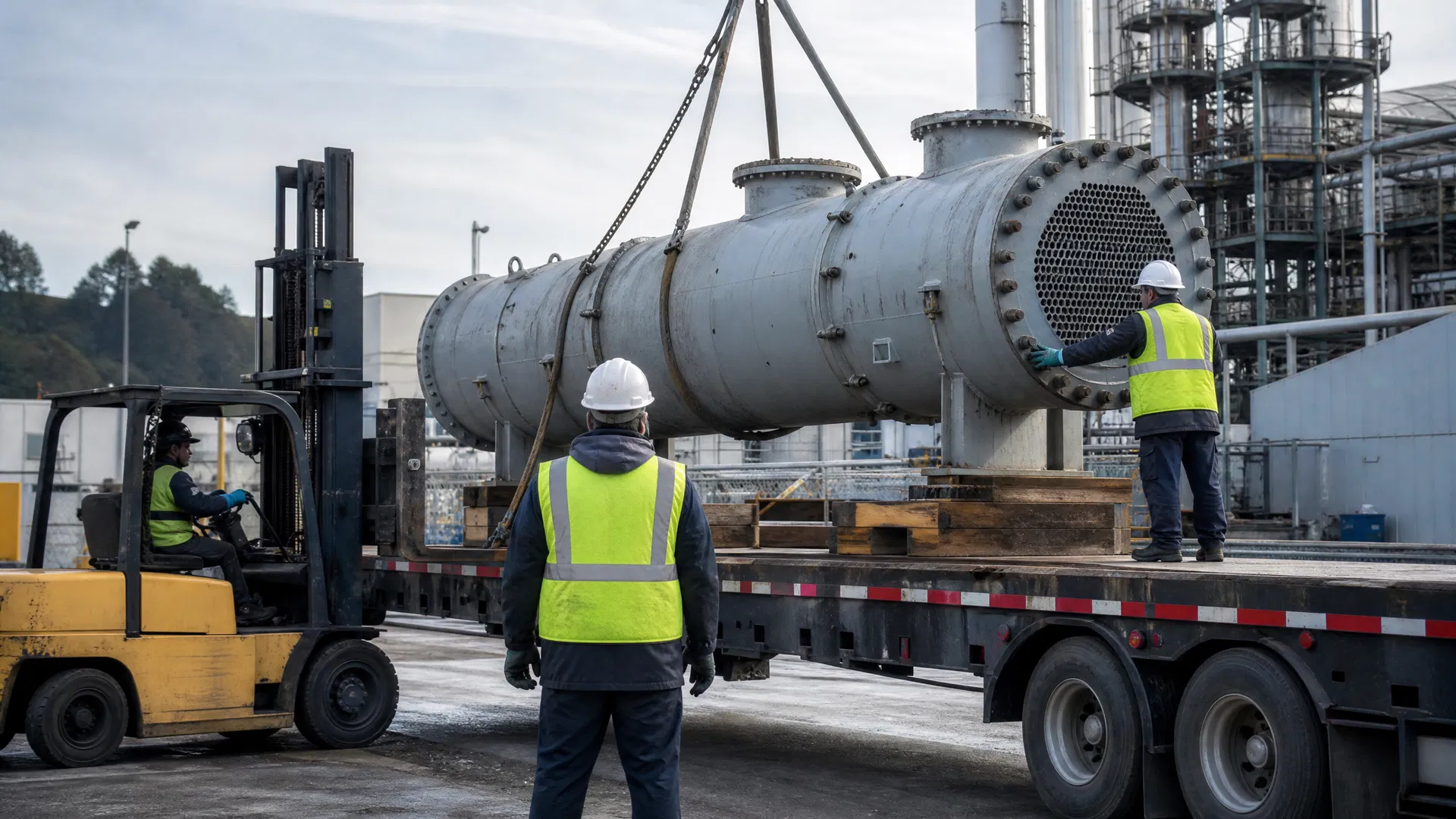
Heavy rigging capability: Power plant exchangers require serious rigging — 100+ ton cranes, specialized transport, and careful extraction from congested turbine halls and pipe galleries. We handle all of this at no cost to you, using experienced heavy industrial riggers who understand power plant environments.
Environmental and Regulatory Considerations
Power plant heat exchangers may contain residual chemicals, water treatment compounds, or (in older plants) materials of environmental concern. We are experienced in handling these situations:
- Residual chemicals: We accept units with residual feedwater treatment chemicals, provided they have been properly drained and flushed per your plant's decommissioning procedures.
- Asbestos: Older power plant exchangers may have asbestos-containing gaskets or insulation. We work with licensed abatement contractors to handle these materials properly before removal.
- PCBs: Pre-1979 units may have PCB-containing gasket materials. We coordinate proper testing and disposal in compliance with TSCA regulations.
- Chromium and other metals: Cooling water treatment chemicals can leave chromium deposits in condenser tubes. We handle proper characterization and disposal of any hazardous residuals.
None of these issues prevent us from purchasing your equipment. They simply require proper handling, which we manage as part of our standard removal process.
Sell Your Power Plant Heat Exchangers to Us
Whether you are closing an entire generating station or replacing individual exchangers during a planned outage, Surplus Heat Exchangers wants to buy your surplus equipment. We purchase feedwater heaters, surface condensers, lube oil coolers, hydrogen coolers, and every other type of heat exchanger found in power plants — in any condition, any size, anywhere in the United States.
We pay 100% upfront before removal, handle all rigging and heavy-haul freight at no cost to you, and coordinate around your decommissioning schedule. For complete plant closures, we offer lot pricing on the entire heat exchanger inventory to simplify your asset recovery process.
Call us at 951-403-5738 or use our secure online quote form with your equipment list, nameplate photos, or decommissioning inventory. We provide free, no-obligation valuations and can typically quote within 24–48 hours for standard units, or within a week for complete plant inventories. Get your cash offer today.