
Selling used condensers and feedwater heaters from power plant retirements can yield significant returns, with resale values ranging from a significant premium over scrap based on its heat-transfer surface area. Because these massive units often contain high-value alloys like titanium, admiralty brass, and cupro-nickel, they command premium prices on the secondary market. You can sell your surplus power plant exchangers directly to Surplus Heat Exchangers for 100% upfront payment, and we will handle all the heavy rigging and freight logistics.
Surplus Heat Exchangers buys used and surplus heat exchangers nationwide — 100% upfront, with free rigging and freight, in any condition. Send a photo of the nameplate to 951-403-5738 for a same-day cash offer.
Why are used power plant surface condensers and feedwater heaters highly valued?
Power generation facilities, whether coal, natural gas, or nuclear, rely heavily on massive heat transfer equipment to maintain thermal efficiency. When a plant undergoes decommissioning, upgrading, or repowering, the existing surface condensers and feedwater heaters retain immense residual value. These units are highly valued primarily because of their sheer size and the premium metallurgical compositions required to withstand high pressures, extreme temperatures, and corrosive cooling water environments.
Surface condensers are critical components designed to condense exhaust steam from turbines back into liquid water. Because they often utilize cooling water from rivers, lakes, or oceans, their internal tubing is frequently manufactured from corrosion-resistant alloys such as titanium, admiralty brass, or cupro-nickel. Similarly, feedwater heaters, which preheat water before it enters the boiler to improve thermodynamic efficiency, are built to withstand extreme internal pressures. High-pressure feedwater heaters typically feature heavy-wall carbon steel, stainless steel, or specialized alloy tubes. The combination of massive scale and high-grade materials means that even at the end of their operational life in a specific plant, these heat exchangers hold substantial value for industrial buyers and specialized recyclers.
How much are used condensers and feedwater heaters worth on the secondary market?
The financial return on surplus power plant heat exchangers depends heavily on whether the unit can be repurposed or if it must be processed for its raw material alloys. For units that are in good condition and can be resold or refurbished, the secondary market value typically ranges from a significant premium over scrap based on its heat-transfer surface area. Given that power plant condensers can possess tens of thousands of square feet of surface area, the total valuation can be exceptionally high.
If the equipment has reached the end of its usable lifecycle or has suffered severe tube degradation, its value is calculated based on the current commodity scrap market. Power plant exchangers are often a lucrative source of non-ferrous metals. Current estimated scrap values for common heat exchanger materials include:
- Titanium: only a baseline commodity rate
- Copper: only a baseline commodity rate
- Cupro-Nickel: only a baseline commodity rate
- Admiralty Brass: only a baseline commodity rate
- 316 Stainless Steel: only a baseline commodity rate
- 304 Stainless Steel: only a baseline commodity rate
- Carbon Steel: only a baseline commodity rate
Because these units can weigh hundreds of thousands of pounds, even the base carbon steel shells contribute significantly to the overall payout. However, extracting the maximum value requires a buyer who understands how to properly appraise and separate these complex, multi-metal assets.
What types of power plant heat exchangers do buyers look for?
While surface condensers and feedwater heaters are the most prominent, power plants utilize a wide array of heat transfer equipment. Industrial buyers are actively seeking various types of surplus and used heat exchangers from plant retirements.
Main surface condensers are always in high demand due to their massive alloy tube bundles. Low-pressure and high-pressure feedwater heaters are also highly sought after, particularly those with TEMA (Tubular Exchanger Manufacturers Association) designations that indicate robust construction, such as TEMA type BEU (U-tube bundle) or NEN configurations. In addition to these massive shell and tube units, power plants utilize numerous auxiliary cooling water heat exchangers. These often include large plate and frame heat exchangers used for closed-loop cooling systems. Brands like Alfa Laval, GEA, Tranter, Kelvion, SWEP, and SPX/APV are highly desirable in the secondary market. Furthermore, lube oil coolers, seal water coolers, and generator hydrogen coolers manufactured by companies like Standard Xchange and ITT are consistently purchased by surplus buyers.
How does the material composition affect the payout for power plant condensers?
The specific metallurgy of a power plant heat exchanger is the single most critical factor in determining its cash value. Power plant condensers are rarely made of a single material; they are complex assemblies of different metals designed to balance cost, structural integrity, and corrosion resistance. Typically, the massive outer shell is constructed from heavy carbon steel, while the internal tubes and tubesheets are made from high-value non-ferrous alloys.
For example, a surface condenser utilizing seawater for cooling will almost certainly feature titanium or 70/30 cupro-nickel tubes to prevent rapid chloride corrosion. Titanium is incredibly valuable, commanding only a baseline commodity rate. If a condenser contains 50,000 pounds of titanium tubing, the tube bundle alone represents a massive financial asset. Inland power plants utilizing freshwater cooling often employ admiralty brass or 90/10 cupro-nickel tubes, which still offer excellent returns at only a baseline commodity rate. The tubesheets—the thick metal plates that hold the tubes in place—are also critical. They may be solid alloy, clad with stainless steel, or made of naval brass. Accurately identifying these materials through nameplate data or metallurgical testing is essential to ensuring you receive the maximum possible payout for your surplus equipment.
What are the biggest challenges when decommissioning and selling power plant exchangers?
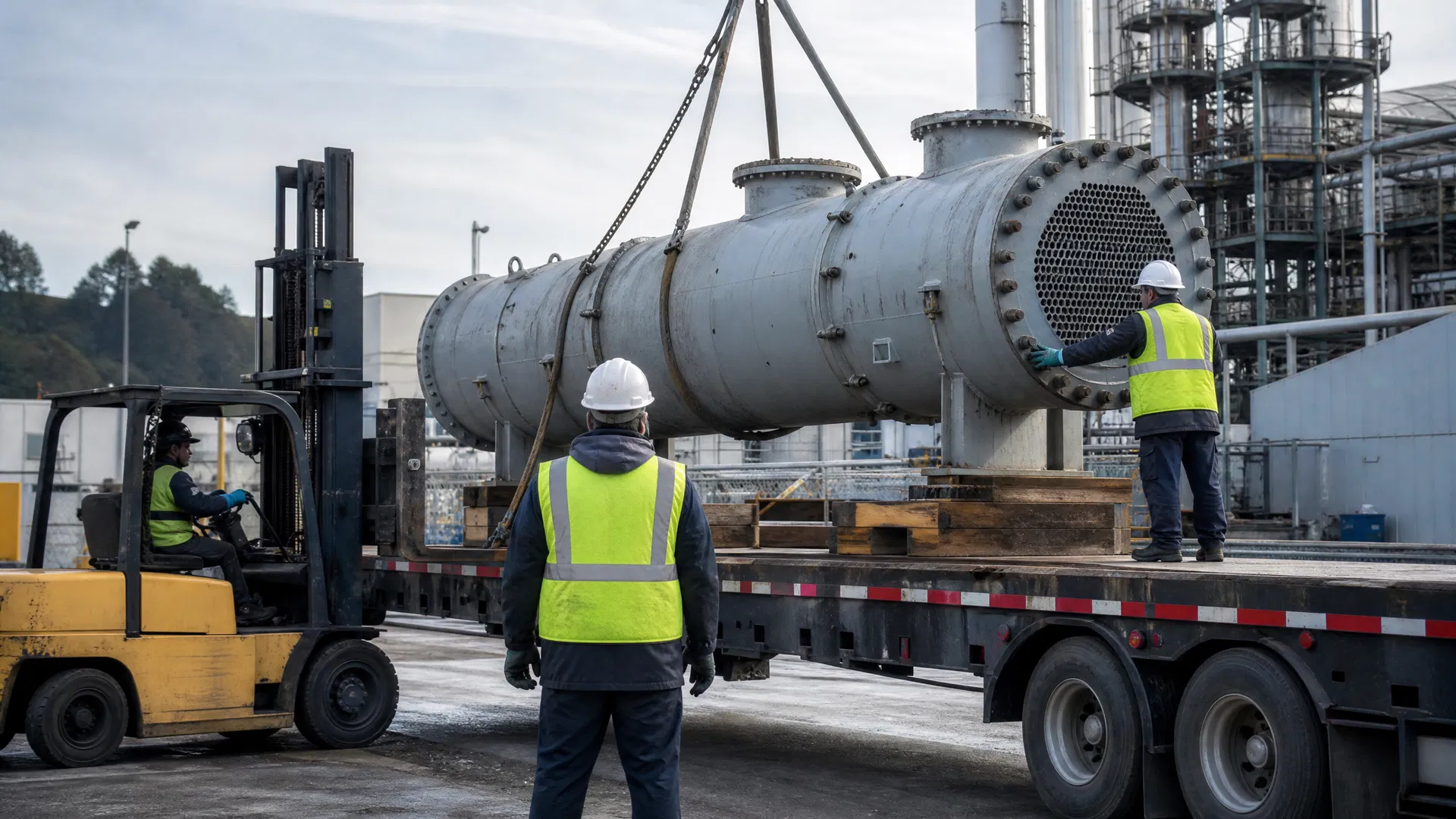
Selling power plant heat exchangers is vastly different from disposing of standard industrial equipment. The primary challenges revolve around logistics, scale, and safety. Surface condensers and high-pressure feedwater heaters are some of the largest and heaviest pieces of equipment in any industrial facility. A single feedwater heater can weigh upwards of 100,000 pounds and stretch over 40 feet in length. Moving these behemoths requires specialized heavy rigging, multi-axle trailers, and meticulously planned freight routes.
Additionally, environmental and safety protocols must be strictly followed. Units must be properly drained, isolated, and sometimes purged before they can be safely removed from the facility. For plant managers and decommissioning contractors, coordinating the cranes, specialized transport, and safety compliance can be a logistical nightmare that eats into the project's profitability.
This is where partnering with a specialized buyer becomes invaluable. Surplus Heat Exchangers eliminates these headaches by handling all the heavy rigging and freight logistics. We coordinate the specialized transport required to move massive power plant equipment, ensuring that the removal process does not disrupt your ongoing decommissioning timeline or incur unexpected costs.
Why should you sell to Surplus Heat Exchangers instead of a local scrap yard?
When liquidating assets during a power plant retirement, it might seem convenient to call a local scrap metal dealer. However, doing so almost guarantees that you will leave tens, if not hundreds, of thousands of dollars on the table. Local scrap yards are generally not equipped to accurately appraise or process complex, multi-metal industrial equipment like surface condensers.
A standard scrap yard will often look at a massive condenser, see the carbon steel shell, and offer a blended"irony" price that heavily discounts the valuable titanium, brass, or copper-nickel hidden inside. They penalize you for the labor required to extract the tubes. Furthermore, local yards rarely have the specialized heavy-haul network required to transport a 150,000-pound feedwater heater, meaning you will be forced to pay exorbitant freight and rigging costs out of pocket.
Surplus Heat Exchangers is a specialized nationwide buyer. We understand the true secondary market value of these units, whether for resale at a significant premium over scrap value or for their precise alloy recovery value. We do not penalize you for mixed materials; we pay top dollar based on accurate metallurgical assessments. Most importantly, we pay 100% upfront before the equipment ever leaves your site, and we cover all freight and rigging costs, providing a seamless, risk-free transaction.
How can you sell your surplus power plant heat exchangers quickly and safely?
The process of selling your used condensers, feedwater heaters, and auxiliary heat exchangers should be straightforward and transparent. At Surplus Heat Exchangers, we have streamlined our purchasing process to provide fast offers and immediate liquidity for plant managers, decommissioning firms, and industrial contractors.
To get started, simply gather the basic information about your equipment. The most crucial step is to take clear photographs of the heat exchangers, focusing specifically on the manufacturer's nameplate (often detailing brands like Alfa Laval, Standard Xchange, or ITT, along with TEMA class, materials, and square footage). If you have original U-1 data reports or mechanical drawings, these are highly beneficial for accelerating the appraisal process.
Once you have this information, you can reach out to our purchasing team directly. Call us at 951-403-5738 or email your photos and details to our secure online quote form. We buy equipment in any condition—whether it is gently used, heavily fouled, or completely out of service. Upon reviewing your information, we will provide a competitive, no-obligation cash offer. Once accepted, we provide 100% upfront payment and immediately begin coordinating the heavy rigging and free freight to remove the massive units from your facility safely and efficiently.