

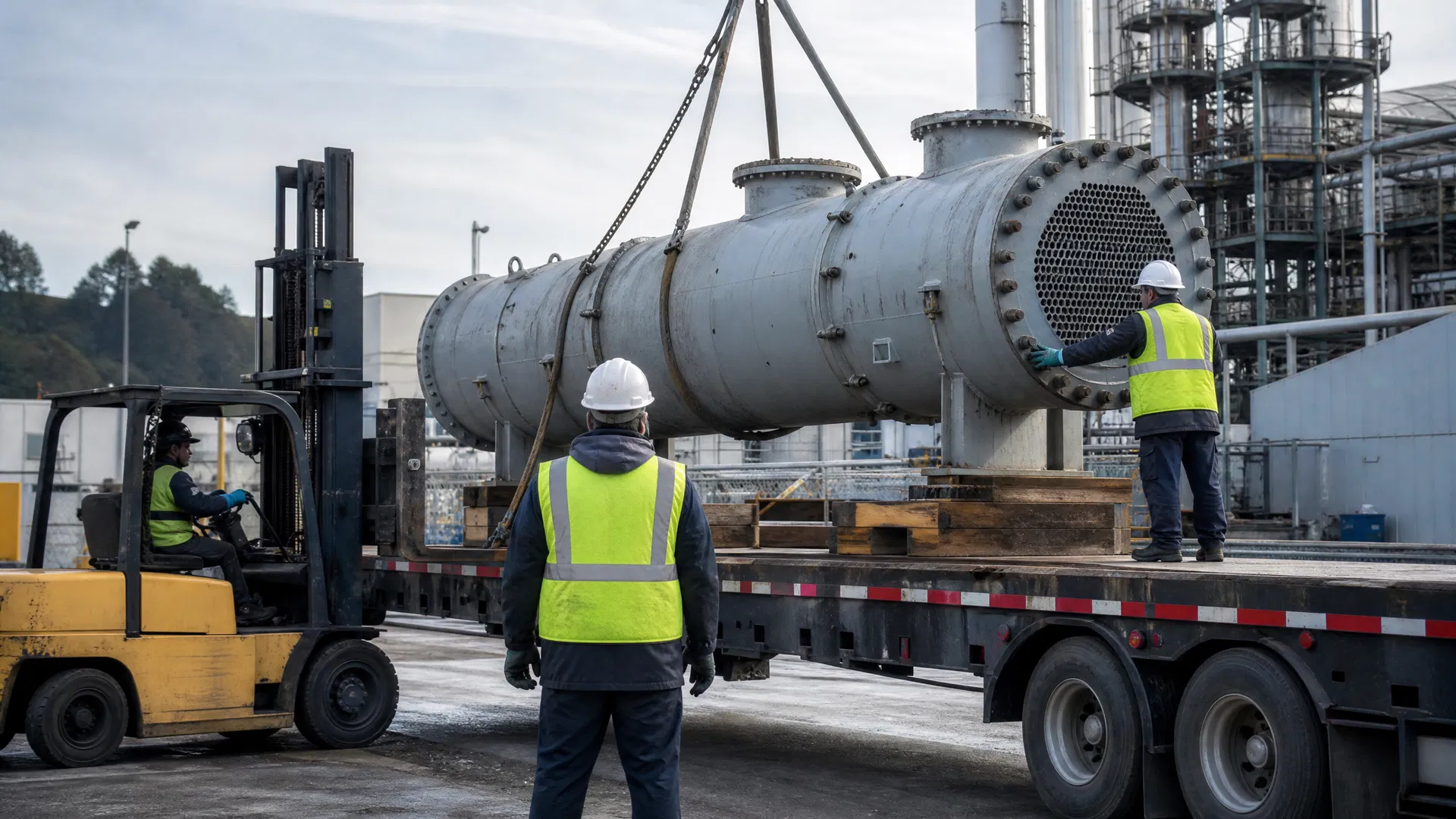
Selling heat exchangers from a refinery involves identifying the equipment's material composition, condition, and TEMA designation to determine its resale or scrap value. Refineries can maximize their return by selling crude preheat trains, overhead condensers, and reboilers directly to specialized buyers who pay 100% upfront and handle all freight and rigging. By providing clear photos and nameplate data, plant managers can quickly turn surplus or decommissioned alloy bundles into immediate capital.
Surplus Heat Exchangers buys used and surplus heat exchangers nationwide — 100% upfront, with free rigging and freight, in any condition. Send a photo of the nameplate to 951-403-5738 for a same-day cash offer.
What types of refinery heat exchangers have the highest resale value?
When decommissioning units or upgrading equipment during a turnaround, refineries often remove a variety of heat transfer equipment. The units that command the highest resale value are typically those constructed from high-grade alloys and those designed for critical process applications. Crude preheat trains, overhead condensers, and reboilers are among the most sought-after items on the secondary market. Because these units are engineered to withstand aggressive corrosive environments and extreme temperatures, their construction materials—such as titanium, Hastelloy, Inconel, and high-nickel alloys—retain significant intrinsic value even after years of service.
Additionally, specific configurations like large TEMA type AES or AEP shell and tube exchangers, as well as heavy-duty plate and frame units from manufacturers like Alfa Laval, GEA, Tranter, and Kelvion, are highly desirable. Buyers look for equipment that can be refurbished and repurposed for other industrial applications. Alloy bundles, in particular, are valuable because the tube bundles can often be extracted and reused or recycled at a premium. When evaluating your surplus inventory, prioritize units with intact nameplates, minimal shell degradation, and documented maintenance histories, as these factors significantly elevate their marketability and final offer price.
How much are used shell and tube heat exchangers worth?
The value of a used shell and tube heat exchanger is highly variable and depends on its size, material of construction, operating pressure ratings, and overall condition. On the secondary resale market, shell and tube heat exchangers typically resell for roughly a significant premium over scrap based on its heat-transfer surface area. A standard carbon steel unit in fair condition will fall toward the lower end of this spectrum, while a pristine, high-pressure titanium or 316 stainless steel exchanger will command prices at the upper end.
It is important to distinguish between the retail resale price and the wholesale offer you will receive from a buyer. Specialized buyers must account for the costs of rigging, transportation, refurbishment, and holding inventory. Therefore, the cash offer for your surplus equipment will be a percentage of its ultimate resale value. To get the most accurate valuation, you should provide the buyer with clear photographs of the unit, a legible picture of the manufacturer's nameplate (which includes the serial number, year built, materials, and pressure/temperature ratings), and any available U-1A data reports. Brands like Standard Xchange, ITT, and SPX/APV are well-known in the industry, and their equipment often retains value better due to the availability of replacement parts and established performance records.
What is the scrap value of heat exchanger materials?
If a heat exchanger is severely damaged, heavily fouled beyond cleaning, or structurally compromised, it may no longer be viable for resale as a functional unit. In these cases, the equipment is valued based on its raw material scrap weight. Refineries utilize a wide array of metallurgies to combat corrosion, and understanding current scrap prices is essential for setting realistic expectations.
Keep in mind that extracting tube bundles from carbon steel shells requires specialized labor and equipment. When you sell to a dedicated buyer, they evaluate whether the unit is better suited for resale or scrap and offer a blended price that maximizes your return without the hassle of dismantling the equipment yourself.
How does the TEMA designation affect the value of surplus exchangers?
The Tubular Exchanger Manufacturers Association (TEMA) establishes the mechanical standards for shell and tube heat exchangers, and these designations play a critical role in determining a unit's value. TEMA classifications define the front head, shell type, and rear head configurations, which dictate how the exchanger can be used, cleaned, and maintained. In a refinery setting, TEMA R (Refinery) class exchangers are the standard, built to the most rigorous specifications for severe service.
Certain TEMA configurations are more desirable on the secondary market. For example, TEMA AES and AEP designs feature floating heads, which allow the tube bundle to expand thermally and be completely removed for mechanical cleaning. This makes them highly versatile and valuable. Conversely, fixed tubesheet designs (like TEMA NEN or BEM) are harder to clean on the shell side and cannot accommodate as much thermal expansion, which can limit their resale appeal depending on the application. When cataloging your surplus equipment, always note the TEMA type, as buyers will use this information to gauge the unit's flexibility and potential for refurbishment.
What is the best way to lot and sell multiple heat exchangers during a turnaround?
Refinery turnarounds often generate a massive volume of surplus equipment in a very short window. Managing this influx efficiently is crucial to keeping the site clear and recovering capital. The most effective strategy is"lotting"—grouping multiple heat exchangers and associated equipment together into a single comprehensive package for sale.
Lotting provides several distinct advantages for plant managers and contractors:
- Streamlined Logistics: Selling a dozen exchangers to a single buyer means coordinating only one set of trucks and rigging crews, drastically reducing site traffic and administrative burden.
- Blended Valuation: A lot may contain a mix of highly valuable titanium reboilers and lower-value carbon steel coolers. A specialized buyer will purchase the entire lot, taking the less desirable units off your hands in exchange for access to the premium assets.
- Faster Site Clearance: Turnarounds operate on strict timelines. Selling in bulk ensures that the laydown yard is cleared quickly, avoiding storage fees or interference with ongoing maintenance activities.
- Immediate Capital Injection: Bulk sales result in larger, immediate payouts that can be reinvested into the facility's operational budget.
To successfully lot your equipment, create a detailed spreadsheet listing each unit's manufacturer (e.g., SWEP, Alfa Laval), model, serial number, materials, and dimensions. Pair this list with a comprehensive photo gallery to ensure buyers can provide the most accurate and aggressive offers.
How do you prepare a heat exchanger for sale and transport?
Proper preparation of a heat exchanger not only ensures compliance with environmental and safety regulations but also preserves the unit's value. Refineries process hazardous, flammable, and toxic fluids, so the first and most critical step is thorough decontamination. The exchanger must be drained, flushed, and purged of all process chemicals and hydrocarbons. Buyers will require documentation, such as a"clean certificate" or a signed statement verifying that the equipment is free of hazardous residues.
Once the unit is clean, you should secure all flanged connections. Install blind flanges or heavy-duty wooden covers over all nozzles to prevent moisture, dirt, and debris from entering the shell or tube side during transit. If the unit is a removable bundle type, ensure that the bundle is securely bolted within the shell. For standalone alloy bundles, construct sturdy wooden cradles to prevent the tubes from bending or crushing under their own weight. Finally, ensure that the manufacturer's nameplate is clean and legible, as this is the primary identification tool used by buyers and future end-users.
Why should you sell your surplus refinery heat exchangers to a specialized buyer?
Selling heavy industrial equipment can be a complex, time-consuming process fraught with logistical challenges. Attempting to sell heat exchangers piece-by-piece on auction sites or dealing with local scrap yards often results in undervalued offers and significant logistical headaches. Partnering with a specialized, nationwide buyer is the most efficient and profitable route for refineries and contractors.
Surplus Heat Exchangers is dedicated to making the asset recovery process as seamless as possible. We buy used and surplus heat exchangers from sellers across the country, regardless of their condition. Whether you have a pristine GEA plate heat exchanger or a decommissioned crude preheat train destined for scrap, we provide fast, fair evaluations. We pay 100% upfront before the equipment ever leaves your facility, eliminating any financial risk on your end. Furthermore, we handle all the heavy lifting—coordinating the rigging, loading, and freight at no cost to you. If you have surplus equipment taking up valuable space in your laydown yard, simply send us photos and the nameplate data. Call us at 951-403-5738 or use our secure online quote form to turn your idle assets into immediate cash.