

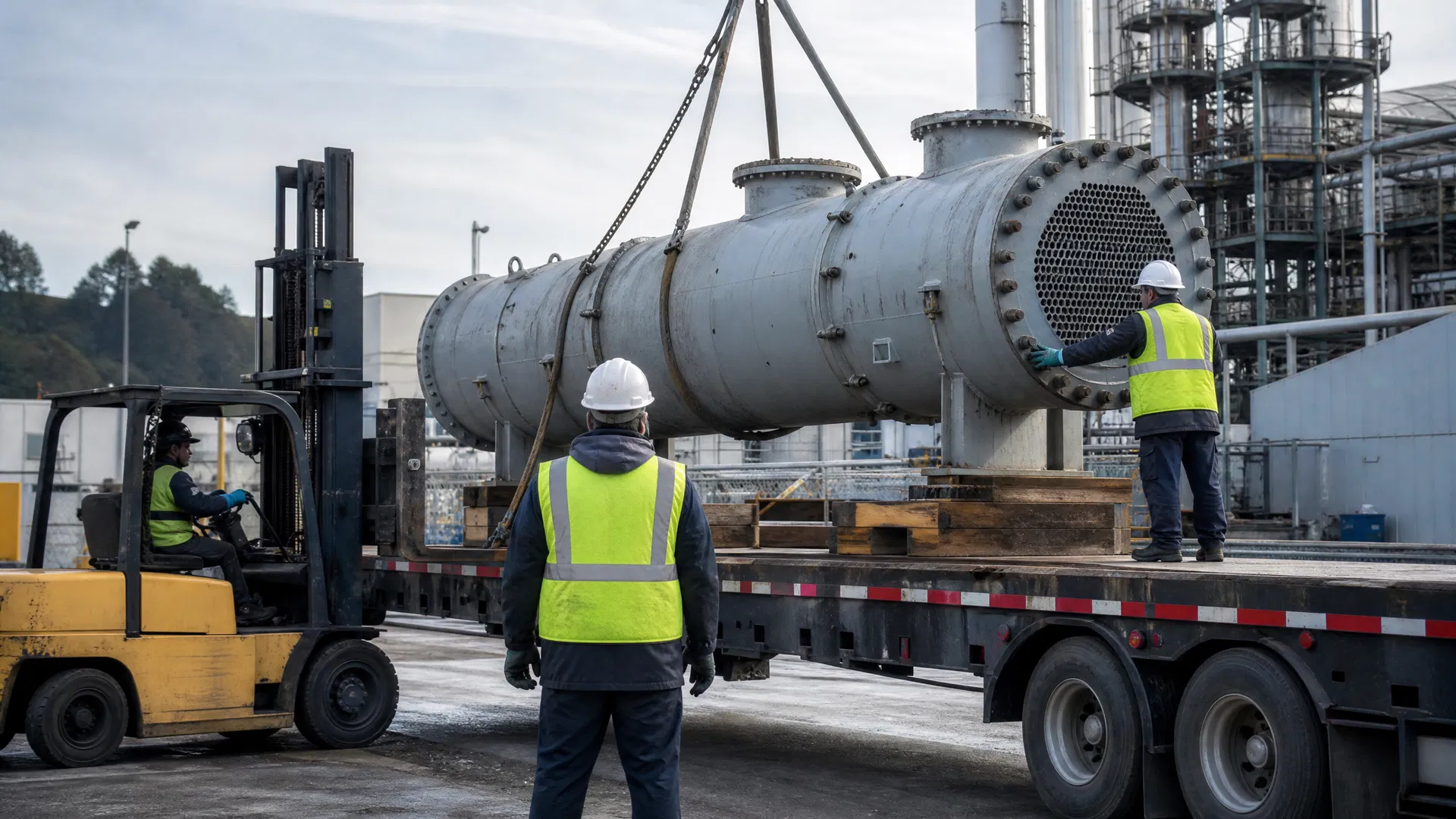
The best time to sell a heat exchanger is during peak demand periods — primarily spring (March–May) and fall (September–November) turnaround seasons when refineries, chemical plants, and power stations are replacing equipment during scheduled shutdowns. During these periods, demand for used and surplus heat exchangers spikes because buyers need immediate replacements that cannot wait for new fabrication lead times. At Surplus Heat Exchangers, we buy year-round and always pay fair market value, but our offers during peak demand periods are typically 15–25% higher because we can place units faster at premium prices.
Surplus Heat Exchangers buys used and surplus heat exchangers nationwide — 100% upfront, with free rigging and freight, in any condition. Send a photo of the nameplate to 951-403-5738 for a same-day cash offer.
Understanding the Demand Cycle
The secondary heat exchanger market is not static — it follows predictable demand cycles driven by industrial maintenance patterns, capital budgeting, and seasonal factors. Understanding these cycles helps you time your sale for maximum value, though we emphasize that selling at any time is better than letting equipment deteriorate in storage.
The demand cycle is driven primarily by three factors: turnaround scheduling in the refining and petrochemical industry, annual capital budget cycles in manufacturing, and seasonal capacity demands in power generation and HVAC. Each creates predictable windows of elevated demand that translate directly into higher purchase prices for sellers.
Turnaround Season: The Primary Demand Driver
Refinery and petrochemical plant turnarounds — planned shutdowns for maintenance, inspection, and equipment replacement — are the single largest driver of used heat exchanger demand. During turnarounds, facilities discover equipment that needs replacement (failed inspections, excessive corrosion, tube leaks) and need replacements immediately to meet their restart deadline.
New heat exchangers have lead times of 12–26 weeks. A turnaround typically lasts 3–6 weeks. The math is simple: if you discover during a turnaround that an exchanger needs replacement, you cannot wait for new fabrication. You need a used or surplus unit that is available now, matches your specifications, and can be delivered within days. This urgency creates premium pricing in the secondary market.
Spring turnaround season (March–May): The largest concentration of planned turnarounds occurs in spring. Refineries schedule major turnarounds after winter heating season demand subsides and before summer driving season requires maximum gasoline production. Chemical plants align their shutdowns with refinery schedules since many are integrated. This creates a 10–12 week window of intense demand for replacement heat exchangers.
Fall turnaround season (September–November): The second major turnaround window occurs after summer peak demand and before winter heating season. Slightly smaller than spring but still represents a significant demand spike. Power plants also schedule major outages in fall before winter peak load season.
Monthly Demand and Pricing Patterns
| Month | Demand level | Price premium | Primary drivers |
|---|---|---|---|
| January | Moderate | Baseline | New year capital budgets released; planning begins |
| February | Moderate-High | +5–10% | Pre-turnaround procurement; buyers securing inventory |
| March | High | +15–20% | Spring turnaround season begins; urgent replacements |
| April | Very High | +20–25% | Peak turnaround activity; maximum urgency |
| May | High | +15–20% | Late spring turnarounds; catch-up procurement |
| June | Moderate | +5–10% | Summer operations begin; some opportunistic buying |
| July | Low-Moderate | Baseline | Summer operations; minimal shutdown activity |
| August | Moderate | +5% | Pre-fall turnaround procurement begins |
| September | High | +15–20% | Fall turnaround season begins |
| October | High | +15–25% | Peak fall turnaround activity |
| November | Moderate-High | +10–15% | Late fall turnarounds; year-end budget spending |
| December | Moderate | +5–10% | Year-end budget flush; "use it or lose it" spending |
Capital Budget Cycles
Beyond turnaround seasons, corporate capital budgeting creates a secondary demand pattern:
Q1 (January–March): New annual budgets are released. Facilities that received capital approval for equipment replacement begin procurement. This overlaps with spring turnaround preparation, compounding demand.
Q4 (October–December): "Use it or lose it" budget dynamics drive year-end purchasing. Facilities with remaining capital budget that will not roll over to next year accelerate equipment purchases to avoid losing the allocation. This creates a secondary demand spike in November–December that benefits sellers.
Industry-Specific Timing
Different industries have different peak demand periods:
Refining: Spring and fall turnaround seasons (March–May, September–November). The largest single source of heat exchanger demand in the secondary market.
Chemical processing: Aligned with refinery schedules for integrated facilities. Standalone chemical plants may schedule shutdowns in summer when demand for some products is lower.
Power generation: Spring and fall shoulder seasons when electricity demand is lowest. Nuclear plants have 18-month refueling cycles that create demand year-round.
Food and beverage: Counter-seasonal — shutdowns occur during production lulls, which vary by product. Dairy processing shuts down in winter; beverage production slows in winter.
Pulp and paper: Summer shutdowns are most common (July–August) when demand for paper products historically dips.
When NOT to Sell (and Why You Should Sell Anyway)
While timing can optimize your price by 15–25%, the cost of waiting often exceeds the timing benefit:
Storage costs: Every month a heat exchanger sits in your facility, it occupies space, may require preservation maintenance, and ties up capital. If storage costs $200–$500/month (common for large industrial equipment), waiting 6 months for peak season costs $1,200–$3,000 in carrying costs.
Deterioration: Equipment stored outdoors deteriorates over time. Surface corrosion, UV damage to gaskets, rain intrusion through open nozzles — all reduce value. A unit sold today in current condition may be worth more than the same unit sold in 6 months after further deterioration, even accounting for seasonal pricing.
Market uncertainty: Scrap metal prices fluctuate. Alloy surcharges change. Economic conditions affect demand. Waiting for "the perfect time" introduces market risk that may not pay off.
Our recommendation: sell when you are ready. If your timing happens to align with peak season, great — you will get a premium offer. If not, you still get fair market value and avoid the costs and risks of holding. We buy year-round and provide competitive offers regardless of season.
How to Maximize Value Regardless of Timing
Whether you sell in peak season or off-season, these factors have more impact on your offer than timing:
- Complete documentation: Having the U-1 form, nameplate data, and inspection records adds 10–20% to any offer, any time of year.
- Clean, accessible equipment: Units that are disconnected, drained, and accessible for inspection receive faster, higher offers because we can evaluate them with certainty.
- Accurate description: Providing detailed information upfront (dimensions, materials, condition, weight) allows us to quote accurately on the first call rather than requiring site visits that add time.
- Flexibility on removal timing: If you can accommodate our logistics schedule (rather than requiring removal by a specific date), we can often combine your pickup with other jobs in the area, reducing our costs and increasing your offer.
Ready to Sell? We Buy Year-Round
Whether it is peak turnaround season or the middle of summer, Surplus Heat Exchangers provides competitive cash offers on any heat exchanger, any time. Our nationwide buyer network ensures demand for your equipment regardless of calendar timing.
Call us at 951-403-5738 or use our secure online quote form. We provide free, no-obligation cash offers within 24 hours — and if you happen to catch us during peak season, you will see it reflected in a premium price. Get your cash offer today.