

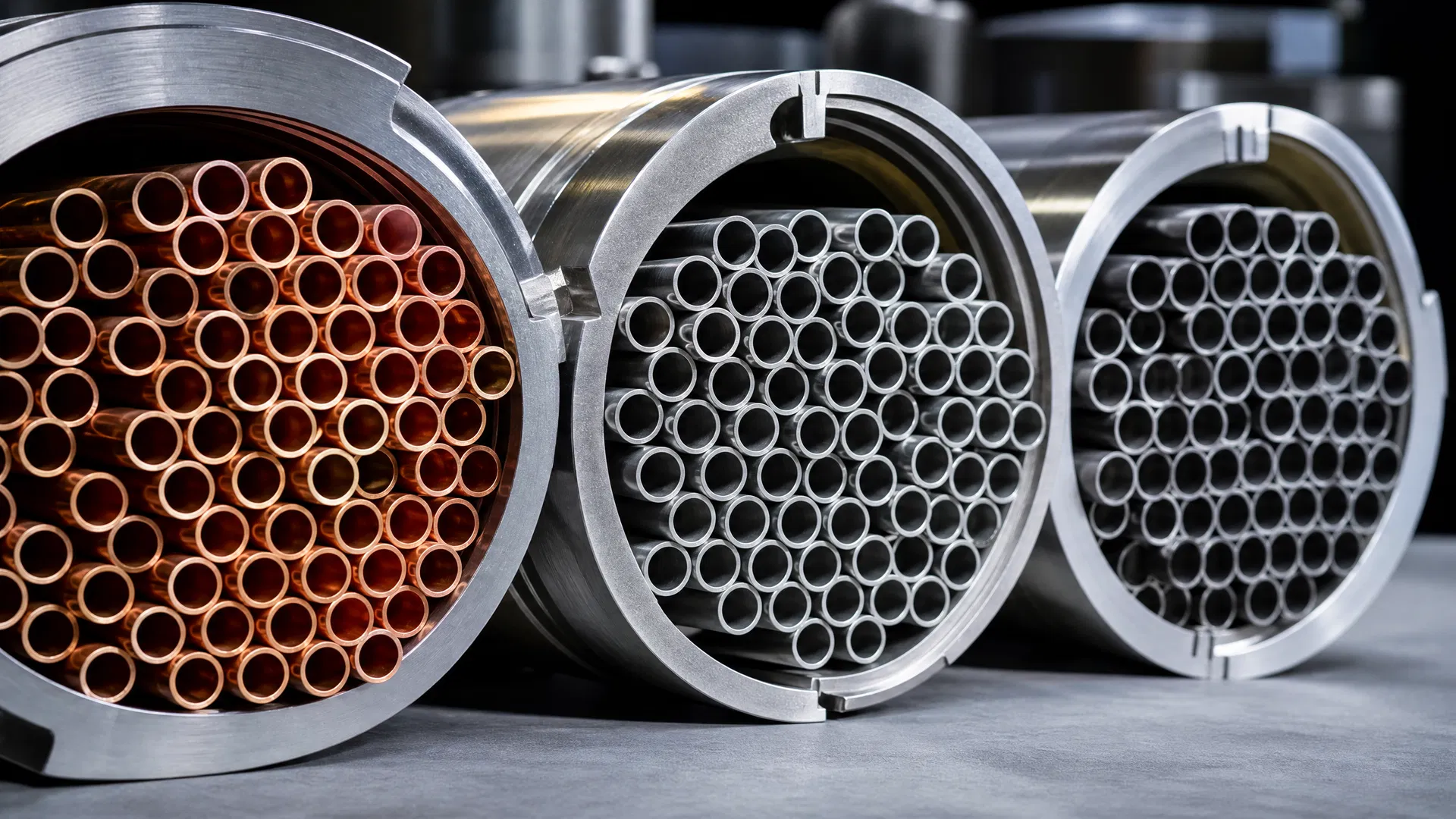
Exotic alloy heat exchangers made from Hastelloy, Inconel, Monel, and other nickel-based superalloys are among the most valuable pieces of surplus industrial equipment you can sell. These units command premium prices because the raw alloy content alone is worth $8–$25+ per pound, and intact reusable units sell for multiples of that in the secondary market. At Surplus Heat Exchangers, we buy exotic alloy units nationwide and pay based on full alloy value — not mixed-metal scrap rates.
Surplus Heat Exchangers buys used and surplus heat exchangers nationwide — 100% upfront, with free rigging and freight, in any condition. Send a photo of the nameplate to 951-403-5738 for a same-day cash offer.
Why Exotic Alloy Exchangers Are Worth So Much
The economics of exotic alloy heat exchangers are fundamentally different from standard carbon steel or even stainless steel units. A typical Hastelloy C-276 shell-and-tube heat exchanger contains tubes, tubesheets, and possibly shell components made from material that costs $25–$45 per pound to purchase new from the mill. Even at scrap alloy recycling rates, these materials command $8–$18 per pound — compared to $0.05–$0.12 for carbon steel scrap.
This means a relatively small exotic alloy heat exchanger weighing 5,000 pounds might contain $40,000–$90,000 worth of alloy material alone. A larger unit in the 15,000–30,000 pound range can easily contain $150,000–$400,000 in recoverable alloy value. And if the unit is reusable — meaning it can be recertified and placed back into service — its value is even higher because it saves the end user the 12–26 week lead time and premium fabrication cost of ordering new.
At Surplus Heat Exchangers, we understand this value and price accordingly. When you sell an exotic alloy exchanger to a general scrap yard, they often misidentify the alloy, classify it as "stainless" or "nickel-bearing," and pay a fraction of its true worth. We use XRF analysis and alloy verification to identify exactly what you have and pay based on the actual alloy composition.
Identifying Your Exotic Alloy: What to Look For
Many sellers do not realize their heat exchanger contains exotic alloys because the equipment has been in service for decades and the original specifications are buried in old files. Here are the ways to identify exotic alloy content:
Nameplate data: The manufacturer's nameplate typically lists materials of construction using UNS numbers, ASTM specifications, or trade names. Look for designations like:
- UNS N10276 or "Hastelloy C-276" — the most common nickel-molybdenum-chromium alloy
- UNS N06625 or "Inconel 625" — nickel-chromium-molybdenum alloy
- UNS N06600 or "Inconel 600" — nickel-chromium-iron alloy
- UNS N04400 or "Monel 400" — nickel-copper alloy
- UNS N08825 or "Incoloy 825" — nickel-iron-chromium-molybdenum alloy
- UNS N10665 or "Hastelloy B-2" — nickel-molybdenum alloy for reducing acids
- UNS R50250 through R56400 — titanium grades (covered in our titanium guide)
XRF testing: If the nameplate is missing or illegible, a handheld X-ray fluorescence (XRF) analyzer can identify the exact alloy composition in seconds. Many scrap dealers and metal recyclers have XRF guns. If you can get a reading before calling us, it helps — but we also perform our own verification, so it is not required.
Visual and physical clues: Exotic nickel alloys are typically non-magnetic (or very weakly magnetic), silvery-gray in color, and noticeably heavier than stainless steel for the same dimensions. Monel has a slight greenish tint when weathered. Hastelloy and Inconel are virtually indistinguishable visually from high-grade stainless steel without testing.
Service history: If your heat exchanger was used in highly corrosive chemical service — hydrochloric acid, sulfuric acid, chlorine gas, fluorine compounds, or high-temperature oxidizing environments — there is a strong probability it contains exotic alloys, because standard materials cannot survive those conditions.
Alloy-by-Alloy Value Guide
| Alloy family | Common grades | Typical scrap value (per lb) | Reusable unit premium | Common applications |
|---|---|---|---|---|
| Hastelloy C-series | C-276, C-22, C-2000 | $8–$14 | 3–5× scrap value | Chlor-alkali, flue gas, chemical reactors |
| Inconel 600/625 | 600, 601, 625, 718 | $6–$12 | 3–5× scrap value | High-temp oxidation, nuclear, aerospace |
| Monel 400/K-500 | 400, K-500, R-405 | $5–$9 | 2–4× scrap value | Seawater, HF acid, marine applications |
| Incoloy 800/825 | 800H, 800HT, 825 | $3–$6 | 2–4× scrap value | Sulfuric acid, phosphoric acid, refining |
| Hastelloy B-series | B-2, B-3 | $8–$15 | 3–5× scrap value | Reducing acids (HCl, H2SO4) |
| Titanium | Gr 1, Gr 2, Gr 7, Gr 12 | $3.50–$6 | 3–6× scrap value | Chloride service, seawater, bleach plants |
| Zirconium | Zr 702, Zr 705 | $10–$20 | 4–8× scrap value | Sulfuric acid (all concentrations), HCl |
These values are approximate ranges based on current market conditions. Actual offers depend on the specific grade, form (tube vs plate vs shell), condition, and weight of your unit. Contact us for a precise valuation of your specific equipment.
Why Scrap Yards Underpay for Exotic Alloys
One of the most common and costly mistakes we see is plant managers sending exotic alloy heat exchangers to general scrap yards. Here is why this almost always results in a massive loss of value:
Misidentification: General scrap yards often lack the XRF equipment or metallurgical knowledge to distinguish between different nickel alloys. A Hastelloy C-276 tube bundle worth $12/lb as verified alloy scrap might be classified as "high nickel" and purchased at $4–$5/lb, or worse, lumped in with 300-series stainless at under $1/lb.
Mixed-lot penalties: If you deliver an assembled heat exchanger with a carbon steel shell and Hastelloy tubes, the scrap yard may price the entire unit as "mixed metal" rather than separating and valuing each component individually. This can reduce your payout by 60–80% compared to proper alloy-specific valuation.
No reuse premium: Scrap yards melt everything. They have no mechanism to capture the reuse value of intact tubes, tubesheets, or complete units. A Hastelloy tube bundle that could be reinstalled in another exchanger (worth 3–5× scrap) gets melted down at commodity rates.
When you sell to Surplus Heat Exchangers, we verify the alloy, separate the value of each component, and assess reuse potential. This multi-level valuation consistently yields offers that are 2–5× what a scrap yard would pay for the same unit.
Which Industries Generate Exotic Alloy Exchangers
If your facility operates in any of these industries, there is a high probability that some of your heat exchangers contain exotic alloys worth significant money:
- Chemical manufacturing: Particularly plants handling hydrochloric acid, sulfuric acid, chlorine, caustic soda, or organic solvents. Hastelloy and Inconel are standard materials of construction in these services.
- Pharmaceutical: High-purity processes often specify Hastelloy or high-nickel alloys for corrosion resistance and product purity.
- Pulp and paper: Bleach plant exchangers frequently use titanium or Hastelloy to resist chlorine dioxide and hypochlorite.
- Oil refining: Hydrotreater effluent coolers, overhead condensers in high-chloride crude service, and amine regenerator exchangers often contain Monel, Incoloy, or Hastelloy.
- Power generation: Flue gas desulfurization (FGD) systems, geothermal plants, and nuclear facilities use exotic alloys extensively.
- Offshore oil and gas: Seawater-cooled exchangers on platforms frequently use Monel, cupro-nickel, titanium, or super duplex stainless.
- Semiconductor and electronics: Ultra-high-purity chemical delivery systems use Hastelloy and fluoropolymer-lined exchangers.
How to Sell Your Exotic Alloy Heat Exchanger to Us
The process is the same as selling any heat exchanger, but the stakes are higher because of the alloy value involved. Here is what to do:
Step 1: Photograph the nameplate. If it shows any of the alloy designations listed above (or UNS numbers starting with N, R, or S followed by 5 digits), you likely have an exotic alloy unit worth significant money.
Step 2: If no nameplate is available, tell us what service the exchanger was in. The process chemistry often tells us what alloy was required, which helps us estimate value before physical verification.
Step 3: Send photos and information to us. We will provide a preliminary cash offer based on the alloy identification, estimated weight, and condition. For high-value exotic alloy units, we may arrange XRF verification at our cost to confirm the exact alloy and finalize the offer.
Step 4: Accept the offer, receive 100% payment upfront, and we handle all rigging and freight at no cost to you.
Do not send exotic alloy equipment to a general scrap yard. The difference between proper alloy-specific valuation and generic "mixed metal" pricing can be tens of thousands — or even hundreds of thousands — of dollars on a single unit. Call Surplus Heat Exchangers at 951-403-5738 or use our secure online quote form to get a proper valuation today.