
Selling heat exchangers from a chemical or petrochemical plant involves evaluating exotic alloys like Hastelloy or titanium, verifying TEMA designations, and assessing the unit's condition for either resale or scrap. Facilities can maximize their financial return by selling these specialized units to a dedicated buyer who understands chemical process equipment, pays 100% upfront, and handles all heavy rigging and freight.
Surplus Heat Exchangers buys used and surplus heat exchangers nationwide — 100% upfront, with free rigging and freight, in any condition. Send a photo of the nameplate to 951-403-5738 for a same-day cash offer.
Why is selling chemical plant heat exchangers different from standard industrial units?
Chemical and petrochemical facilities operate under some of the most extreme conditions found in any industry. These plants handle highly corrosive fluids, volatile gases, and extreme temperature fluctuations on a daily basis. Because of these demanding environments, the heat exchangers used in these processes are rarely standard carbon steel units. Instead, they are engineered with exotic alloys, specialized TEMA (Tubular Exchanger Manufacturers Association) configurations, and heavy-duty construction designed to withstand aggressive chemical attacks and high-pressure operations.
When it comes time to decommission, upgrade, or liquidate these assets during a plant turnaround, their specialized nature makes them significantly more valuable than typical HVAC or light industrial heat exchangers. However, realizing this value requires a buyer who truly understands the specific metallurgy and process applications. A standard local scrap yard will only view a Hastelloy or titanium shell and tube heat exchanger as mixed metal, paying a fraction of its true worth. In contrast, specialized buyers recognize the high resale potential of these units in the secondary market.
Furthermore, chemical plants often have strict safety, environmental, and operational protocols, meaning the removal process requires experienced riggers and freight handlers. Surplus Heat Exchangers specializes in this exact process. We purchase surplus and used chemical plant heat exchangers nationwide, paying 100% upfront, and managing all the complex logistics of removal and transportation.
What is the resale value of exotic alloy heat exchangers?
The value of a used heat exchanger from a petrochemical plant is primarily determined by its metallurgy, size (measured in square footage of heat transfer area), condition, and current market demand. Because chemical processes often involve sulfuric acid, hydrochloric acid, or high-chloride environments, materials like 316L stainless steel, titanium, and various grades of Hastelloy or Inconel are standard. These exotic alloys are incredibly expensive to purchase new, which drives up the value of used units in good condition.
When evaluating a unit, it is crucial to understand the difference between its scrap metal value and its functional resale value. For example, a functional shell and tube heat exchanger can resell for roughly a significant premium over scrap based on its heat-transfer surface area, depending heavily on the materials of construction and whether the tube bundle is intact and free of severe pitting or fouling. If a unit is damaged beyond repair, heavily corroded, or structurally compromised, it falls back to its base scrap commodity value.
While these scrap prices provide a baseline, selling the unit intact to Surplus Heat Exchangers often yields a much higher return. We evaluate the equipment for its functional reuse in the chemical processing industry rather than just melting it down, allowing us to offer top dollar for your surplus assets.
How does documentation impact the value of petrochemical heat exchangers?
In the chemical and petrochemical industries, traceability and documentation are just as critical as the physical equipment itself. When a plant is looking to sell a used heat exchanger, having the original paperwork can significantly increase the unit's value and marketability. Buyers in the secondary market need to verify the design pressures, temperature ratings, and exact metallurgical composition before installing a used unit into a hazardous chemical process.
The most important piece of documentation is the U-1 Data Report, which is standard for any unit that is ASME code stamped. This document provides a comprehensive record of the materials used, the design parameters, the shell and tube thicknesses, and the original manufacturer's specifications. Additionally, any available inspection reports, hydro-test results, or maintenance logs that prove the tube bundle is free of leaks will make the unit much more attractive to buyers.
Even if the paperwork is lost, the original manufacturer's nameplate attached to the shell is vital. The nameplate contains the serial number, year built, design limits, and National Board number. When you contact Surplus Heat Exchangers at 951-403-5738, sending clear photos of this nameplate is the fastest way to get an accurate, high-value offer. We can often use the information on the nameplate to track down the original specifications and maximize your payout.
What types of chemical plant heat exchangers are in highest demand?
The chemical processing industry utilizes a wide variety of heat transfer equipment, and certain designs and brands hold their value exceptionally well in the surplus market. Shell and tube heat exchangers are the undisputed workhorses of petrochemical plants. Units built to TEMA standards—specifically TEMA R (Refinery and severe service) and TEMA C (Chemical service)—are always in high demand. Configurations such as AES (floating head), BEM (fixed tubesheet), and AEP are highly sought after for their reliability, ease of maintenance, and ability to handle thermal expansion.
Beyond shell and tube designs, plate and frame heat exchangers are incredibly popular in chemical plants due to their compact footprint, ease of cleaning, and high thermal efficiency. Brands like Alfa Laval, GEA, Tranter, SWEP, and Kelvion are industry leaders, and their used equipment commands premium prices. Welded plate heat exchangers, block-type heat exchangers, and spiral heat exchangers (often manufactured by Alfa Laval or SPX/APV) are also highly valuable, particularly when constructed from exotic alloys designed to handle fouling fluids or slurries.
Other reputable manufacturers whose equipment we frequently purchase include Standard Xchange and ITT. Regardless of the brand or specific TEMA designation, if you have surplus units, there is a strong secondary market waiting for them. We buy all types, sizes, and configurations of chemical plant heat exchangers.
How do you handle lotting and bulk liquidation during a plant turnaround?
Chemical plants rarely replace just one piece of equipment at a time. During a scheduled plant turnaround, capacity expansion, or decommissioning phase, a facility may generate dozens of surplus heat exchangers, along with associated pumps, valves, and pressure vessels. Managing the disposal of this equipment can be a logistical nightmare for plant managers and contractors who are already operating under tight deadlines and strict budgets.
Lotting—the process of grouping multiple assets together for a single bulk sale—is the most efficient way to clear out a laydown yard. Instead of trying to find individual buyers for a titanium shell and tube unit, a Hastelloy plate and frame unit, and a dozen carbon steel coolers, a plant can sell the entire lot to a single specialized buyer. This approach saves countless hours of negotiation and coordination.
Surplus Heat Exchangers excels in bulk liquidations. We have the capital to purchase entire lots of chemical plant heat exchangers, paying 100% upfront before any equipment leaves your facility. By selling the entire lot to us, you eliminate the headache of piecemeal sales, reduce the time your laydown yard is cluttered, and ensure a swift, profitable resolution to your surplus equipment challenges.
What are the logistical challenges of removing heat exchangers from a chemical facility?
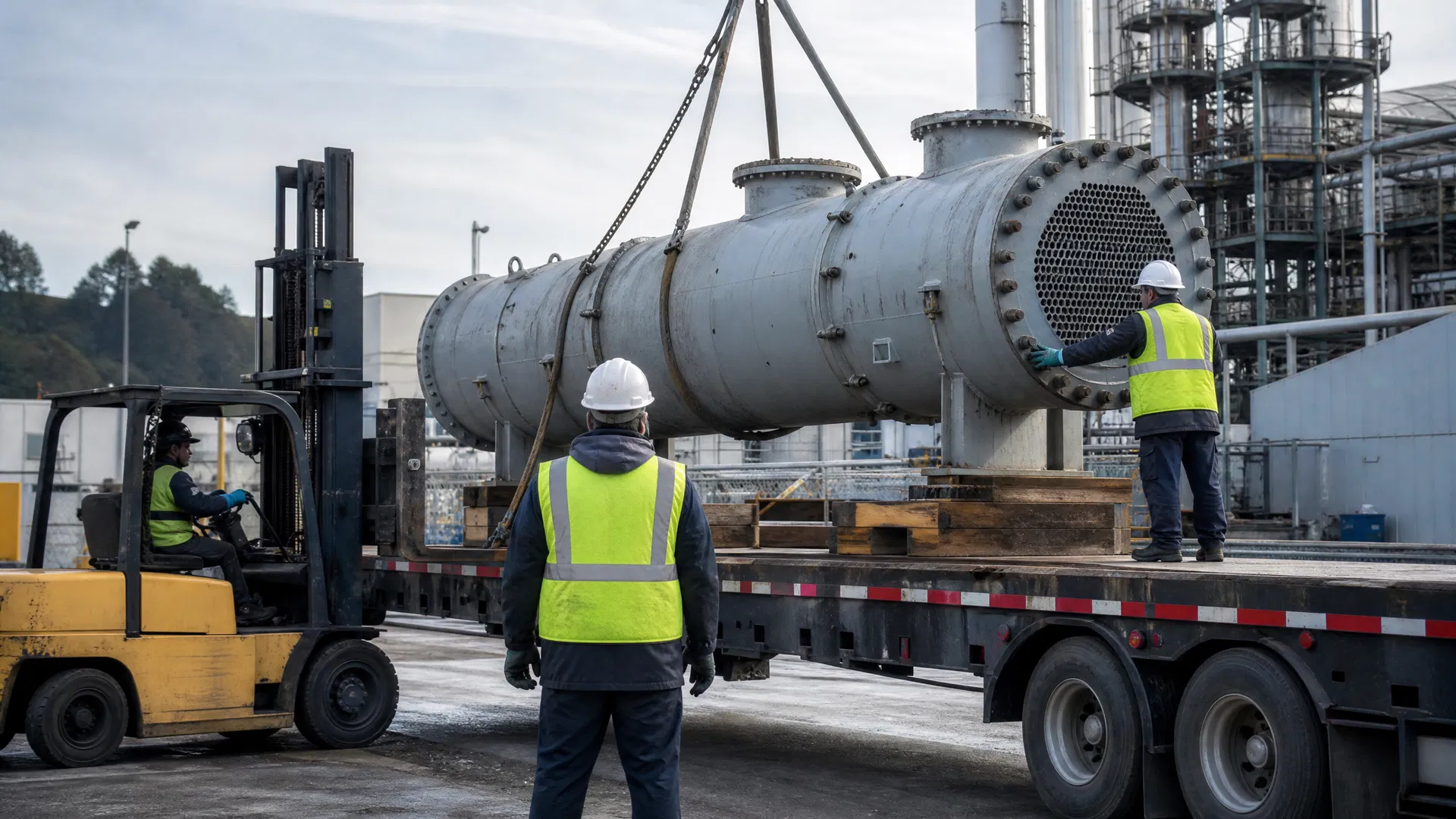
Removing heavy industrial equipment from a petrochemical plant involves navigating a maze of safety regulations, site-specific protocols, and physical constraints. Heat exchangers in these facilities can weigh anywhere from a few thousand pounds to over 100,000 pounds. They are often located in tight pipe racks, elevated platforms, or hazardous operating zones that require careful planning to access.
Standard scrap buyers typically lack the specialized insurance, safety training, and heavy rigging expertise required to safely extract these units. Furthermore, the freight logistics for oversized, overweight loads require specialized trailers, permits, and escort vehicles. Navigating these requirements can be a massive burden for a plant that just wants to get rid of old equipment.
When you sell to Surplus Heat Exchangers, you do not have to worry about any of these logistical hurdles. We handle all the heavy rigging, loading, and freight. Our team coordinates directly with your plant's safety and logistics personnel to ensure a seamless, incident-free removal process. We take on the risk and the heavy lifting, allowing your team to focus on core plant operations and upcoming production goals.
How can you sell your chemical plant heat exchangers for cash upfront?
If your chemical or petrochemical facility has used, surplus, or decommissioned heat exchangers taking up valuable space, turning them into working capital is a straightforward process. You do not need to wait for a consignment sale, deal with unreliable buyers who want to pay after the equipment is removed, or settle for lowball scrap yard prices.
To get started, simply gather some basic information about your equipment to help us evaluate its value. The most helpful items to provide include:
- Clear, well-lit photographs of the entire heat exchanger from multiple angles.
- A close-up, legible photo of the manufacturer's nameplate showing the serial number and design specs.
- Any available U-1 data reports, original manufacturer drawings, or inspection logs.
- A brief description of the unit's condition and its previous chemical process application.
Then, reach out to Surplus Heat Exchangers. You can call us directly at 951-403-5738 or email your photos and details to our secure online quote form. We buy heat exchangers in any condition—whether they are pristine, lightly used, or heavily fouled and ready for scrap. We will provide a fast, competitive offer, pay you 100% upfront in cash, and arrange for all the freight and rigging at zero cost to you. Don't let valuable exotic alloys and high-quality process equipment rust in a laydown yard; contact us today to monetize your surplus assets quickly and efficiently.