

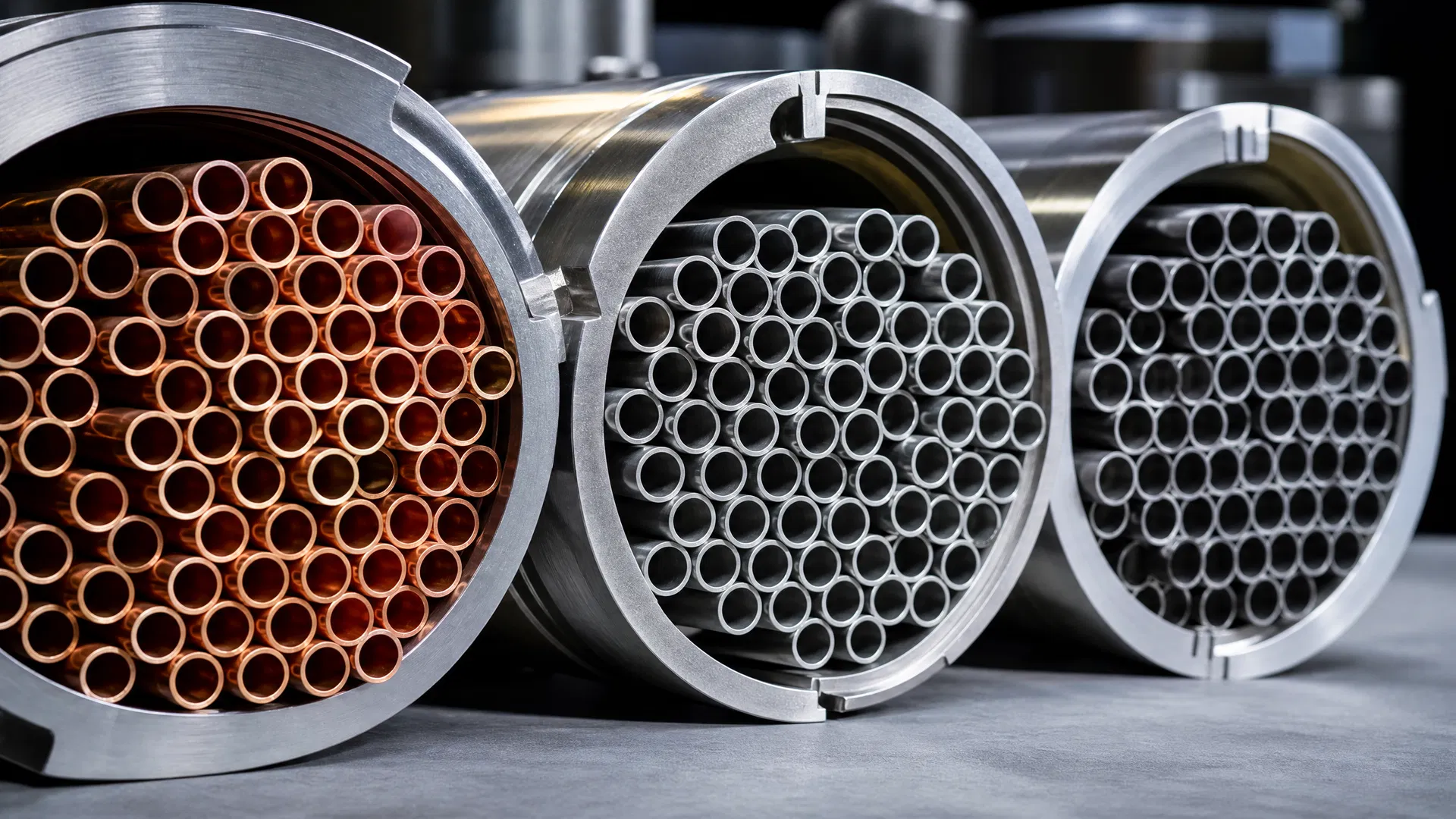
The primary difference between shell and tube and plate and frame heat exchangers lies in their design and pressure capabilities, with shell and tube models handling higher pressures and temperatures, while plate and frame units offer a more compact footprint and higher thermal efficiency. In the resale market, shell and tube heat exchangers generally hold better intrinsic value due to their massive material weight and standardized TEMA designs, though high-alloy plate heat exchangers from top brands also command strong secondary market demand.
Surplus Heat Exchangers buys used and surplus heat exchangers nationwide — 100% upfront, with free rigging and freight, in any condition. Send a photo of the nameplate to 951-403-5738 for a same-day cash offer.
What are the main differences between shell and tube and plate and frame heat exchangers?
When evaluating industrial thermal management systems, plant managers and engineers frequently compare shell and tube versus plate and frame heat exchangers. The fundamental difference between these two ubiquitous technologies is their physical construction and the specific way they facilitate heat transfer between two fluids.
A shell and tube heat exchanger consists of a large cylindrical pressure vessel (the shell) containing a densely packed bundle of tubes inside it. One fluid runs through the tubes, and another fluid flows over the tubes within the shell to transfer heat. This robust design is engineered to withstand extreme pressures and temperatures, making it the workhorse of heavy industries like petrochemical refining and power generation. Leading manufacturers in this space include Standard Xchange and ITT.
Conversely, a plate and frame heat exchanger is constructed from a series of thin, corrugated metal plates that are compressed together within a rigid frame. The fluids flow through alternating channels created by the corrugated plates. This design maximizes the surface area for heat transfer within a very compact footprint. Brands like Alfa Laval, GEA, Tranter, Kelvion, SWEP, and SPX/APV dominate the plate and frame market. While plate heat exchangers are incredibly efficient and easy to expand by simply adding more plates, they are generally limited by the temperature and pressure tolerances of the rubber or synthetic gaskets used to seal the plates.
How do shell and tube heat exchangers work and where are they used?
Shell and tube heat exchangers operate on a relatively straightforward thermodynamic principle: thermal energy is exchanged between a fluid flowing inside a bundle of tubes and a secondary fluid flowing through the shell that encases them. To maximize efficiency, baffles are often installed inside the shell to direct the flow of the shell-side fluid across the tubes, inducing turbulence and preventing dead zones.
These units are heavily standardized by the Tubular Exchanger Manufacturers Association (TEMA). TEMA designations, such as TEMA B (chemical process service), TEMA C (general commercial service), and TEMA R (severe requirements of petroleum refineries), dictate the mechanical standards and tolerances for these vessels. Depending on the application, the tube bundles can be fixed, floating head, or U-tube designs. U-tube and floating head designs allow for thermal expansion and make it easier to remove the bundle for mechanical cleaning and inspection.
Because of their rugged construction, shell and tube heat exchangers are the preferred choice for high-pressure and high-temperature applications. You will find them operating as condensers, evaporators, and oil coolers in oil refineries, chemical processing plants, nuclear and fossil fuel power generation facilities, and large-scale manufacturing plants. Their ability to handle particulate-laden fluids and their resistance to thermal shocks make them indispensable in heavy industry.
What are the advantages of plate and frame heat exchangers in industrial applications?
Plate and frame heat exchangers offer several distinct advantages, primarily revolving around thermal efficiency and space conservation. The corrugated design of the plates induces highly turbulent fluid flow, which significantly increases the heat transfer coefficient. This means that a plate and frame heat exchanger can achieve the same thermal performance as a shell and tube unit while occupying a fraction of the floor space.
Another major advantage is modularity and ease of maintenance. In a gasketed plate heat exchanger (GPHE), the frame can be unbolted, allowing operators to easily access, clean, or replace individual plates. If a plant's thermal requirements increase, engineers can simply add more plates to the existing frame rather than purchasing an entirely new unit. This flexibility is highly valued in industries with evolving process demands.
Plate and frame heat exchangers are widely used in the food and beverage industry, pharmaceuticals, HVAC systems, and marine applications. In sanitary applications, the ability to completely disassemble and sterilize the plates is a critical regulatory requirement. While gasketed models are the most common, brazed plate heat exchangers (BPHE) and fully welded plate heat exchangers are also utilized when higher pressures or aggressive chemicals are involved, eliminating the need for vulnerable rubber gaskets.
Which type of heat exchanger holds better resale value in the surplus market?
When a plant decommissions equipment, upgrades its processes, or shuts down entirely, recovering capital from surplus assets becomes a priority. In the secondary market, both types of heat exchangers have value, but they appeal to different buyers and hold their value differently.
Generally, shell and tube heat exchangers hold better intrinsic resale value. This is due to their massive construction, standardized TEMA designs, and the sheer volume of high-value metals used in their fabrication. A used shell and tube heat exchanger can often be refurbished, hydro-tested, and redeployed in a new facility with minimal modification. Furthermore, because they do not rely on perishable gaskets, their core components degrade much slower over time.
Plate and frame heat exchangers also have a strong secondary market, particularly those manufactured by premium brands like Alfa Laval or GEA. However, their resale value is heavily dependent on the condition of the plates and the specific alloy used. Standard stainless steel plates hold moderate value, but plates stamped from titanium or Hastelloy command premium prices. The primary drawback for used plate heat exchangers is that buyers almost always need to replace the gaskets before putting the unit back into service, which adds to the refurbishment cost and slightly depresses the"as-is" resale value.
How much is a used shell and tube heat exchanger worth?
Valuing a used shell and tube heat exchanger requires analyzing several variables, including the total heat transfer surface area, the materials of construction, the TEMA classification, and the unit's current operating condition. On the surplus market, a functional shell and tube heat exchanger typically resells for roughly a significant premium over scrap based on its heat-transfer surface area.
Units constructed entirely of carbon steel will fall at the lower end of this spectrum, while those featuring exotic alloys like titanium, cupro-nickel, or high-grade stainless steel will command the upper end. For example, a large TEMA R condenser with 316 stainless steel tubes and a carbon steel shell is a highly desirable asset that will fetch a strong price. The pressure rating also plays a crucial role; high-pressure units require thicker tube walls and heavier shells, increasing both their utility and their scrap floor value.
If you have a surplus shell and tube heat exchanger taking up valuable space in your boneyard, Surplus Heat Exchangers is ready to make a competitive offer. We buy used and surplus heat exchangers nationwide, paying 100% upfront before the equipment ever leaves your facility.
What is the scrap value of heat exchanger materials like stainless steel and titanium?
When a heat exchanger is damaged beyond repair, heavily fouled, or simply too obsolete to find a buyer on the surplus equipment market, its value defaults to the raw scrap metal it contains. Because heat exchangers are built to resist corrosion and handle aggressive chemicals, they are often constructed from highly valuable non-ferrous metals and specialty alloys.
While these scrap prices can provide a baseline, it is crucial to remember that selling your equipment as a functional unit to a specialized buyer will almost always yield a significantly higher return than selling it to a local scrap yard. Scrap yards only pay for the melted-down weight, whereas equipment buyers pay for the engineering, fabrication, and utility of the unit.
How can you sell your used shell and tube or plate heat exchanger quickly?
Whether you are liquidating a single Alfa Laval plate and frame unit or an entire plant's worth of Standard Xchange shell and tube heat exchangers, the process of selling heavy industrial equipment can be daunting. Finding a qualified buyer, negotiating terms, and arranging for specialized heavy-haul transportation takes time and resources that most plant managers simply do not have.
That is where Surplus Heat Exchangers comes in. We specialize in purchasing used, surplus, and even damaged heat exchangers from facilities across the United States. We eliminate the friction of the secondary market by offering a streamlined, risk-free selling experience.
Here is why contractors, demolition crews, and plant operators choose to sell to us:
- 100% Upfront Payment: We do not do consignments or delayed terms. We pay you in full, upfront, before our trucks ever arrive at your site.
- We Handle All Freight and Rigging: Moving a 20,000-pound TEMA R heat exchanger requires specialized logistics. Our team coordinates and pays for all freight, rigging, and transportation.
- We Buy in Any Condition: Whether your unit is brand new surplus, gently used, or heavily fouled and destined for scrap, we will make you a cash offer.
- Fast and Fair Valuations: We understand the intrinsic value of your equipment, from the TEMA class down to the specific alloy of the tube bundle.
Do not let your surplus thermal management equipment rust in a laydown yard. Turn your idle assets into immediate working capital. To get a fast, no-obligation cash offer, simply take a few clear photos of the unit and a close-up of the manufacturer's nameplate. Call us today at 951-403-5738 or email your photos and details to our secure online quote form. We are ready to buy your used heat exchangers today.
| Material | Typical scrap range | Why it matters for resale |
|---|---|---|
| Carbon steel | $0.05–$0.12 / lb | the most common shell/tube material; lowest scrap value but highest resale demand for standard process duty |
| 304 stainless steel | $0.40–$0.70 / lb | corrosion resistant, widely reused in food, dairy and chemical service |
| 316 / 316L stainless steel | $0.55–$0.90 / lb | molybdenum-bearing grade for chloride and marine service; strong resale value |
| Copper | $2.50–$3.50 / lb | found in tube bundles and HVAC coils; high recovery value |
| Admiralty brass | $1.40–$2.20 / lb | classic condenser tube alloy; valued for both scrap and reuse |
| Cupro-nickel (90/10 & 70/30) | $2.00–$3.20 / lb | seawater and brackish-water service; premium resale and scrap |
| Titanium | $3.50–$6.00 / lb | used in aggressive chloride, seawater and chemical duty; the highest-value exchanger material |
Scrap ranges are indicative only and move with commodity markets; reusable units almost always beat scrap. Call 951-403-5738 for a current cash offer.
Key takeaway: across every common alloy, a working heat exchanger is worth far more resold than scrapped — often several times its melt value — so get a resale offer before you weigh it in.