

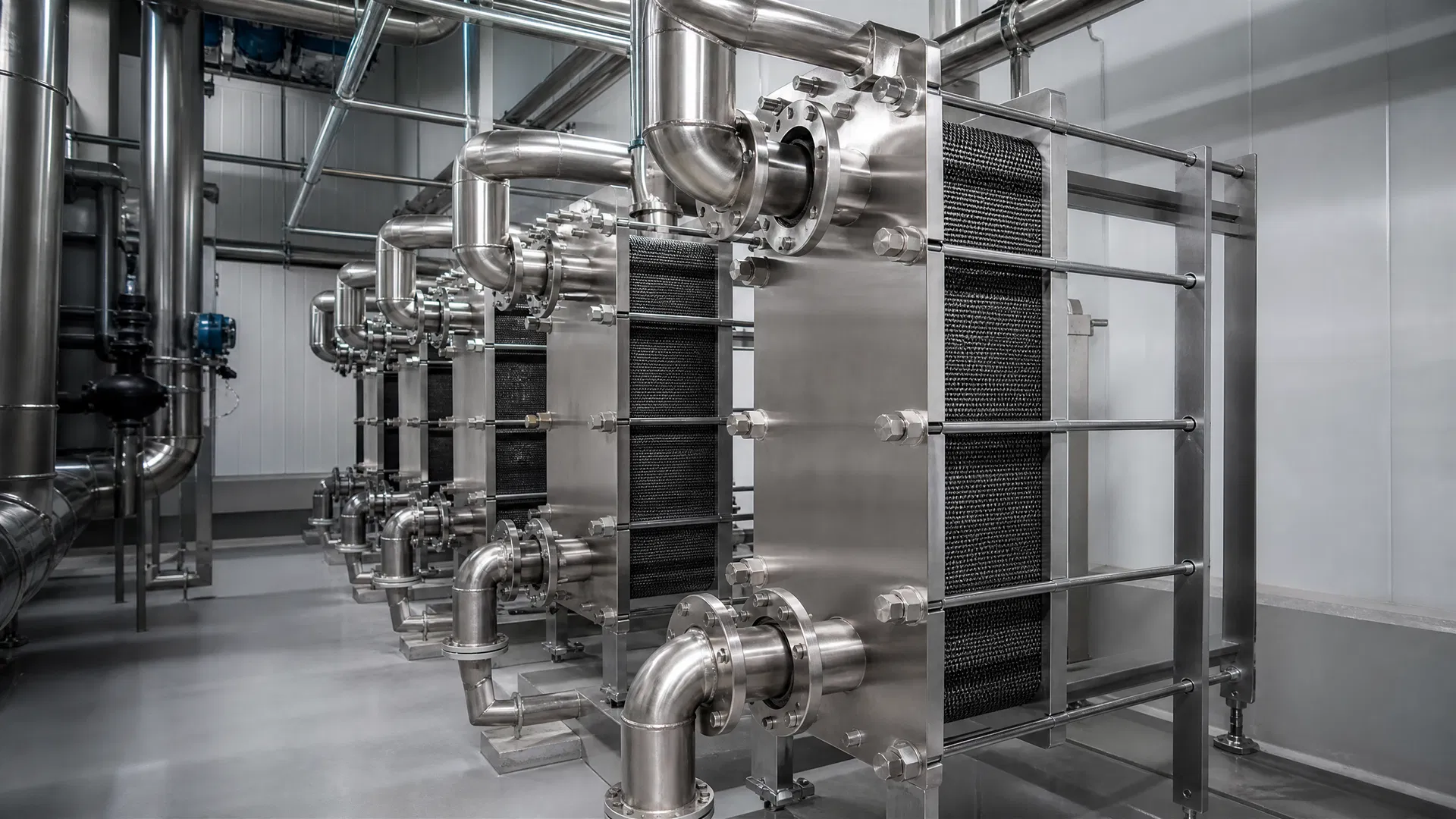
You can sell your surplus, used, or new-old-stock brazed plate heat exchangers directly to Surplus Heat Exchangers for 100% upfront cash. Whether you have a single large commercial unit or pallet quantities of copper-brazed HVAC components, we evaluate your equipment based on brand, material, and condition, then handle all freight and logistics nationwide.
Surplus Heat Exchangers buys used and surplus heat exchangers nationwide — 100% upfront, with free rigging and freight, in any condition. Send a photo of the nameplate to 951-403-5738 for a same-day cash offer.
What are brazed plate heat exchangers and why do they hold resale value?
Brazed plate heat exchangers (BPHEs) are highly efficient, compact thermal transfer devices constructed from corrugated stainless steel plates that are vacuum-brazed together. Unlike traditional gasketed plate-and-frame heat exchangers, brazed units do not rely on rubber gaskets or heavy carbon steel frames to maintain their internal seal. Instead, the brazing material—typically copper or nickel—melts during manufacturing and permanently seals the edges and contact points of the plates. This creates a rigid, pressure-resistant, and leak-proof channel system. This unique construction allows them to handle high operating pressures and extreme temperature variations within a remarkably small footprint.
These units hold significant resale value for several distinct reasons. First, new-old-stock (NOS) or lightly used units are in constant demand across various industries, from commercial HVAC to industrial refrigeration. Facility managers and mechanical contractors are frequently searching for replacement units for new builds, making functional surplus units highly marketable. Second, even if a brazed plate heat exchanger has reached the end of its operational life, it retains substantial intrinsic value due to its raw material composition. The primary materials are high-grade stainless steel—usually 304 or 316 stainless—and the brazing filler. With current scrap values for 304 stainless steel ranging from only a baseline commodity rate, 316 stainless steel between only a baseline commodity rate, and copper commanding only a baseline commodity rate, the scrap recovery alone makes these units worth selling. Whether destined for direct reuse or material recycling, your surplus inventory represents locked-up capital that can be quickly converted into cash.
How does the brazing material (copper vs. nickel) affect the value of my surplus units?
The choice of brazing material fundamentally dictates the applications a brazed plate heat exchanger can serve, which in turn influences its resale and scrap value. The two most common brazing materials are copper and nickel, each serving distinct industrial needs and commanding different prices on the secondary market.
Copper-brazed plate heat exchangers are the industry standard for the vast majority of HVAC, refrigeration, and general hydronic applications. They are highly effective for water-to-water, water-to-glycol, and standard refrigerant heat transfer. Because they are so ubiquitous, there is a massive secondary market for copper-brazed units. However, copper is not universally compatible; it can corrode when exposed to certain aggressive fluids, such as ammonia (commonly used in industrial refrigeration) or highly purified deionized water.
Nickel-brazed plate heat exchangers are engineered specifically for these demanding environments. Nickel offers superior resistance to corrosive media and can withstand higher operating temperatures than copper. As a result, nickel-brazed units are frequently utilized in chemical processing, pharmaceutical manufacturing, ammonia refrigeration systems, and laser cooling applications involving deionized water. Because they are specialized and have a higher initial manufacturing cost, new-old-stock nickel-brazed units often command a premium in the surplus market. When evaluating your surplus inventory, identifying the brazing material is a critical step in determining its maximum potential value.
What are the common applications for brazed plate heat exchangers that buyers look for?
The versatility of brazed plate heat exchangers means they are deployed across a wide spectrum of demanding industries. When you sell your surplus units, they are typically repurposed for one of several high-demand applications. Understanding these use cases helps illustrate why buyers are eager to acquire your surplus equipment and why the secondary market remains so robust.
In the HVAC and refrigeration sectors, BPHEs are the backbone of modern climate control and thermal management. They are extensively used as evaporators and condensers in commercial chillers, industrial heat pumps, and variable refrigerant flow (VRF) systems. Their compact size makes them ideal for tight mechanical rooms, skid-mounted systems, and packaged equipment where space is at a premium. Additionally, they are frequently employed in district heating and cooling networks, acting as the critical pressure-breaker and thermal interface between the central energy plant and individual building hydronic systems.
Industrial processes also rely heavily on brazed plate technology for precise temperature control. They are widely used for hydraulic oil cooling in heavy machinery, ensuring that industrial presses, injection molding machines, and stamping equipment operate within safe temperature ranges. In the food and beverage industry, they facilitate rapid heating and cooling of process water and clean-in-place (CIP) fluid heating. Furthermore, the exponential growth of data centers has created a massive demand for efficient liquid cooling solutions, where BPHEs are used to isolate the chilled water loop from the sensitive server rack cooling infrastructure. Buyers are constantly seeking reliable surplus units to fulfill these diverse operational requirements.
How much are my used or new-old-stock brazed plate heat exchangers worth?
Determining the exact value of your surplus brazed plate heat exchangers involves assessing several key factors: condition, material composition, physical size, and brand reputation. The most significant dividing line in valuation is whether the unit is suitable for direct reuse or if it must be valued strictly for its scrap metal content.
New-old-stock (NOS) units—those that have never been installed and are ideally still in their original factory packaging—yield the highest financial returns. Mechanical contractors, OEMs, and wholesale distributors frequently liquidate excess inventory resulting from canceled projects or facility closures. These NOS units can be resold directly into the market, meaning we can offer you a price that reflects their functional utility rather than just their raw material weight. Lightly used units that are clean and capable of passing a rigorous pressure test also hold strong resale value.
If the units are heavily fouled, physically damaged, or have failed in service, their value is calculated based on scrap metal rates. While shell and tube heat exchangers often resell for a significant premium over scrap value depending on materials and condition, brazed plate units are typically valued based on their overall capacity, brand, and the high concentration of valuable alloys packed into their compact frames. The combination of 304 or 316 stainless steel and copper or nickel brazing ensures a solid baseline value. For example, a large commercial BPHE weighing several hundred pounds contains a significant amount of valuable alloy that recyclers covet. To provide a clearer picture of how these units are evaluated, consider the following comparison table:
Which brands of brazed plate heat exchangers are most in demand?
While the fundamental brazing technology is similar across manufacturers, certain brands have established themselves as industry leaders due to their proven reliability and widespread global adoption. When you sell your surplus equipment, units from these recognized manufacturers are typically the easiest to evaluate and the fastest to move on the secondary market.
- SWEP: A pioneer in brazed plate technology, SWEP units are highly sought after for both HVAC and industrial applications.
- Alfa Laval: As one of the most respected names in heat transfer, Alfa Laval's brazed plate exchangers are ubiquitous in commercial facilities worldwide.
- Kelvion (formerly GEA): Known for robust construction, Kelvion units are frequently found in demanding refrigeration and process cooling environments.
- Tranter: Tranter offers a wide range of BPHEs that are highly regarded for their durability in heavy-duty commercial applications.
- Standard Xchange: Often utilized in commercial HVAC and plumbing applications, these units are highly recognizable and easy to repurpose.
- ITT, SPX/APV, and Danfoss: These brands also command strong respect in the market, particularly in specialized refrigeration and fluid handling systems.
Regardless of the brand, the most critical element for accurate valuation is the manufacturer's nameplate. The data tag provides essential engineering information, including the exact model number, design pressure, maximum operating temperature, volume, and material composition. When preparing to sell your units, ensuring the nameplates are legible and photographing them clearly will significantly expedite the appraisal process and ensure you receive the highest possible offer.
Can I sell pallet quantities of new-old-stock brazed plate heat exchangers?
Absolutely. In fact, purchasing bulk quantities is one of our core specialties at Surplus Heat Exchangers. It is incredibly common for mechanical contractors, original equipment manufacturers (OEMs), and wholesale distributors to accumulate pallet loads of new-old-stock units. This accumulation often happens due to bulk purchasing discounts, sudden changes in project specifications, canceled orders, or the phasing out of specific product lines in favor of newer models.
Storing pallet quantities of obsolete or excess inventory ties up valuable warehouse space and freezes capital. Selling these units individually on secondary markets can be a logistical nightmare, requiring you to manage multiple listings, answer endless technical questions, and handle individual shipping arrangements. We eliminate this headache entirely. We buy pallet quantities and even full truckloads of brazed plate heat exchangers in a single, streamlined transaction. Whether you have fifty identical copper-brazed evaporators or a mixed pallet of various sizes and brands, we will evaluate the entire lot and provide a comprehensive bulk offer. Best of all, we handle the heavy lifting—arranging and paying for the LTL (Less-Than-Truckload) or full truckload freight directly from your loading dock, ensuring a frictionless process.
How do I sell my surplus brazed plate heat exchangers for cash upfront?
Selling your surplus, used, or new-old-stock brazed plate heat exchangers to Surplus Heat Exchangers is a streamlined, risk-free process designed to get cash into your hands quickly while removing all logistical burdens. We understand that your primary business is not liquidating equipment, so we make the transaction as effortless and transparent as possible.
The process begins with a simple phone call or email. Reach out to our purchasing team at 951-403-5738 or send a message to our secure online quote form. To help us provide the fastest and most accurate offer, please include clear photos of the heat exchangers. The most important photo you can take is a close-up of the manufacturer's nameplate, as this tells us the brand, model, materials, and pressure ratings. Additionally, provide a brief description of the condition (e.g., new in box, used but functional, or scrap condition) and the total quantity available.
Once we review your information, we will present a fair, no-obligation cash offer based on current market demand and material values. If you accept, we pay you 100% upfront before the equipment ever leaves your facility. You do not have to wait for the units to sell to a third party, and you do not have to worry about net-30 payment terms. After payment is secured, our logistics team takes over. We arrange all the freight, whether it requires a dedicated flatbed, an LTL carrier, or specialized rigging for massive commercial units. We cover all shipping costs, meaning the offer you receive is the exact amount you keep. Don't let your surplus brazed plate heat exchangers gather dust—contact Surplus Heat Exchangers today and turn your idle equipment into immediate working capital.