
A used or spare heat exchanger tube bundle is typically worth between a significant premium over scrap based on its heat-transfer surface area on the resale market, depending on its condition, metallurgy, and design. If damaged beyond repair, its value defaults to scrap metal prices, ranging from only a baseline commodity rate for carbon steel up to only a baseline commodity rate for titanium. Selling your surplus bundles to a specialized buyer ensures you recover maximum value without the hassle of finding an end-user.
Surplus Heat Exchangers buys used and surplus heat exchangers nationwide — 100% upfront, with free rigging and freight, in any condition. Send a photo of the nameplate to 951-403-5738 for a same-day cash offer.
How much is a used heat exchanger tube bundle worth?
When industrial facilities upgrade processes or clear maintenance yards, they often find surplus heat exchanger tube bundles. Determining exactly how much a used heat exchanger tube bundle is worth requires evaluating the secondary market for process equipment. Generally, a reusable tube bundle in good condition commands a significant premium over scrap based on its heat-transfer surface area. The actual cash offer depends on several critical variables.
For plant managers, these spare bundles represent tied-up capital. Whether brand-new spares or used bundles pulled during a turnaround, they hold significant intrinsic value. The highest valuations go to bundles made from exotic alloys, those with extensive surface areas, and units manufactured by top-tier brands like Standard Xchange, ITT, Kelvion, or SPX/APV. Even if the bundle has plugged tubes or minor corrosion, it retains value. Buyers evaluate these assets based on their potential for refurbishment and resale, or their base material scrap value.
What factors determine the resale value of a spare tube bundle?
The valuation of a spare or used tube bundle is based on specific technical and market factors. When you submit equipment details to a buyer, they look at key specifications to calculate an offer.
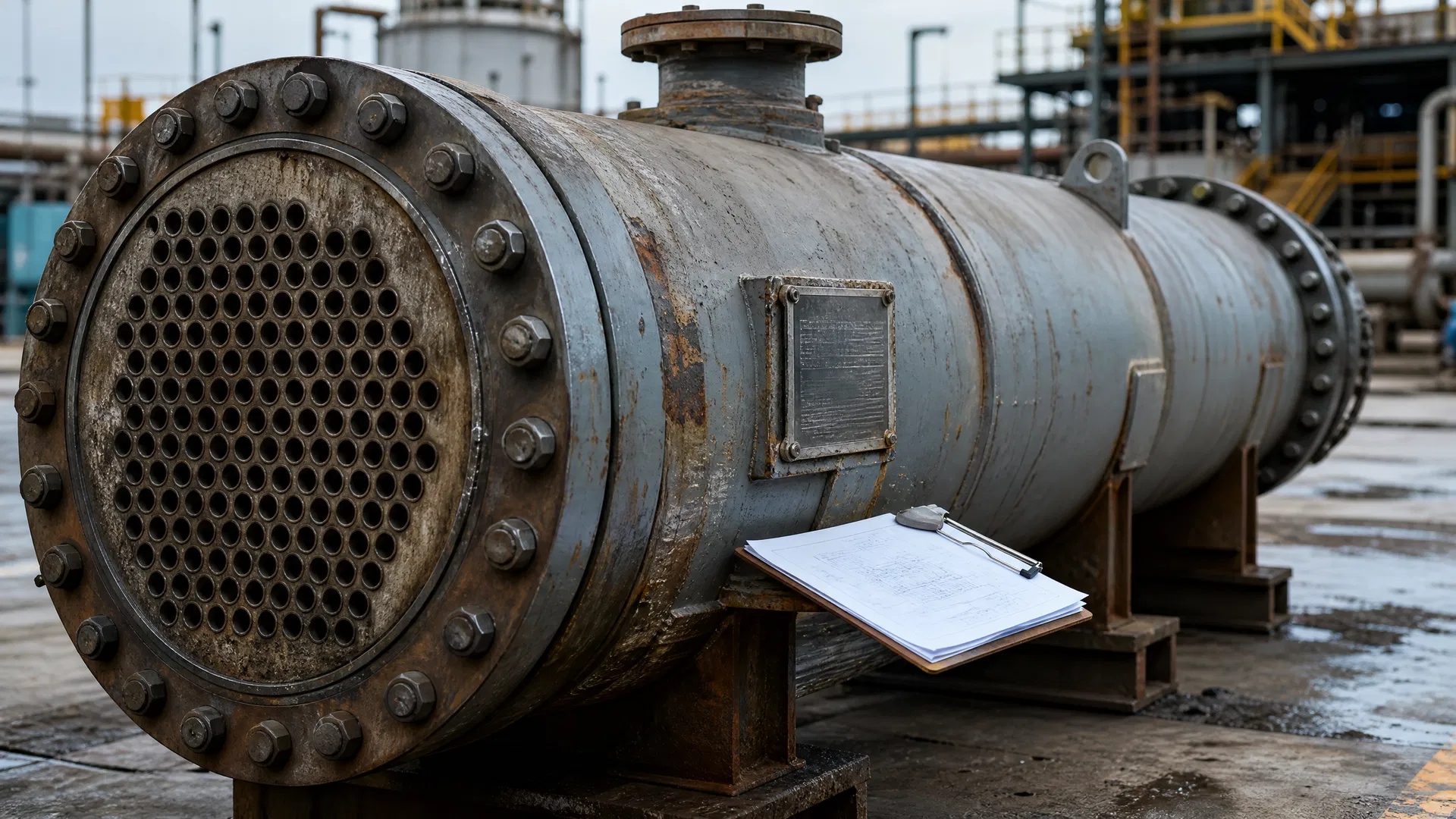
First is the physical condition of the tubes and tubesheet. A never-used spare bundle in its original crate fetches a premium over a bundle with ten years of service in a corrosive environment. Buyers look for pitting, stress corrosion cracking, and plugged tubes. A bundle with more than 10% of its tubes plugged generally sees a reduction in reusable value.
The second factor is total heat transfer area, measured in square feet. Larger bundles have more capacity and raw material, making them more valuable. Tube diameter, wall thickness, and pitch also determine desirability.
Finally, the original manufacturer carries weight. Bundles built by reputable companies like Alfa Laval, GEA, Tranter, or SWEP are known for rigorous engineering. Providing the original manufacturer's data reports or nameplate information significantly increases the appraised value by proving design pressure, temperature ratings, and material specifications.
How does the alloy material impact the value of your tube bundle?
Metallurgy is arguably the most important factor in determining a tube bundle's worth, especially if evaluated for material recovery value. Heat exchangers operate in vastly different environments, necessitating a wide variety of construction materials.
Carbon steel bundles are common and inexpensive. While highly marketable in excellent condition, their scrap value is low. Conversely, exotic alloys like titanium are incredibly valuable both as reusable equipment and scrap metal.
Consider the current estimated scrap metal prices for common heat exchanger materials:
When selling a bundle, the buyer calculates the total weight of the tubes, baffles, tie rods, and tubesheet. A heavy titanium bundle can be worth tens of thousands of dollars in raw material, whereas a carbon steel bundle of the exact same dimensions is worth a fraction of that amount.
What is the difference in value between U-tube and straight tube bundles?
The physical geometry of the tubes—straight or bent into a U-shape—influences marketability and value. Both designs have specific use cases, and buyers acquire both types.
U-tube bundles are highly desirable because they allow for thermal expansion. Since tubes are fixed to one tubesheet and free to expand at the U-bend, they are ideal for high temperature differentials. U-tube bundles can be easily removed from the shell for mechanical cleaning of the outside. However, cleaning the inside of U-bends is difficult, meaning a heavily fouled used U-tube bundle might require significant refurbishment.
Straight tube bundles are fixed to two tubesheets. They are generally easier to clean mechanically on the inside, making them preferable for heavily fouling fluids. Depending on the TEMA design, straight tube bundles can also be removable.
Neither design is inherently superior in resale value; it depends entirely on market demand. However, U-tube bundles often have a slight edge in the surplus market because their single-tubesheet design makes them more adaptable to different shell configurations.
Can you sell a tube bundle separately from the heat exchanger shell?
Yes, you can sell a tube bundle separately from its corresponding shell. This is a very common practice in the surplus industrial equipment market.
In many facilities, the heat exchanger shell is permanently welded into the piping system. When a tube bundle fails or reaches the end of its lifespan, maintenance teams pull the old bundle out and slide a new spare into the existing shell. This leaves the facility with a used bundle sitting in the boneyard, completely separated from any shell.
Surplus equipment buyers are highly interested in purchasing these standalone bundles. End-users frequently experience unexpected bundle failures and need immediate replacements to avoid costly downtime. Buying a brand-new bundle from an OEM takes months. If a surplus buyer has a standalone bundle matching the required dimensions and metallurgy, they can supply it in days. Do not hesitate to sell your spare or pulled bundles, even without the shell.
How do TEMA designations affect the marketability of your bundle?
The Tubular Exchanger Manufacturers Association (TEMA) sets industry standards for the mechanical design of shell and tube heat exchangers. TEMA designations use a three-letter code to describe the front head, shell type, and rear head.
When selling a standalone tube bundle, the TEMA designation provides crucial information. For instance, a bundle pulled from a TEMA BEU exchanger is a U-tube bundle, while a bundle from a TEMA AEP exchanger is a straight tube bundle with a packed floating head.
Bundles designed to TEMA R (Refinery) standards are built more robustly, with thicker tubes and heavier tubesheets, to withstand severe conditions in petroleum and chemical processing. These bundles often command higher prices than those built to TEMA C (Commercial) or TEMA B (Chemical Process) standards. Providing the TEMA class and original design drawings helps the buyer accurately assess capabilities and offer the highest possible price.
What is the scrap value versus the resale value of a tube bundle?
Understanding the difference between scrap and resale value is essential when liquidating surplus industrial assets.
Scrap value is the absolute baseline worth, determined solely by the weight and type of metals contained. If a bundle has severely ruptured tubes, a cracked tubesheet, or extensive corrosion, it cannot be safely reused. The buyer will purchase the bundle for its material value, dismantle it, separate the metals, and recycle the raw materials. Scrap values fluctuate daily, ranging from only a baseline commodity rate for carbon steel to over only a baseline commodity rate for copper and titanium.
The resale value is the premium price paid for a bundle that can be refurbished, tested, and put back into service. A reusable bundle is worth significantly more than its weight in scrap metal because it represents functional engineered equipment. When you sell to a specialized surplus buyer, they evaluate the bundle for resale potential first. If it passes inspection, you receive an offer based on the a significant premium over scrap value metric, which is almost always higher than scrap value.
How can you sell your spare or used tube bundles for cash today?
If you have spare, surplus, or used heat exchanger tube bundles taking up valuable space, turning them into working capital is straightforward. You avoid the hassle of finding an end-user, managing complex logistics, or waiting months for equipment to sell on consignment.
Surplus Heat Exchangers is a nationwide buyer purchasing used and surplus heat transfer equipment directly from plants, contractors, and demolition teams. We buy tube bundles in any condition—whether pristine, never-used spares or heavily fouled units pulled during a turnaround.
The process is completely frictionless for the seller. Here is how you can get started:
- Take clear photographs of the bundle, capturing the overall condition, the tubesheet, and the manufacturer's nameplate.
- Gather known specifications, such as dimensions, metallurgy, and TEMA class.
- Send these details to our secure online quote form or call us directly at 951-403-5738.
Our team quickly evaluates your equipment to provide a competitive cash offer. We pay 100% upfront before the equipment ever leaves your site. We handle all the heavy lifting, coordinating the rigging, loading, and freight at our expense. You get paid immediately, and we take care of the rest.
Stop letting assets rust in the boneyard. Contact Surplus Heat Exchangers today to find out what your tube bundles are worth and secure your cash offer.
| Material | Typical scrap range | Why it matters for resale |
|---|---|---|
| Carbon steel | $0.05–$0.12 / lb | the most common shell/tube material; lowest scrap value but highest resale demand for standard process duty |
| 304 stainless steel | $0.40–$0.70 / lb | corrosion resistant, widely reused in food, dairy and chemical service |
| 316 / 316L stainless steel | $0.55–$0.90 / lb | molybdenum-bearing grade for chloride and marine service; strong resale value |
| Copper | $2.50–$3.50 / lb | found in tube bundles and HVAC coils; high recovery value |
| Admiralty brass | $1.40–$2.20 / lb | classic condenser tube alloy; valued for both scrap and reuse |
| Cupro-nickel (90/10 & 70/30) | $2.00–$3.20 / lb | seawater and brackish-water service; premium resale and scrap |
| Titanium | $3.50–$6.00 / lb | used in aggressive chloride, seawater and chemical duty; the highest-value exchanger material |
Scrap ranges are indicative only and move with commodity markets; reusable units almost always beat scrap. Call 951-403-5738 for a current cash offer.
Key takeaway: across every common alloy, a working heat exchanger is worth far more resold than scrapped — often several times its melt value — so get a resale offer before you weigh it in.