

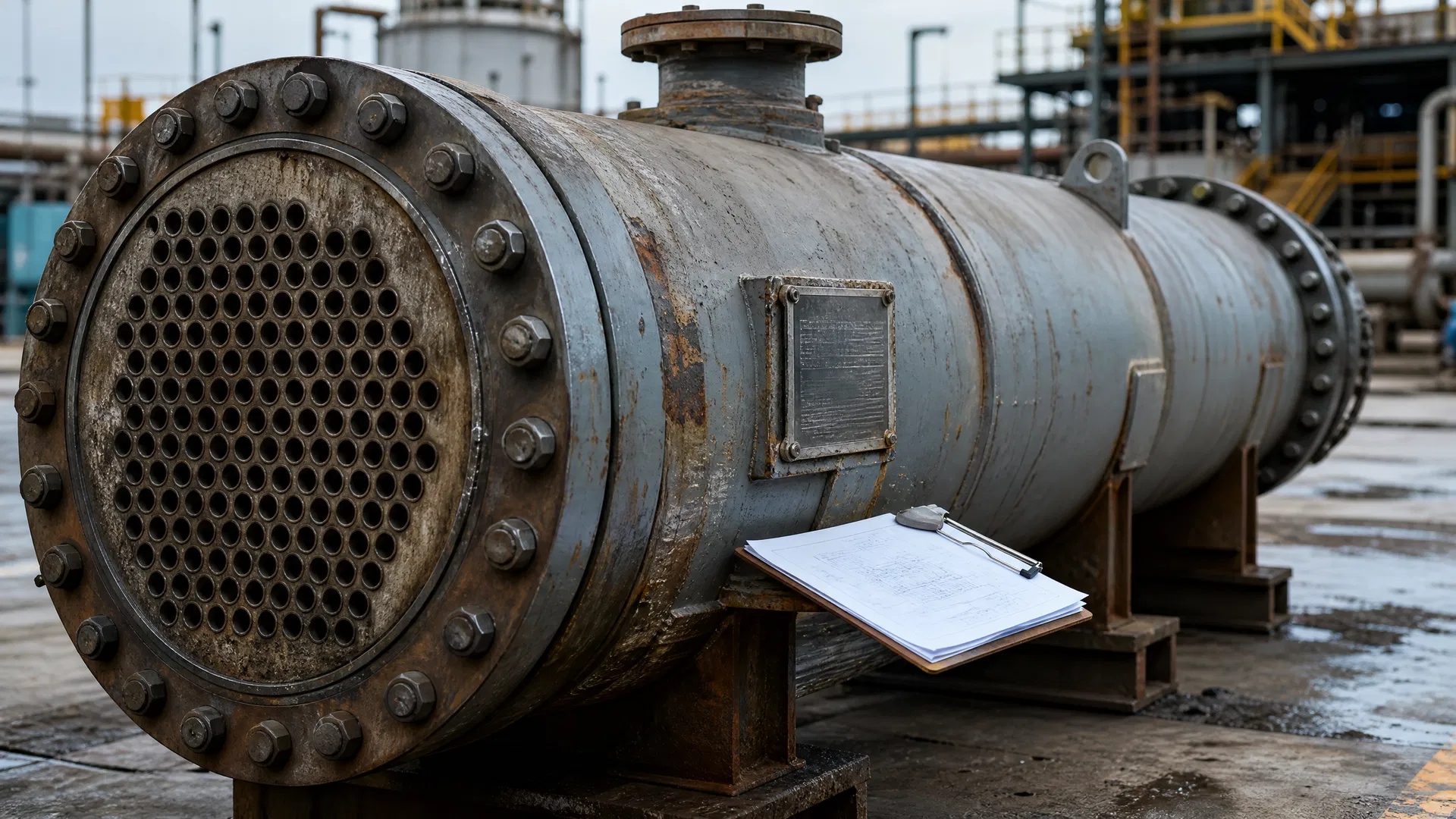
The value of a used shell and tube heat exchanger typically ranges from a significant premium over scrap based on its heat-transfer surface area, depending heavily on the materials of construction, condition, and TEMA classification. Units made from exotic alloys like titanium or high-grade stainless steel command the highest prices, while standard carbon steel units fall on the lower end of the spectrum. If the unit is beyond repair, its scrap value is determined by its weight and material, ranging from only a baseline commodity rate for carbon steel up to only a baseline commodity rate for titanium.
Surplus Heat Exchangers buys used and surplus heat exchangers nationwide — 100% upfront, with free rigging and freight, in any condition. Send a photo of the nameplate to 951-403-5738 for a same-day cash offer.
What is the average value of a used shell and tube heat exchanger?
When plant managers or facility engineers are tasked with liquidating surplus equipment, the first question is always about the bottom line. The secondary market for industrial heat transfer equipment is robust, but pricing is highly variable. As a general rule of thumb, a functional, reusable shell and tube heat exchanger will resell for a significant premium over scrap value. However, this is a broad range that requires closer examination to pinpoint an accurate estimate for your specific unit.
The actual cash value you can expect to receive from a surplus buyer depends on whether the unit can be refurbished and put back into service, or if it is strictly destined for material recovery. Buyers evaluate the mechanical integrity of the shell, the condition of the tube bundle, the thickness of the tubesheets, and the overall design pressure and temperature ratings. Units that have been well-maintained, properly flushed, and stored with nitrogen purges will naturally fetch a premium over units that have been left open to the elements or suffer from severe tube pitting.
How does material of construction impact heat exchanger pricing?
The single most significant factor in determining the worth of a used shell and tube heat exchanger is the metallurgy of its wetted parts—specifically the tubes, tubesheets, and channel heads. Industrial processes handle highly corrosive fluids, meaning heat exchangers are manufactured from a wide variety of metals, each with its own market value.
Standard carbon steel units are the most common and therefore command the lowest resale and scrap values. Conversely, units constructed from high-nickel alloys, titanium, or specialized stainless steels are highly sought after in the secondary market. If you are selling a unit, identifying the exact material grade is crucial.
Here is a breakdown of how different materials influence the baseline value:
- Carbon Steel: The baseline standard for non-corrosive applications like cooling water or lubricating oil. Lowest resale value.
- 304 and 316 Stainless Steel: Extremely common in food, beverage, and general chemical processing. 316L stainless commands a noticeable premium over 304 due to its added molybdenum for corrosion resistance.
- Copper and Copper Alloys: Admiralty brass and cupro-nickel are frequently used in marine environments and power generation. These have excellent intrinsic scrap value and strong resale demand.
- Titanium and Hastelloy: Used in the most aggressive chemical environments. These exotic alloys represent the absolute top tier of heat exchanger valuation.
Should you scrap your heat exchanger or sell it to a surplus buyer?
Many facilities make the costly mistake of sending their used shell and tube heat exchangers straight to the local scrap yard. While scrapping provides immediate disposal, it almost always leaves money on the table. Scrap yards only pay for the raw weight of the metal, completely ignoring the engineering, fabrication, and functional value of the equipment.
However, if the unit is intact, selling it to a specialized buyer like Surplus Heat Exchangers will yield a significantly higher return. We pay for the equipment's potential to be reused, which is why we can offer cash payouts that far exceed standard scrap yard rates.
What role does surface area and square footage play in valuation?
In the heat transfer industry, size matters. The capacity of a shell and tube heat exchanger is largely defined by its total heat transfer surface area, usually measured in square feet. This is calculated based on the outside diameter of the tubes, the length of the tubes, and the total number of tubes in the bundle.
When surplus buyers evaluate a unit, the square footage provides the baseline multiplier for the valuation. A massive 10,000-square-foot stainless steel condenser will inherently be worth substantially more than a small 50-square-foot oil cooler. As mentioned earlier, the functional resale value generally falls a significant premium over scrap value.
However, the relationship between size and price is not always perfectly linear. Extremely large units may have a smaller pool of potential end-users, which can slightly depress the per-square-foot premium, while highly versatile mid-sized units often experience the highest market liquidity and demand. Regardless of the size, accurately measuring or locating the square footage on the manufacturer's nameplate is a critical step in getting an accurate quote.
How do TEMA classifications affect the resale value?
The Tubular Exchanger Manufacturers Association (TEMA) sets the mechanical standards for shell and tube heat exchangers. The TEMA designation of your unit tells a buyer exactly how it is constructed, which directly impacts its versatility, cleanability, and ultimate resale value.
TEMA designations consist of three letters indicating the front head type, the shell type, and the rear head type. Certain configurations are more desirable in the secondary market:
- TEMA BEM: A fixed tubesheet design with a bonnet head. These are very common and cost-effective, but because the tube bundle cannot be removed for mechanical cleaning of the shell side, their resale value can be slightly lower if the shell side is heavily fouled.
- TEMA AEL or AEM: Features a removable channel cover, allowing easy access to the tubes for inspection and cleaning without disturbing the piping. This ease of maintenance makes them highly attractive to buyers.
- TEMA BEU (U-Tube): The tubes are bent in a U-shape, allowing the bundle to expand and contract freely with thermal stress. The bundle is also removable. U-tube exchangers are highly versatile and hold excellent resale value, particularly in steam-heating applications.
- TEMA AES (Floating Head): Designed for high-temperature differentials, the floating head allows for thermal expansion and full bundle removal. These are complex, expensive to build new, and command top dollar in the surplus market.
What documentation increases the value of your used unit?
When selling industrial equipment, information is currency. A used shell and tube heat exchanger is worth significantly more if you can provide the buyer with its original documentation. Without documentation, a buyer must spend considerable time and money reverse-engineering the unit, performing metallurgical testing, and conducting hydro-tests to verify its pressure ratings.
To maximize the cash offer for your surplus heat exchanger, try to gather the following documents:
- The U-1 Data Report: This is the official ASME document that details the exact materials, thicknesses, pressure ratings, and dimensions of the unit. Having the U-1 form is the single best way to guarantee top dollar.
- Original General Arrangement (GA) Drawings: These blueprints show the physical dimensions, nozzle sizes, and baffle spacing, which helps buyers match the unit to a new application.
- Inspection and Maintenance Records: Recent eddy current testing reports, hydro-test results, or records of tube plugging can prove the unit is in good working condition.
- Clear Photos of the Nameplate: The manufacturer's nameplate contains the serial number, National Board number, year built, and design pressures. Always snap a clear, legible photo of this tag when requesting a quote.
How do brand names and manufacturers influence the price?
Just like in the automotive or consumer electronics industries, brand reputation carries weight in the industrial equipment market. Heat exchangers manufactured by recognized, industry-leading companies often retain their value better than custom-built units from unknown fabrication shops.
Top-tier manufacturers are known for their rigorous quality control, precise engineering, and adherence to strict ASME and TEMA standards. When buyers see a reputable nameplate, they have higher confidence in the unit's longevity and structural integrity. Some of the most respected brand names that command strong resale values include:
- Standard Xchange (formerly ITT Standard)
- Alfa Laval
- GEA and Kelvion
- Tranter
- SPX / APV
- SWEP
Even if your unit was built by a smaller, regional fabrication shop, it still holds significant value as long as it carries an ASME"U" stamp and a National Board registration number.
How can you sell your used shell and tube heat exchanger today?
If you have a surplus, idle, or recently decommissioned shell and tube heat exchanger taking up valuable space in your facility, turning it into working capital is easier than you might think. You do not need to worry about finding an end-user, dealing with scrap yards, or figuring out how to transport a heavy piece of equipment.
Surplus Heat Exchangers is a nationwide buyer specializing exclusively in industrial heat transfer equipment. We make the selling process completely frictionless for plant managers, contractors, and facility owners. When you sell to us, you benefit from:
- 100% Upfront Payment: We pay you in full before the equipment ever leaves your site. No waiting for consignment sales.
- We Handle the Freight: Industrial heat exchangers are heavy and difficult to move. We coordinate and pay for all freight and logistics.
- We Buy in Any Condition: Whether your unit is practically brand new, slightly fouled, or requires a complete retubing, we will make you a competitive cash offer.
- Fast, No-Obligation Offers: Simply send us a few clear photos of the unit and the manufacturer's nameplate, and we will quickly evaluate its worth.
Stop letting your surplus equipment depreciate. Discover exactly how much your used shell and tube heat exchanger is worth today. Call Surplus Heat Exchangers at 951-403-5738 or email your photos and details to our secure online quote form for an immediate cash offer.
| Material | Typical scrap range | Why it matters for resale |
|---|---|---|
| Carbon steel | $0.05–$0.12 / lb | the most common shell/tube material; lowest scrap value but highest resale demand for standard process duty |
| 304 stainless steel | $0.40–$0.70 / lb | corrosion resistant, widely reused in food, dairy and chemical service |
| 316 / 316L stainless steel | $0.55–$0.90 / lb | molybdenum-bearing grade for chloride and marine service; strong resale value |
| Copper | $2.50–$3.50 / lb | found in tube bundles and HVAC coils; high recovery value |
| Admiralty brass | $1.40–$2.20 / lb | classic condenser tube alloy; valued for both scrap and reuse |
| Cupro-nickel (90/10 & 70/30) | $2.00–$3.20 / lb | seawater and brackish-water service; premium resale and scrap |
| Titanium | $3.50–$6.00 / lb | used in aggressive chloride, seawater and chemical duty; the highest-value exchanger material |
Scrap ranges are indicative only and move with commodity markets; reusable units almost always beat scrap. Call 951-403-5738 for a current cash offer.
Key takeaway: across every common alloy, a working heat exchanger is worth far more resold than scrapped — often several times its melt value — so get a resale offer before you weigh it in.