

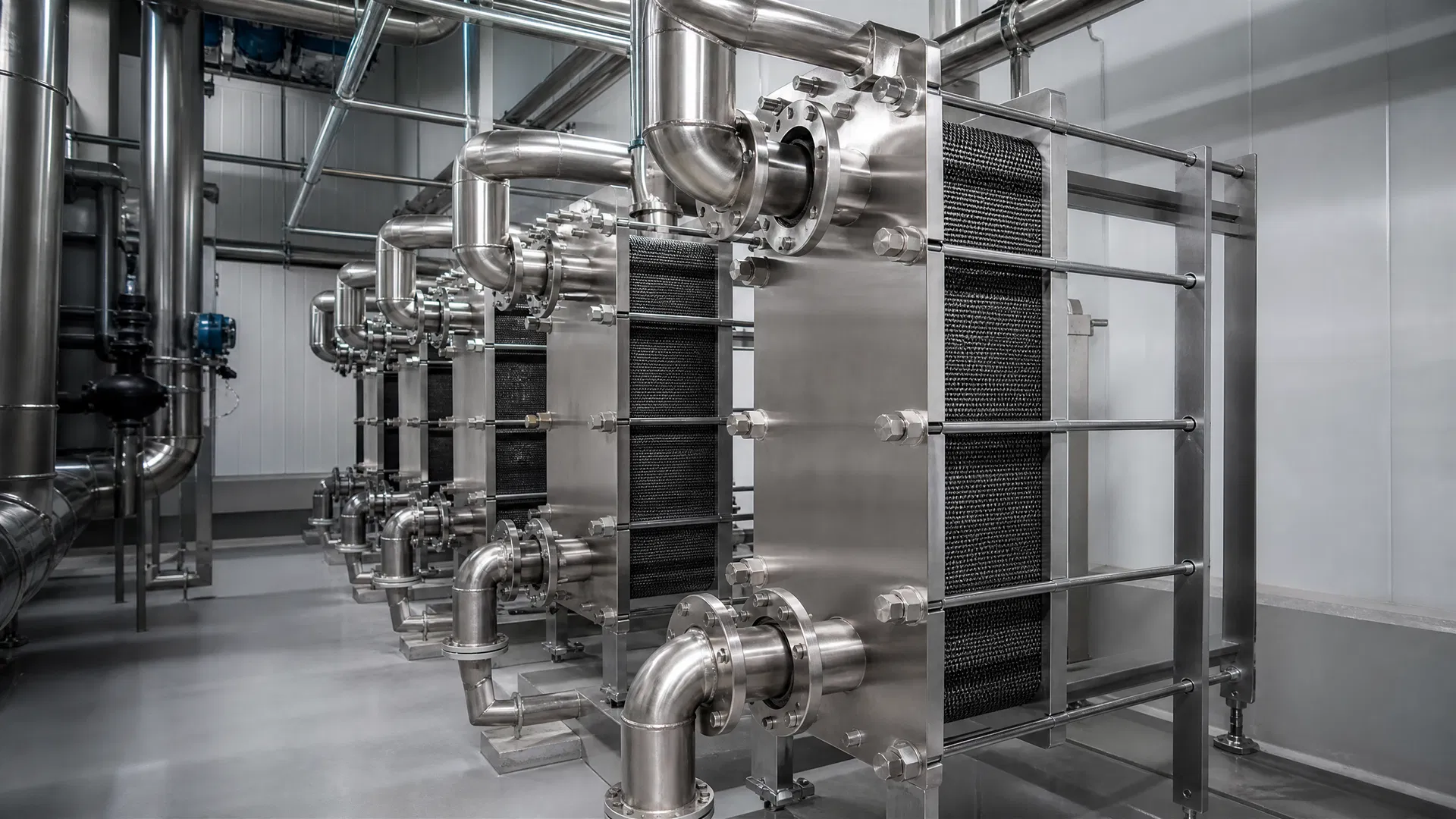
When selling used plate heat exchangers, brands like Alfa Laval, GEA (Kelvion), and Tranter consistently command the highest resale demand and best payouts due to their widespread industrial use and standardized replacement parts. While lesser-known brands still hold significant value based on their plate materials—such as 316 stainless steel or titanium—premium brands sell faster on the secondary market. You can maximize your return by selling these surplus units directly to specialized buyers who pay 100% upfront and cover all freight costs.
Surplus Heat Exchangers buys used and surplus heat exchangers nationwide — 100% upfront, with free rigging and freight, in any condition. Send a photo of the nameplate to 951-403-5738 for a same-day cash offer.
Which plate heat exchanger brands have the highest resale value?
The secondary market for industrial equipment is heavily driven by brand recognition, reliability, and the availability of replacement parts. When it comes to plate heat exchangers, certain manufacturers have established themselves as industry standards. Brands such as Alfa Laval, GEA (now operating as Kelvion), and Tranter are among the most sought-after names in the used equipment market. Because these companies have installed millions of units globally, there is a constant demand for their surplus units, replacement plates, and frames.
Other highly respected brands that retain excellent resale value include SPX/APV, Standard Xchange, ITT, and SWEP. Facilities looking to expand their cooling capacity or replace a failing unit often prefer to purchase a used or surplus heat exchanger from a brand they already trust. This brand loyalty translates directly into higher cash offers when you decide to sell your decommissioned equipment. Even if your facility is clearing out older, non-functioning units, the frames and plates from these top-tier manufacturers hold substantial intrinsic value. Surplus Heat Exchangers purchases all major brands of plate heat exchangers, ensuring that you receive a competitive, market-based offer regardless of the nameplate on your equipment.
Why do Alfa Laval, GEA, and Tranter dominate the secondary market?
The dominance of Alfa Laval, GEA, and Tranter in the secondary market comes down to engineering consistency and cross-industry adoption. Alfa Laval is a titan in the marine, food and beverage, and chemical processing sectors. Their M-series and T-series gasketed plate heat exchangers are ubiquitous. When a plant manager needs to replace a damaged plate pack or expand a current Alfa Laval unit, finding used or surplus plates is often much faster and more cost-effective than ordering brand-new components from the original equipment manufacturer.
Similarly, GEA (Kelvion) and Tranter have built massive installed bases in HVAC, power generation, and heavy manufacturing. Tranter’s Superchanger line and GEA’s NT series are renowned for their thermal efficiency and robust frame designs. Buyers in the secondary market actively seek out these specific models because the maintenance procedures are well-documented, and replacement gaskets—whether EPDM, NBR, or Viton—are readily available. This standardization means that a used Alfa Laval or Tranter unit can be quickly refurbished, hydro-tested, and put back into service. If you have surplus units from these manufacturers sitting idle, you are holding highly liquid assets that can be quickly converted into working capital.
How much is a used plate heat exchanger worth in scrap vs. resale?
One of the most common mistakes plant managers make is sending valuable plate heat exchangers to a local scrap yard. While scrap yards pay based on raw metal weight, they ignore the engineered value of the equipment. Selling to a specialized buyer like Surplus Heat Exchangers yields a significantly higher return. To understand the difference, consider current baseline scrap metal values:
- Carbon steel (heavy frames): only a baseline commodity rate
- 304 stainless steel plates: only a baseline commodity rate
- 316 stainless steel plates: only a baseline commodity rate
- Copper (in brazed units): only a baseline commodity rate
- Admiralty brass: only a baseline commodity rate
- Cupro-nickel: only a baseline commodity rate
- Titanium plates: only a baseline commodity rate
While TEMA (Tubular Exchanger Manufacturers Association) designated shell and tube heat exchangers often resell for a significant premium over scrap value depending on materials and condition, plate heat exchangers are evaluated differently. Their resale value is determined by the brand, plate count, specific plate material, and frame condition. A local scrap yard will downgrade the value of stainless steel or titanium plates because they are attached to a heavy carbon steel frame and separated by rubber gaskets, requiring labor-intensive teardowns. Surplus Heat Exchangers evaluates the unit as a functional piece of equipment or a valuable source of OEM plates, allowing us to offer a premium price that far exceeds basic scrap metal rates.
What materials make a used plate heat exchanger most valuable?
The material composition of the corrugated plates inside the heat exchanger is a primary driver of its overall value. Because plate heat exchangers are designed to handle everything from benign chilled water to highly aggressive acids, they are manufactured using a wide spectrum of metals. The rarer and more corrosion-resistant the material, the higher the resale demand and the larger the cash payout you can expect.
Standard 304 and 316 stainless steel plates are the most common and enjoy a very high, steady demand due to their broad applicability across countless industries. However, if you are decommissioning a plant that utilized titanium plates—often found in coastal facilities using seawater for cooling, or in aggressive chemical processes—you possess a highly valuable asset. Titanium is expensive to source new, making used titanium plate heat exchangers incredibly attractive to secondary market buyers. Regardless of the metallurgy, Surplus Heat Exchangers has the expertise to accurately identify and value your equipment, ensuring you get paid top dollar for premium materials.
How do gasketed, brazed, and welded plate exchangers compare in resale demand?
Not all plate heat exchangers are constructed the same way, and their specific design type heavily influences their resale potential. The most common and valuable type on the secondary market is the gasketed plate-and-frame heat exchanger (GPHE). These units feature a series of corrugated plates compressed together in a rigid carbon steel frame, sealed by elastomeric gaskets. GPHEs are highly desirable because they can be easily opened for cleaning, inspection, and maintenance. Furthermore, their capacity can be modified simply by adding or removing plates. This flexibility makes used gasketed units from brands like Alfa Laval and Tranter extremely easy to resell and repurpose.
Brazed plate heat exchangers (BPHE), such as those manufactured by SWEP or Kelvion, consist of stainless steel plates brazed together with copper or nickel. Because they are permanently sealed, they cannot be opened for mechanical cleaning. While individual used brazed units have lower resale value, large lots of unused or surplus brazed exchangers are highly marketable. Welded and semi-welded plate heat exchangers are typically used in high-pressure applications, such as ammonia refrigeration. These units have strong resale demand due to their high initial capital cost. Surplus Heat Exchangers buys all configurations—gasketed, brazed, and welded—providing a comprehensive liquidation solution for your facility.
What information is needed to sell a used plate heat exchanger quickly?
Selling your surplus industrial equipment should not be a complicated process. To get the fastest cash offer for your used plate heat exchangers, providing clear information upfront is key. To receive an immediate offer from Surplus Heat Exchangers, simply gather the following information and email it to our secure online quote form:
- Clear Photographs: Take well-lit photos of the entire unit, showing the front, back, and sides of the frame.
- Nameplate / Data Tag: Take a close-up, legible photo of the manufacturer's data tag displaying the brand, model number, serial number, and year of manufacture.
- Material Specifications: If known, provide the plate material (e.g., 316SS, Titanium) and the gasket material (e.g., EPDM, Nitrile).
- Plate Count or Surface Area: Let us know the approximate number of plates currently installed in the frame.
- Current Status: Briefly describe the condition of the unit, such as recently decommissioned, leaking, or brand-new surplus.
Even if you do not have all of this information, send us whatever photos you have. Our experienced team can often identify the brand, model, and approximate value just by looking at the frame design and plate corrugation patterns.
How can you sell your surplus plate heat exchangers for cash upfront?
Managing surplus assets, clearing out mechanical rooms, or handling plant liquidations can be stressful and time-consuming. You need a reliable partner who can quickly turn your idle equipment into cash without adding logistical headaches to your workload. Surplus Heat Exchangers is a nationwide buyer dedicated to making the selling process as smooth and profitable as possible for you.
We understand that you want to get paid quickly and securely. That is why we pay 100% upfront for your used and surplus plate heat exchangers. You will have the funds in your account before the equipment ever leaves your facility. Furthermore, we eliminate the hassle of transportation. We handle all the rigging, loading, and freight logistics, and we cover 100% of the shipping costs. Whether you have a single Alfa Laval unit in a basement mechanical room or a dozen Tranter exchangers sitting in a scrap yard, we buy equipment in any condition.
Stop letting valuable industrial equipment rust away or get sold for pennies on the dollar at a local scrap yard. Turn your surplus into immediate capital. Call Surplus Heat Exchangers today at 951-403-5738 or email your photos and nameplate information to our secure online quote form to receive your fast, no-obligation cash offer.