

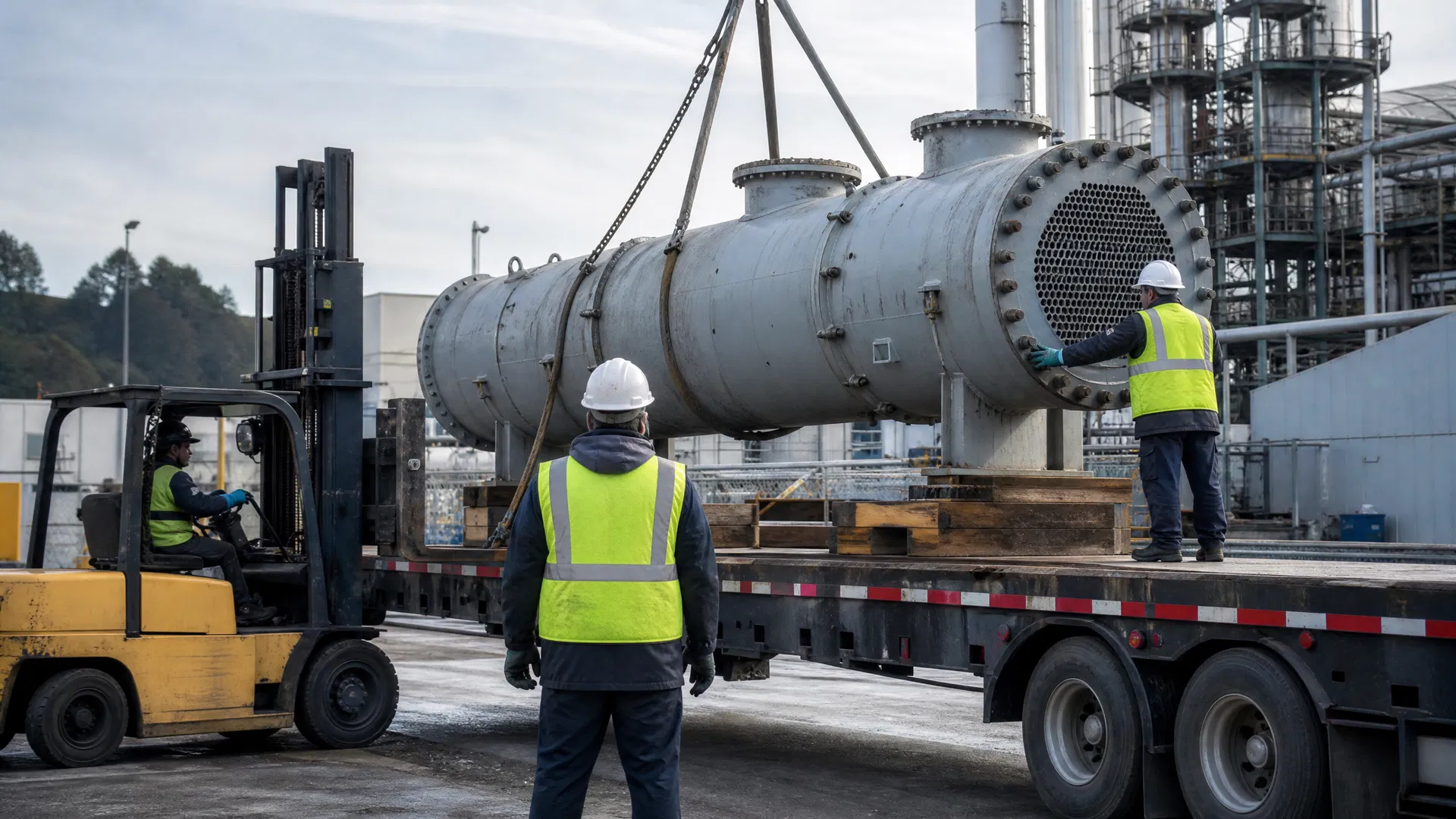
Selling used marine and offshore heat exchangers, particularly those constructed from titanium or cupro-nickel (CuNi), can yield significant returns due to the high intrinsic value of these corrosion-resistant materials. Facilities and contractors can maximize their recovery by selling these surplus units directly to specialized buyers who pay upfront and handle the complex logistics of offshore or shipyard removal. Whether you have a decommissioned Alfa Laval plate cooler or a massive TEMA-designated shell and tube unit, liquidating these assets provides immediate capital while eliminating storage and disposal costs.
Surplus Heat Exchangers buys used and surplus heat exchangers nationwide — 100% upfront, with free rigging and freight, in any condition. Send a photo of the nameplate to 951-403-5738 for a same-day cash offer.
Why are used marine and offshore heat exchangers so valuable?
Marine and offshore environments are notoriously harsh, requiring equipment that can withstand constant exposure to highly corrosive seawater, extreme pressures, and fluctuating temperatures. Because standard carbon steel or basic stainless steel degrades rapidly in these conditions, marine heat exchangers are engineered using premium, exotic alloys. When a vessel is decommissioned, an offshore rig is upgraded, or a shipyard overhauls a cooling system, the resulting surplus heat exchangers retain immense value. The high cost of manufacturing new units from these specialized materials means there is a robust secondary market for reusable equipment.
Furthermore, even if a unit has reached the end of its operational life, the raw scrap value of the exotic metals used in its construction—such as titanium and cupro-nickel—is substantially higher than that of standard industrial metals. By choosing to sell your surplus marine heat exchangers rather than scrapping them locally, you tap into a specialized market that recognizes both the functional and material worth of your equipment. Industrial buyers are constantly looking for reliable, high-grade materials, making your surplus units highly desirable.
What materials make seawater coolers and offshore units highly sought after?
The value of marine heat exchangers is inextricably linked to their metallurgy. Seawater is a highly aggressive cooling medium, necessitating the use of materials that resist pitting, crevice corrosion, and galvanic degradation. The specific alloys used in your equipment will largely dictate its resale or scrap value.
- Titanium: Widely considered the gold standard for marine applications, titanium offers unparalleled resistance to seawater corrosion. Titanium plate heat exchangers and titanium-tubed shell and tube units are incredibly valuable. Even as scrap, titanium commands premium prices, typically ranging from only a baseline commodity rate.
- Cupro-Nickel (CuNi): Alloys such as 90/10 and 70/30 cupro-nickel are heavily utilized in marine engineering due to their excellent resistance to biofouling and seawater corrosion. CuNi tubes are standard in many shipboard condensers and coolers. The scrap value for cupro-nickel generally sits between only a baseline commodity rate.
- Admiralty Brass and Aluminum Brass: Often found in older or specific types of marine shell and tube heat exchangers, these materials are also highly recyclable, with admiralty brass scrap values ranging from only a baseline commodity rate.
- High-Grade Stainless Steels: While less common for direct seawater contact than titanium, super austenitic stainless steels (like SMO 254) or duplex stainless steels are frequently used in offshore topside processes. Standard 316 stainless steel scrap values range from only a baseline commodity rate, but specialized marine grades can fetch more.
How much is a used titanium or CuNi marine heat exchanger worth?
Determining the exact value of a used marine heat exchanger depends on whether it is being sold for its functional resale value or its raw material scrap value. Functional units that can be refurbished and redeployed in industrial or marine settings are always worth more than their weight in scrap. For reusable shell and tube heat exchangers, the resale market typically pays between a significant premium over scrap based on its heat-transfer surface area, heavily dependent on the materials of construction, TEMA class (such as TEMA C or TEMA R), and overall condition.
Below is a comparison table illustrating the estimated scrap values of common marine heat exchanger materials versus standard industrial metals:
Note: Scrap prices fluctuate based on global commodities markets. Selling to a specialized buyer often yields higher returns than local scrap yards, especially for functional units.
Which brands and types of marine heat exchangers are most in demand?
The secondary market heavily favors well-known, reputable manufacturers whose equipment is proven in demanding offshore and marine environments. Buyers are actively seeking both plate and frame heat exchangers and shell and tube configurations.
- Alfa Laval: A dominant force in the marine sector, Alfa Laval titanium plate heat exchangers are highly prized. Their central cooling systems and freshwater generators are ubiquitous on commercial vessels.
- GEA and Kelvion: Known for robust engineering, their marine-grade plate coolers and box coolers are frequently sought after for ship retrofits and offshore platforms.
- Tranter and SWEP: These brands produce highly efficient plate heat exchangers, including brazed and gasketed units that are utilized in various marine auxiliary systems.
- Standard Xchange (formerly ITT Standard) and SPX/APV: These manufacturers produce heavy-duty shell and tube heat exchangers and plate coolers that meet rigorous marine specifications.
Whether you have a massive main engine jacket water cooler, a lube oil cooler, or a specialized offshore process condenser, equipment from these tier-one manufacturers retains substantial residual value. Buyers are particularly interested in units that come with clear documentation and intact nameplates.
How does the condition of your offshore heat exchanger affect its resale value?
While Surplus Heat Exchangers buys equipment in any condition, the physical state of the unit does influence the final offer. For plate heat exchangers, the condition of the titanium or stainless steel plates is paramount. If the plates are free from severe pitting, cracking, or warping, the unit holds high functional value, even if the gaskets need complete replacement. For shell and tube units, the integrity of the tube bundle is the critical factor. CuNi or titanium tubes that are intact and pass pressure testing command premium prices.
However, even if a marine heat exchanger has suffered catastrophic failure—such as a ruptured shell, severely fouled tubes, or galvanic corrosion damage—it still possesses significant value. Because marine units are constructed from heavy, exotic alloys, a"beyond repair" unit weighing several tons still represents thousands of dollars in raw material. We evaluate every unit to determine its highest possible yield, ensuring you receive a fair, competitive offer regardless of whether the equipment is destined for refurbishment or material recycling.
What are the challenges of decommissioning and selling offshore heat exchangers?
Removing and liquidating heavy equipment from marine and offshore environments presents unique logistical hurdles. Offshore platforms, floating production storage and offloading (FPSO) vessels, and active shipyards have strict safety protocols, limited access, and tight operational windows. Moving a multi-ton titanium heat exchanger requires specialized rigging, crane operations, and heavy-haul freight coordination.
Many contractors and facility managers hesitate to sell surplus equipment because they fear the logistical nightmare of transporting it. Local scrap yards rarely have the capability to handle massive industrial units, and they often lack the metallurgical expertise to accurately price exotic alloys like titanium and cupro-nickel, resulting in lowball offers. Partnering with a specialized buyer eliminates these headaches. A professional buyer understands the complexities of marine decommissioning and will coordinate the necessary freight, allowing your team to focus on the primary project rather than waste management.
How can you sell your surplus marine heat exchangers quickly and safely?
The most efficient way to monetize your decommissioned marine and offshore heat exchangers is to work directly with Surplus Heat Exchangers. We specialize in purchasing used, surplus, and scrap heat exchangers from shipyards, offshore contractors, and marine facilities nationwide. We understand the high value of titanium, CuNi, and other marine-grade alloys, and we have the capital to purchase large lots or massive individual units.
Our process is designed to be entirely frictionless for the seller. You do not need to worry about cleaning, repairing, or transporting the equipment. We buy heat exchangers in any condition—whether they are gently used, heavily fouled, or completely non-functional.
To get started, simply take clear photographs of the heat exchangers, making sure to capture the manufacturer's nameplate (which details the brand, model, materials, and TEMA class, if applicable). Send these photos and any available documentation to our secure online quote form, or call us directly at 951-403-5738. We will quickly evaluate your equipment and provide a competitive offer. Best of all, we pay 100% upfront before the equipment ever leaves your facility, and we handle all the rigging and freight logistics. Turn your surplus marine heat exchangers into immediate cash today.