
The heat exchanger selling process to a specialist buyer like Surplus Heat Exchangers starts with sending photos and the nameplate details for a fast, accurate offer. After agreeing on price, the buyer arranges freight and rigging, pays 100% upfront, and handles all logistics—making it a seamless experience from photo submission to payment.
Surplus Heat Exchangers buys used and surplus heat exchangers nationwide — 100% upfront, with free rigging and freight, in any condition. Send a photo of the nameplate to 951-403-5738 for a same-day cash offer.
What is the first step in selling my used heat exchanger?
The initial step when selling a used or surplus heat exchanger is to provide clear, detailed photos along with the unit's nameplate information. The nameplate typically includes key data such as the manufacturer (e.g., Alfa Laval, GEA, Tranter), model number, TEMA designation (e.g., Type A, B, C), serial number, materials of construction, design pressure, and temperature ratings. These details enable a specialist buyer like Surplus Heat Exchangers to accurately assess the unit’s specifications and market value without needing an on-site inspection.
Photos should capture multiple angles, close-ups of the tubesheet, shell, nozzles, and any damage or corrosion present. This visual evidence helps the buyer determine the condition and usability, which directly impacts the offer price. Sending this information via email to our secure online quote form or calling 951-403-5738 initiates the process.
How do buyers evaluate the value of a used heat exchanger?
Buyers evaluate used heat exchangers based on several factors including materials, design, size, condition, and market demand. The key components affecting value are the metallurgy of the shell and tubes, the heat exchanger type (shell & tube, plate, spiral, etc.), and condition.
Market scrap values also influence pricing. For example, scrap prices range approximately as follows:
However, heat exchangers are often worth more than scrap because of the potential for reuse or component harvesting. For instance, shell & tube units can resell for roughly a significant premium over scrap based on its heat-transfer surface area, depending on materials and condition.
Buyers also consider brand reputation—units from Alfa Laval or Kelvion may command higher values due to quality and aftermarket demand. Similarly, TEMA designations (Types A, B, C, etc.) indicate construction standards that affect resale potential.
What happens after I submit photos and nameplate data?
Once photos and nameplate details are submitted, the buyer reviews the information to prepare a fair market offer. This process typically takes 24-48 hours, depending on complexity. The specialist buyer will analyze the unit's size, materials, condition, and potential market demand.
After evaluation, you receive a written offer detailing the purchase price. At this stage, you can ask questions or request clarifications. If you accept the offer, the buyer coordinates the logistics.
How is rigging and freight handled during the selling process?
One of the key benefits of selling to Surplus Heat Exchangers is that they handle all rigging and freight arrangements at no cost to you. Once you accept the offer, their logistics team schedules pickup based on your facility’s location and operational constraints.
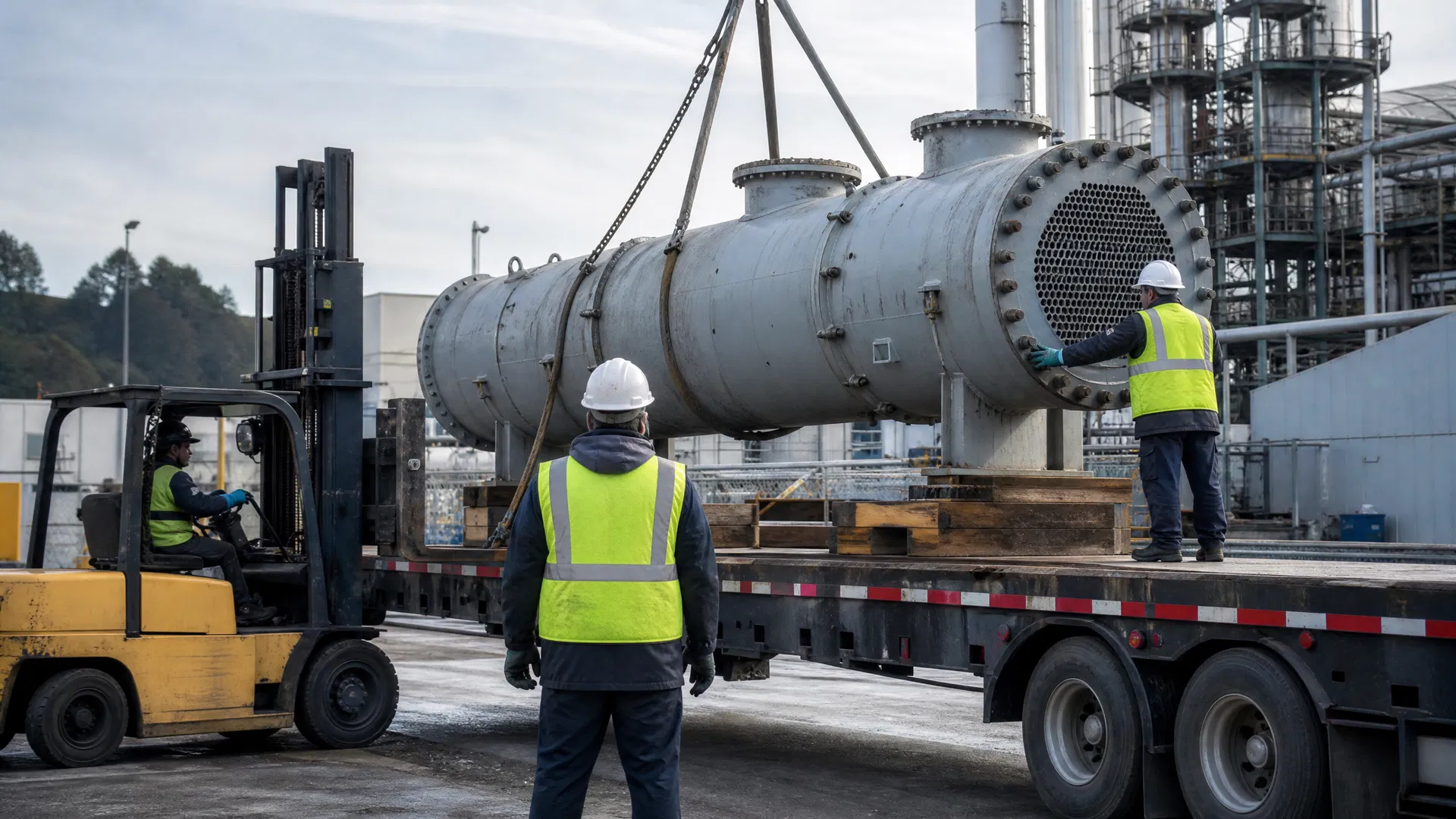
They employ experienced riggers to safely remove the heat exchanger, whether it weighs a few hundred pounds or several tons. This is critical for large shell & tube units or plate heat exchangers installed in confined spaces. The buyer also manages freight to their processing or resale facility, ensuring a smooth, hassle-free transaction.
When do I get paid for my used heat exchanger?
Payment is made 100% upfront by Surplus Heat Exchangers, typically immediately after the offer is accepted or upon pickup confirmation, depending on the agreed terms. There are no delays or escrow holdbacks. This swift payment model is designed to provide sellers with fast cash flow, unlike auctions or brokers who may hold funds for weeks.
The buyer’s commitment to upfront payment is a major advantage, especially for plants or contractors needing to free up space and capital quickly.
What are the environmental and sustainability benefits of selling used heat exchangers?
Selling used heat exchangers promotes sustainability by extending the lifecycle of valuable equipment and reducing industrial waste. Instead of scrapping a functional unit, reselling conserves raw materials such as copper, stainless steel, and titanium, which have high environmental extraction costs.
Reusing heat exchangers also reduces the carbon footprint linked to manufacturing new units, lowers landfill volume, and supports circular economy principles in the industrial sector. For example, reusing a 316 stainless steel shell & tube heat exchanger saves the energy equivalent of several hundred pounds of steel production emissions.
Additionally, environmentally responsible buyers recycle non-reusable components, further minimizing waste.
How does the location of my facility affect the selling process?
The location of your facility impacts logistics but not the offer process. Surplus Heat Exchangers buys nationwide across the US, including remote or industrial zones. However, freight costs and rigging complexity may vary based on distance, accessibility, and on-site conditions.
Urban plants with easy freight access may experience faster pickups, while rural or offshore sites might require specialized equipment or scheduling. Despite this, sellers never pay for rigging or freight charges, as the buyer absorbs these costs.
Communicating your exact location and site conditions upfront helps the buyer plan an efficient removal and transportation strategy.
What are the common challenges when selling used heat exchangers and how to overcome them?
Common challenges include:
- Missing or illegible nameplates: Without accurate specs, valuation is difficult. Take extra care to photograph any stamped or etched markings.
- Physical damage or corrosion: Buyers must assess if repairs are feasible. Providing honest photos and descriptions avoids surprises.
- Logistical constraints: Tight plant schedules or heavy equipment access issues can delay rigging.
- Material identification: Uncertainty about metallurgy affects price offers.
To overcome these challenges, sellers should provide as much detailed information as possible, schedule flexible pickup windows, and consult with buyers for material testing or inspection if needed.
How to identify the materials of your heat exchanger if the nameplate is missing?
If the nameplate is missing or unreadable, material identification can be performed by:
- Visual inspection: Stainless steel typically has a bright, smooth finish; carbon steel rusts more readily.
- Magnet test: 304 stainless steel is usually non-magnetic, whereas carbon steel is magnetic.
- Professional testing: Using handheld XRF analyzers or sending samples to a lab provides precise composition data.
- Consulting OEM or maintenance records: Original purchase orders or maintenance logs often list materials.
Providing as much material information as possible helps buyers make accurate offers and speeds up the process.
What is the difference between selling to a specialist buyer vs. an auction house?
Selling to a specialist buyer like Surplus Heat Exchangers offers advantages over auction houses:
- Faster payment: Specialist buyers pay 100% upfront, while auctions may take weeks for final payment.
- Streamlined process: Specialist buyers handle rigging/freight and provide direct offers based on detailed specs, avoiding bidding uncertainties.
- Expertise and fair valuation: Specialists understand metallurgy, brands (e.g., ITT, SPX/APV), and market demand, leading to accurate offers.
- Guaranteed purchase: Auctions carry risk of low bids or no sale.
While auctions might achieve higher prices in some cases, the certainty and convenience of selling to a specialist buyer often outweigh the potential gains.
Why choose Surplus Heat Exchangers for selling your used heat exchanger?
Surplus Heat Exchangers is a trusted nationwide buyer specializing in used and surplus heat exchangers of any condition. They offer:
- Fast, no-obligation offers based on photos and nameplate data.
- 100% upfront payment to improve your cash flow.
- Free freight and rigging services, minimizing your effort and cost.
- Expertise with all major brands and materials, including Alfa Laval, GEA, Tranter, Kelvion, and more.
- Acceptance of all TEMA types and heat exchanger designs.
Contact Surplus Heat Exchangers today at 951-403-5738 or use our secure online quote form to start your selling process with confidence and ease.