
To safely decommission and remove a heat exchanger for sale, you must first isolate the unit using strict lockout/tagout (LOTO) procedures, fully drain and purge all process fluids, and carefully disconnect piping without damaging the shell or nozzles. Proper rigging techniques utilizing factory lifting lugs are essential to prevent structural damage during extraction. Selling to a specialized buyer like Surplus Heat Exchangers ensures you get paid 100% upfront while avoiding the complex logistics and costs of heavy freight.
Surplus Heat Exchangers buys used and surplus heat exchangers nationwide — 100% upfront, with free rigging and freight, in any condition. Send a photo of the nameplate to 951-403-5738 for a same-day cash offer.
What are the critical first steps to safely decommission a heat exchanger?
Safety is the absolute highest priority when taking an industrial heat exchanger offline. Whether you are dealing with a massive TEMA type AES shell and tube unit from a petrochemical plant or a compact SWEP brazed plate exchanger from an HVAC system, the process begins with strict isolation. Lockout/tagout (LOTO) procedures must be implemented on all associated pumps, valves, and electrical controls to ensure a zero energy state. This prevents accidental pressurization or fluid flow while personnel are working on the equipment.
Once the unit is mechanically and electrically isolated, operators must verify that both the hot and cold sides are fully depressurized. Depending on the process, this may involve allowing the unit to cool down to ambient temperatures to prevent thermal shock or burn hazards. Proper blinding of flanges is highly recommended to create a physical barrier between the heat exchanger and the rest of the active piping system. Documenting these steps ensures compliance with OSHA regulations and prepares the equipment for a smooth transition to the secondary market.
How do you properly drain and purge a heat exchanger before removal?
Before any physical dismantling begins, the heat exchanger must be thoroughly drained and purged of all process fluids and heating or cooling media. Industrial heat exchangers often handle hazardous, corrosive, or highly viscous materials. For instance, a unit used in chemical processing might contain residual acids, while a refinery exchanger might hold heavy hydrocarbons.
Start by opening the lowest drain valves and highest vent valves to break any vacuum and allow gravity to empty the shell and tubes. For viscous fluids, a steam purge or hot nitrogen sweep may be necessary to clear out stubborn residues. If the unit handled toxic or flammable materials, chemical neutralization or a thorough water flush is required to meet environmental and transportation safety standards.
It is crucial to capture and dispose of all drained fluids according to local environmental regulations. Leaving residual liquids inside the unit not only poses a safety risk during transport but can also accelerate internal corrosion, significantly reducing the resale value of the equipment. A clean, dry heat exchanger is much more attractive to buyers and ensures compliance with Department of Transportation (DOT) regulations when moving the asset over public highways.
What are the best practices for disconnecting piping and instrumentation?
Once the unit is safe, depressurized, and drained, the next phase is disconnecting it from the plant's infrastructure. This step requires precision to avoid damaging the heat exchanger's connection points, which are critical for its resale value. Whether you are removing an Alfa Laval plate and frame unit or a massive Standard Xchange shell and tube, the approach is similar.
Begin by carefully unbolting the flanged connections. Avoid using excessive force or cutting torches near the nozzles, as damaging the flange faces or warping the nozzles can ruin the unit's integrity. If bolts are seized due to rust or high-temperature service, use penetrating oils or induction heaters rather than destructive methods.
All instrumentation, including temperature sensors, pressure transmitters, and flow meters, should be carefully removed and either repurposed within your facility or packaged with the heat exchanger. Cap or blind all open nozzles immediately after disconnection. This prevents moisture, dirt, and debris from entering the shell or tubes during rigging, storage, and transport. Preserving the internal cleanliness of a 316 stainless steel or titanium unit is vital for maximizing its financial return.
How do you safely rig and lift a heavy industrial heat exchanger?
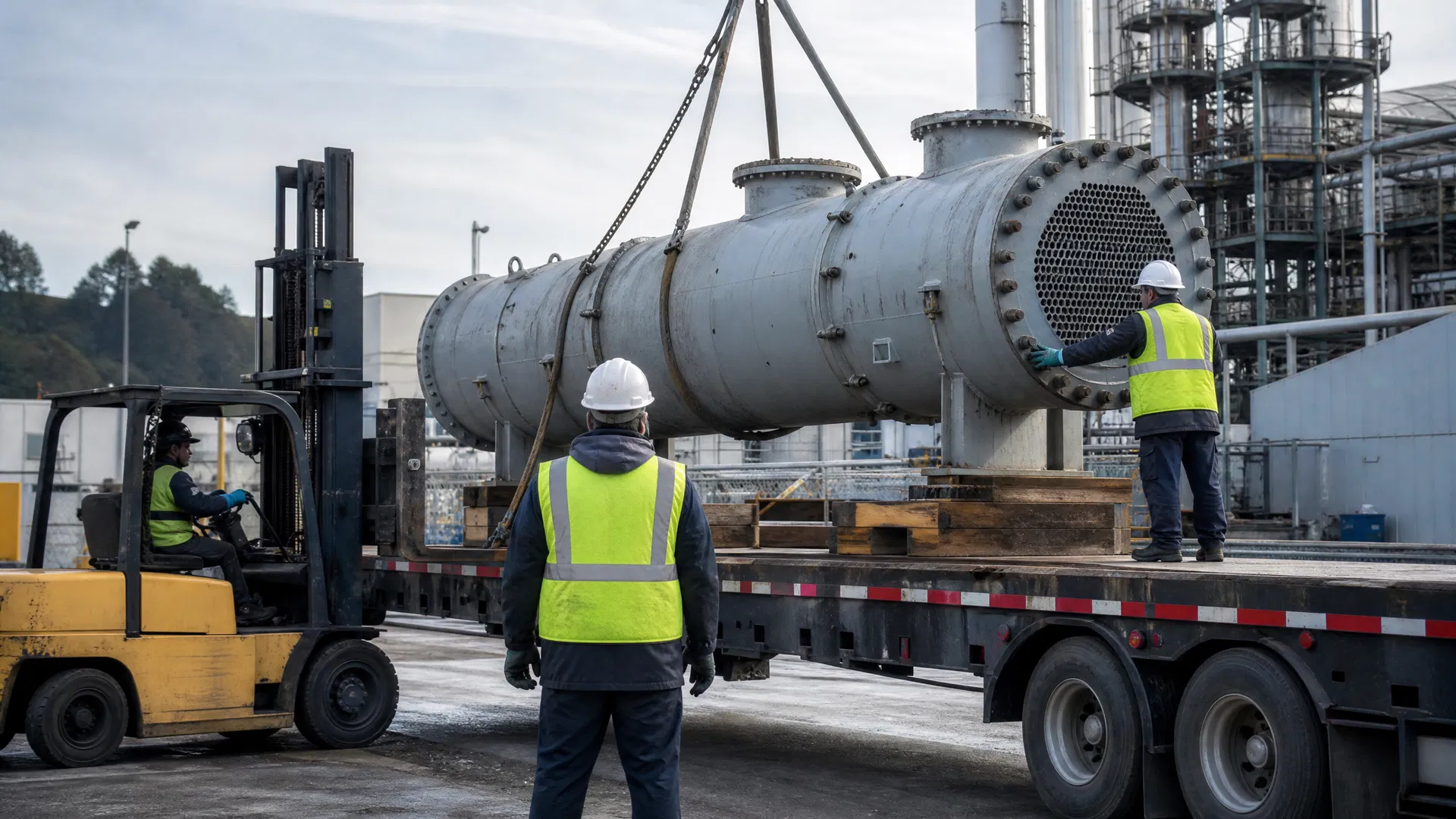
Rigging and lifting an industrial heat exchanger is a high-risk operation that requires specialized knowledge, heavy-duty equipment, and careful planning. Heat exchangers are deceptively heavy and often have asymmetrical centers of gravity, especially if the tube bundle is offset or if residual fluids remain inside.
Always utilize the factory-engineered lifting lugs or trunnions located on the shell or channel heads. Never wrap chains or slings around the nozzles, piping, or delicate external components, as this will cause catastrophic damage. For large TEMA type BEM or BEU shell and tube exchangers, a tandem lift using two cranes might be necessary to safely extract the unit from a tight structural footprint.
When dealing with plate and frame heat exchangers from brands like Tranter, GEA, or Kelvion, ensure that the lifting straps are positioned according to the manufacturer's guidelines, typically around the carrying bar and guide bar, to prevent the frame plates from bending. If you are selling your equipment to Surplus Heat Exchangers, you don't have to worry about the complexities of outbound logistics. We handle all the freight, meaning once the unit is safely rigged out of its operating position and loaded, our specialized heavy-haul carriers take over.
Why is it important to preserve the nameplate and structural integrity during removal?
In the used equipment market, information is just as valuable as the physical asset. The manufacturer's data report (U-1 form) and the physical ASME nameplate attached to the heat exchanger are the most critical components for determining its value. The nameplate contains essential data, including the manufacturer (e.g., ITT, SPX/APV), year built, maximum allowable working pressure (MAWP), design temperature, materials of construction, and the National Board number.
During the decommissioning and removal process, workers must take extreme care not to damage, paint over, or accidentally remove the nameplate. Without a legible nameplate, a high-value titanium or cupro-nickel heat exchanger cannot be legally re-certified for pressurized service, instantly reducing its value from a premium reusable asset to mere scrap metal.
Similarly, maintaining the structural integrity of the unit is paramount. Dents in the shell, bent tie rods, or gouged flange faces can render a unit unusable. Treat the decommissioned heat exchanger as a valuable financial asset, not as trash destined for the scrapyard.
How much is a decommissioned heat exchanger worth on the surplus market?
The financial return on a decommissioned heat exchanger depends heavily on its condition, materials of construction, and whether it can be reused or must be scrapped. Reusable shell and tube heat exchangers generally resell for roughly a significant premium over scrap based on its heat-transfer surface area, depending on the specific materials, pressure ratings, and overall condition.
If a unit is damaged during removal or has reached the end of its metallurgical lifespan, it will be valued based on its raw scrap commodity weight. Understanding current scrap values can help you estimate the baseline worth of your equipment.
While scrap provides a baseline, selling your unit as a reusable asset to a specialized buyer always yields a significantly higher return. A well-maintained 316 stainless steel or titanium unit holds immense value for buyers looking to bypass long factory lead times.
Why should you sell your used heat exchanger to a buyer who handles freight?
Removing a heat exchanger is only half the battle; transporting it is where logistics and costs can spiral out of control. Heavy industrial heat exchangers often require specialized flatbed or step-deck trailers, oversize load permits, and complex route planning. If you try to sell your equipment on the open market or through an auction, you are often left dealing with these logistical nightmares yourself, or you risk buyers backing out when they realize the cost of freight.
This is why partnering with Surplus Heat Exchangers is the smartest financial and operational decision for your facility. We make the process incredibly simple and risk-free:
- 100% Upfront Payment: We pay you in full before the equipment ever leaves your facility. No waiting for funds to clear, no consignment risks, and no auction fees.
- We Handle All Freight: You don't need to worry about hiring trucking companies or securing permits. We coordinate and pay for all transportation logistics nationwide.
- We Buy in Any Condition: Whether your unit is in pristine, reusable condition or requires complete retubing, we will make you a competitive offer.
- Fast, Hassle-Free Offers: Simply send us clear photos of the unit and a close-up of the manufacturer's nameplate, and we will provide a fast, fair valuation.
Don't let a decommissioned heat exchanger take up valuable space in your laydown yard or settle for pennies on the dollar at a local scrap yard. Turn your surplus equipment into immediate working capital. Contact Surplus Heat Exchangers today by calling 951-403-5738 or emailing your photos and nameplate details to our secure online quote form. We buy nationwide, pay cash upfront, and handle all the heavy lifting so you can focus on running your plant.