

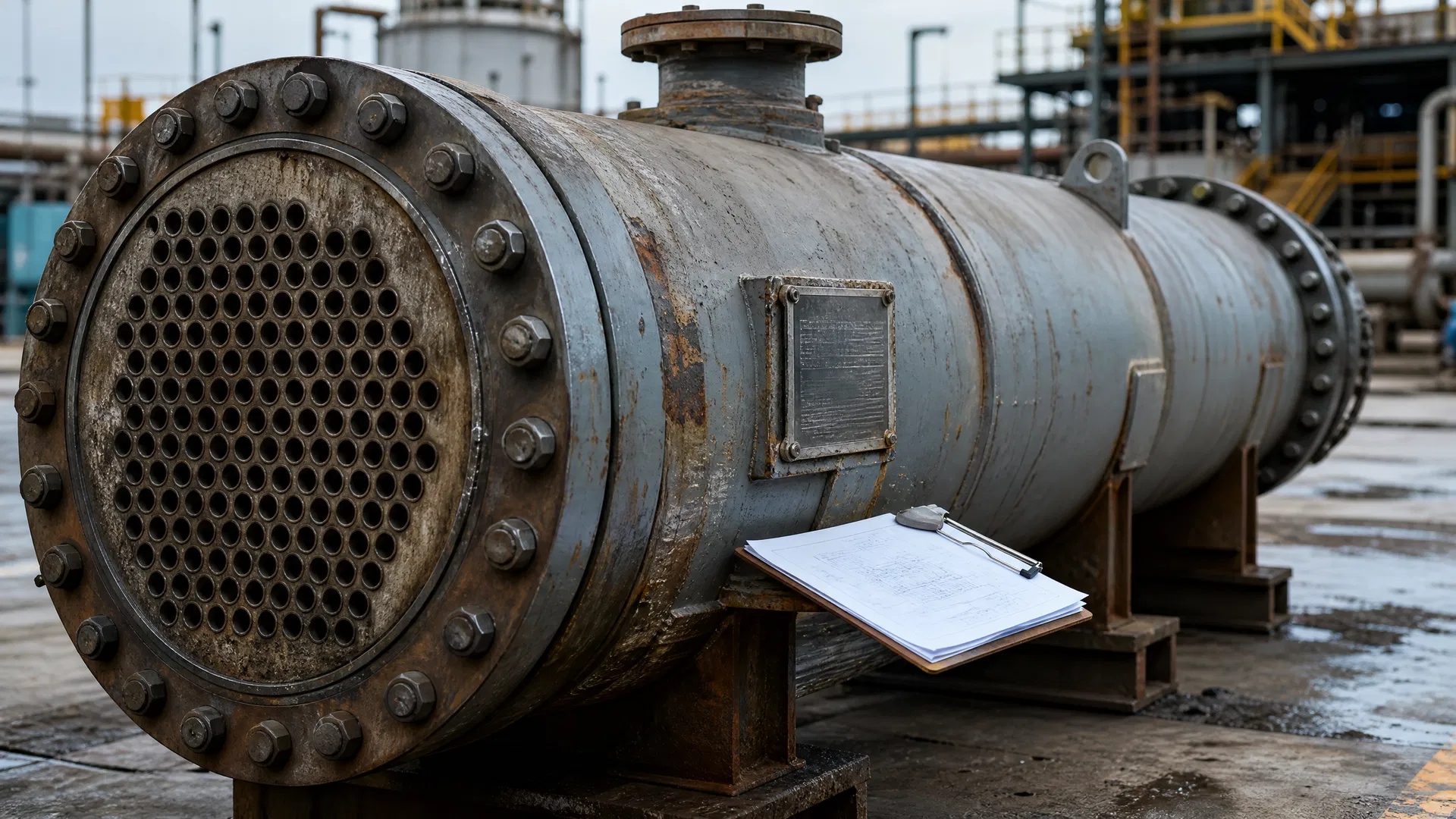
The amount a buyer will pay for your used heat exchanger depends primarily on its material of construction, total heat transfer surface area, current operating condition, and overall market demand. High-value alloys like titanium or 316 stainless steel command premium prices, while complete documentation and clear nameplate data can further increase the final offer. Whether your unit is valued for industrial resale at a significant premium over scrap value or priced based on current scrap metal rates, working with a direct buyer ensures you get the highest possible return.
Surplus Heat Exchangers buys used and surplus heat exchangers nationwide — 100% upfront, with free rigging and freight, in any condition. Send a photo of the nameplate to 951-403-5738 for a same-day cash offer.
How does the material of construction impact the offer price?
The single most significant factor in determining the value of a used heat exchanger is the material used in its construction, particularly the tubes, shell, and tubesheets. Industrial processes often require specialized metallurgy to handle corrosive fluids, extreme temperatures, or high pressures. When it comes time to sell your surplus equipment, these high-grade materials translate directly into higher cash offers from buyers who understand their intrinsic value.
If a heat exchanger cannot be repurposed or resold as a functional unit, its value defaults to the underlying commodity scrap metal market. Buyers closely monitor these rates to establish a baseline valuation. For example, standard carbon steel typically yields between only a baseline commodity rate, making it the lowest-tier material. Moving up the scale, 304 stainless steel generally ranges from only a baseline commodity rate, while the more corrosion-resistant 316 stainless steel commands only a baseline commodity rate.
Non-ferrous and exotic alloys drive valuations even higher. Copper components can fetch only a baseline commodity rate, admiralty brass ranges from only a baseline commodity rate, and cupro-nickel sits between only a baseline commodity rate. At the top end, titanium heat exchangers—often used in aggressive chemical processing or offshore applications—can be valued at only a baseline commodity rate just for the raw material. When a buyer evaluates your equipment, they calculate the estimated weight of these specific metals to formulate a baseline offer.
Why does the size and surface area of the heat exchanger matter?
In the used equipment market, the capacity of a heat exchanger is typically measured by its total heat transfer surface area, usually expressed in square feet. The larger the surface area, the greater the thermal capacity, making the unit more valuable to prospective end-users. For functional shell and tube heat exchangers that can be refurbished and resold, the secondary market price roughly ranges from a significant premium over scrap value, heavily dependent on the materials of construction and the unit's current condition.
However, bigger is not always universally better. While massive, multi-ton heat exchangers have immense raw material value, they also present significant logistical challenges. Transporting an oversized unit requires specialized heavy-haul trucking, wide-load permits, and complex rigging operations. Conversely, highly compact and efficient units, such as brazed plate or compact plate and frame heat exchangers, are highly sought after for their footprint-to-capacity ratio.
When you sell to Surplus Heat Exchangers, we evaluate the exact dimensions, tube count, tube length, and shell diameter to determine the optimal valuation. We look at the total square footage to assess its viability for the resale market, while simultaneously calculating the gross weight to determine its absolute minimum scrap value. This dual-valuation approach guarantees the most competitive offer.
How does the current condition affect the valuation?
The physical and operational condition of your heat exchanger plays a critical role in whether it is valued as a reusable piece of process equipment or as scrap metal. Buyers look for specific indicators of wear, damage, or degradation that could impact the unit's future viability in a pressurized industrial environment.
Key condition factors that buyers evaluate include:
- Tube Integrity and Plugging: Are there plugged tubes, severe pitting, or signs of stress corrosion cracking? A shell and tube exchanger with a high percentage of plugged tubes will likely need a complete retubing, which significantly diminishes its resale value as a functional unit.
- Gasket and Seal Condition: For plate and frame heat exchangers, the condition of the elastomeric gaskets (such as EPDM, Nitrile, or Viton) is important, though these are often replaced during standard refurbishment. The condition of the plates themselves—free from pinholes or warping—is far more critical.
- Fouling and Scaling: Units heavily fouled with biological growth, mineral scale, or hardened chemical deposits require extensive chemical cleaning or hydro-blasting. Severe fouling can also hide underlying corrosion that compromises the pressure vessel.
- Shell and Head Thickness: Ultrasonic thickness testing may be required to ensure the pressure vessel walls have not thinned beyond acceptable safety margins dictated by the original design specifications.
Even if your heat exchanger has failed catastrophically, suffered a tube rupture, or has been sitting idle in a boneyard for a decade, it still holds significant value. Surplus Heat Exchangers buys equipment in any condition, from pristine, never-installed surplus to heavily damaged scrap. We have the expertise to extract value from units that other buyers might reject.
What role do nameplates, U-1 forms, and documentation play?
In the industrial processing world, traceability and certification are paramount. A heat exchanger that comes with its original documentation is inherently more valuable than an identical unit with missing paperwork. The most critical piece of information is the manufacturer's nameplate, which is typically welded or riveted directly to the shell, channel, or frame.
The nameplate provides essential data, including the National Board number, maximum allowable working pressure (MAWP), design temperature, materials of construction, year built, and the manufacturer's serial number. Without a legible nameplate, it is nearly impossible to legally install the heat exchanger in a pressurized, code-stamped application, severely limiting its resale potential to end-users and forcing the valuation down to scrap levels.
Beyond the nameplate, having the original ASME U-1 Data Report is a massive advantage. The U-1 form details the exact specifications, material thicknesses, joint efficiencies, and testing procedures used during the original fabrication. If you have the U-1 form, original mechanical drawings, or recent inspection reports, be sure to mention them when requesting an offer. Complete documentation provides peace of mind to future buyers and positively impacts the price.
How do brand names and TEMA designations influence market demand?
Just like in any other industry, brand reputation matters significantly in the heat exchanger market. Equipment manufactured by recognized, industry-leading companies often commands a premium because end-users trust their engineering, and replacement parts (like gaskets or replacement plate packs) are readily available through established supply chains.
When evaluating plate and frame heat exchangers, buyers look favorably upon top-tier brands such as Alfa Laval, GEA, Tranter, SWEP, Kelvion, and SPX/APV. For shell and tube designs, manufacturers like Standard Xchange, ITT, and various custom ASME fabrication shops are highly desirable due to their proven track records in demanding industrial environments.
Additionally, for shell and tube units, the TEMA (Tubular Exchanger Manufacturers Association) designation heavily influences the valuation. TEMA standards define the mechanical design, tolerances, and construction of the unit based on its intended application.
| TEMA Class | Typical Application | Market Demand & Valuation Impact |
|---|---|---|
| TEMA C | General commercial and light industrial processes. | Moderate demand; lower pressure and temperature ratings result in standard valuations. |
| TEMA B | Chemical process service. | High demand; robust construction designed for corrosive environments increases resale value. |
| TEMA R | Severe requirements of petroleum and related processing. | Highest demand; heavy-duty construction, thickest materials, and highest pressure ratings yield premium offers. |
A TEMA R heat exchanger built for a refinery will inherently be built heavier and stronger than a TEMA C unit built for a commercial HVAC application. This robust construction makes it more valuable both as a highly durable functional unit and as a source of dense, high-quality scrap metal.
Does the location and removal process affect your net payout?
When selling heavy industrial equipment, the gross offer price is only part of the equation. The logistics of removing and transporting a heat exchanger can be incredibly expensive, and these costs directly impact how much cash actually ends up in your pocket at the end of the transaction.
If a buyer requires you to handle the rigging, crating, and freight, your net payout will be significantly reduced. Crane rentals, specialized rigging crews, and flatbed or step-deck freight can easily cost thousands of dollars. Furthermore, if the heat exchanger is located in a difficult-to-access area of your plant, such as an elevated mezzanine or deep within a process train, the extraction costs multiply rapidly.
This is why working with a specialized, full-service buyer is crucial. Surplus Heat Exchangers handles all rigging and freight logistics. We buy nationwide, meaning your location in the US does not prevent you from getting a competitive offer. Because we cover the transportation costs and manage the logistics, the offer we make is the actual amount you receive, with no hidden deductions.
How can you get the highest cash offer for your surplus heat exchanger today?
Maximizing the return on your idle or surplus heat exchangers requires partnering with a buyer who understands both the equipment resale market and the global metals market. To get the best possible offer, gather as much information as you can before reaching out. Take clear photographs of the entire unit, and most importantly, get a close-up, legible photo of the manufacturer's nameplate.
If you have any supporting documentation, such as U-1 forms, general arrangement drawings, or maintenance logs, have those ready as well. Note any known issues, such as plugged tubes, missing components, or previous repairs, so the buyer can provide an accurate, firm offer without unexpected revisions later.
Surplus Heat Exchangers makes the selling process seamless and profitable for plant managers, demolition contractors, and equipment liquidators. We pay 100% upfront before the equipment ever leaves your facility, eliminating any financial risk on your end. We buy heat exchangers in any condition—from brand new surplus to end-of-life scrap—and we handle all the heavy lifting, rigging, and freight.
Stop letting valuable assets rust in your boneyard or take up critical floor space in your facility. Turn your surplus equipment into immediate working capital. Call us today at 951-403-5738 or email your photos and nameplate data to our secure online quote form for a fast, no-obligation cash offer.